Ashwagandha isn’t emerging anymore,  it’s everywhere. Which means your product isn’t judged by claims. It’s judged by consistency.
If your stick packs vary in fill, clump under humidity, or feel inconsistent across batches, customers notice. And in a category this competitive, they don’t wait, they switch.
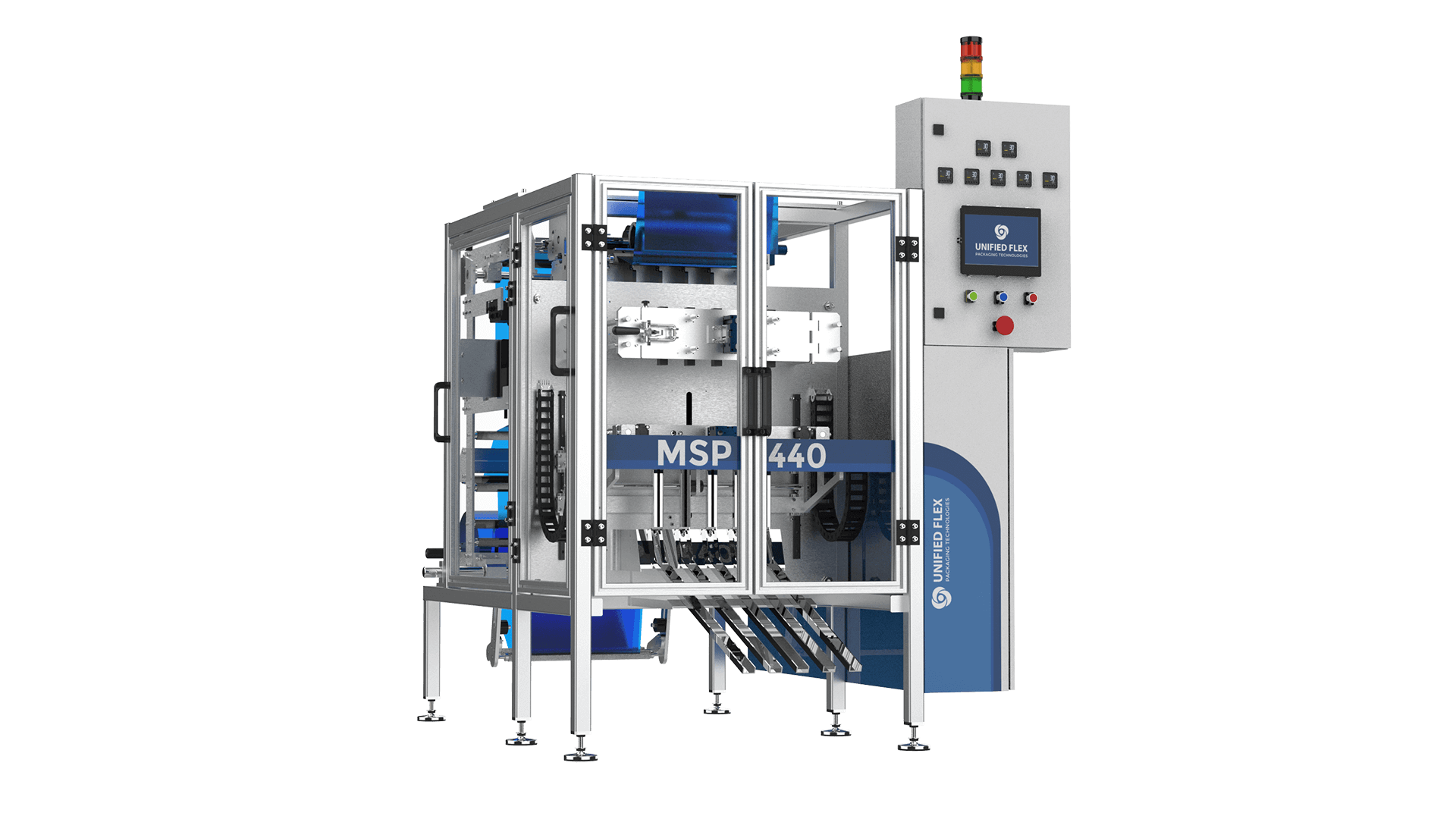
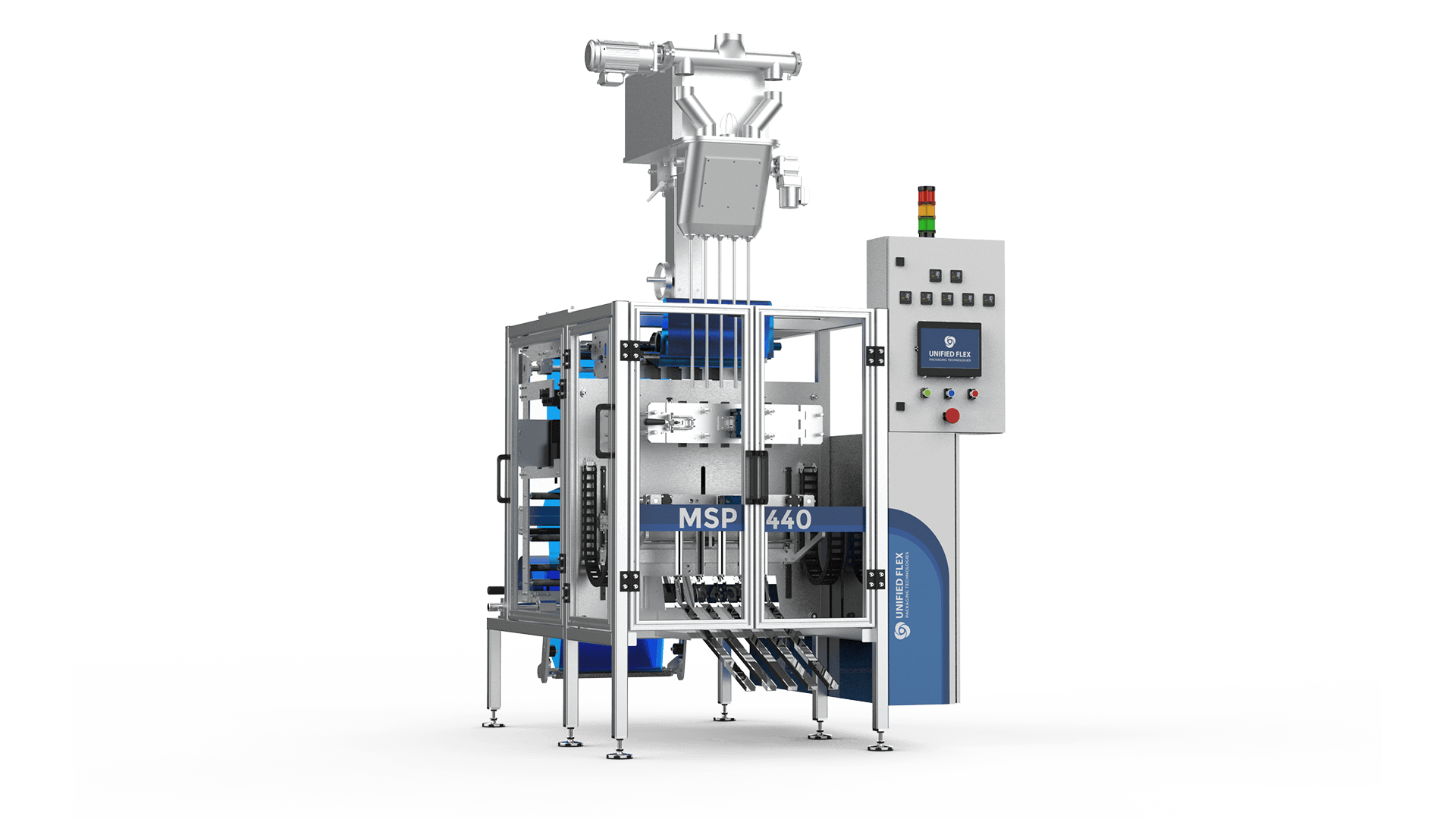
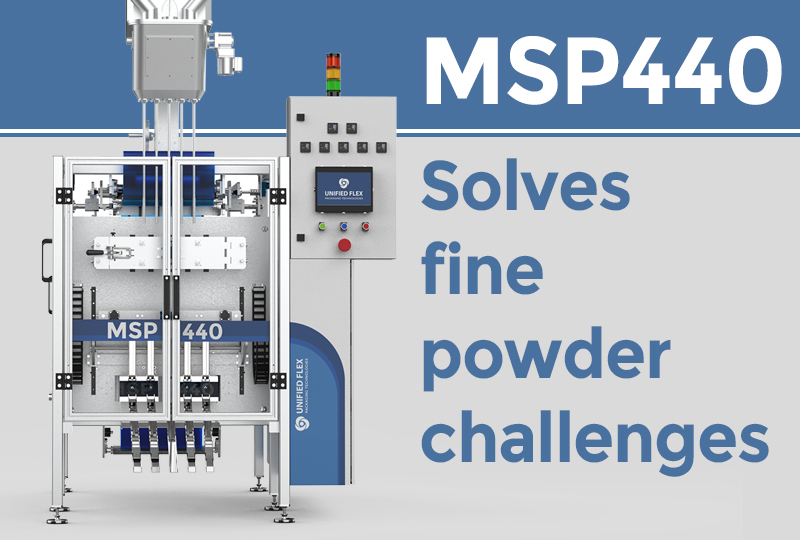
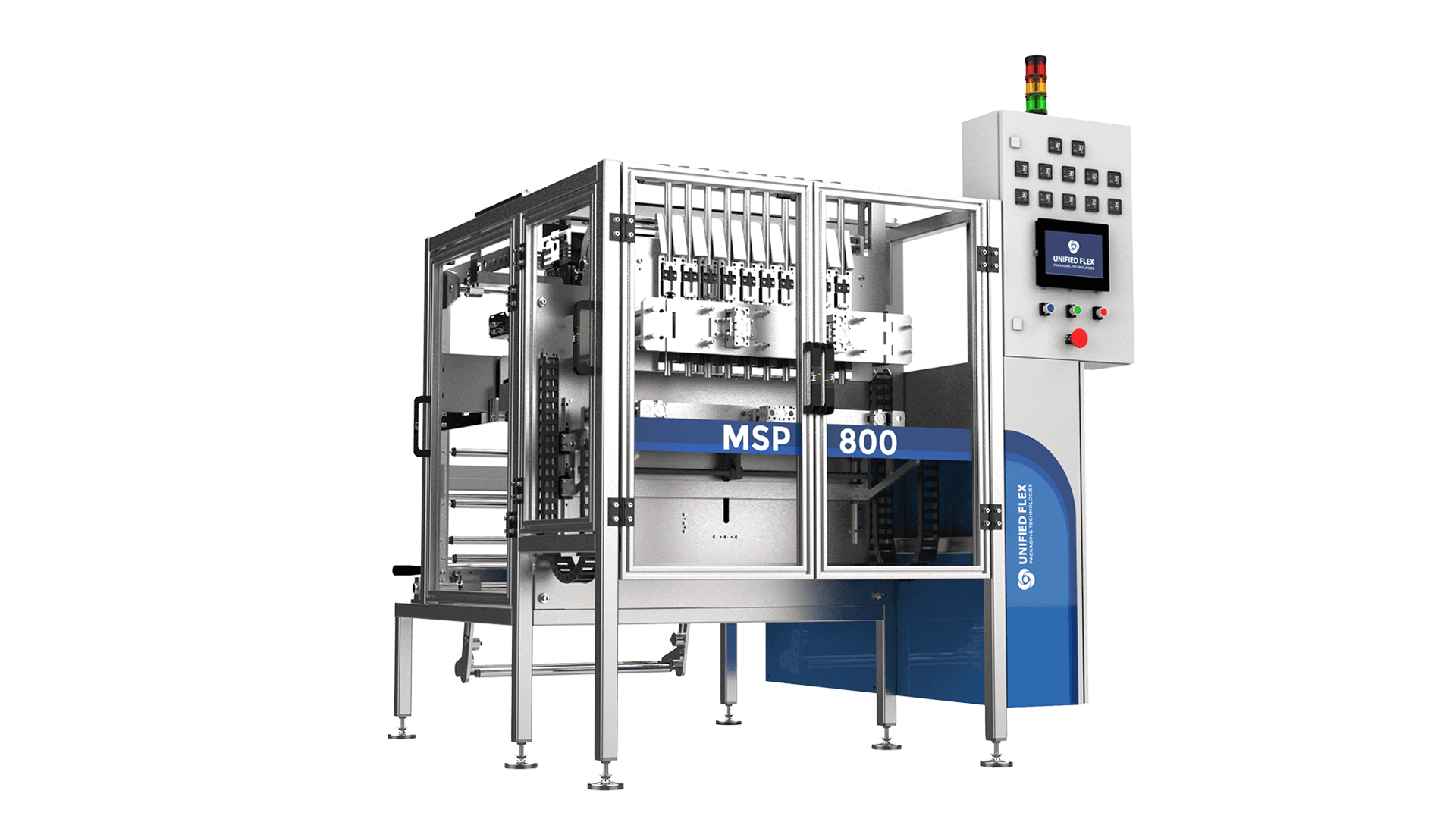
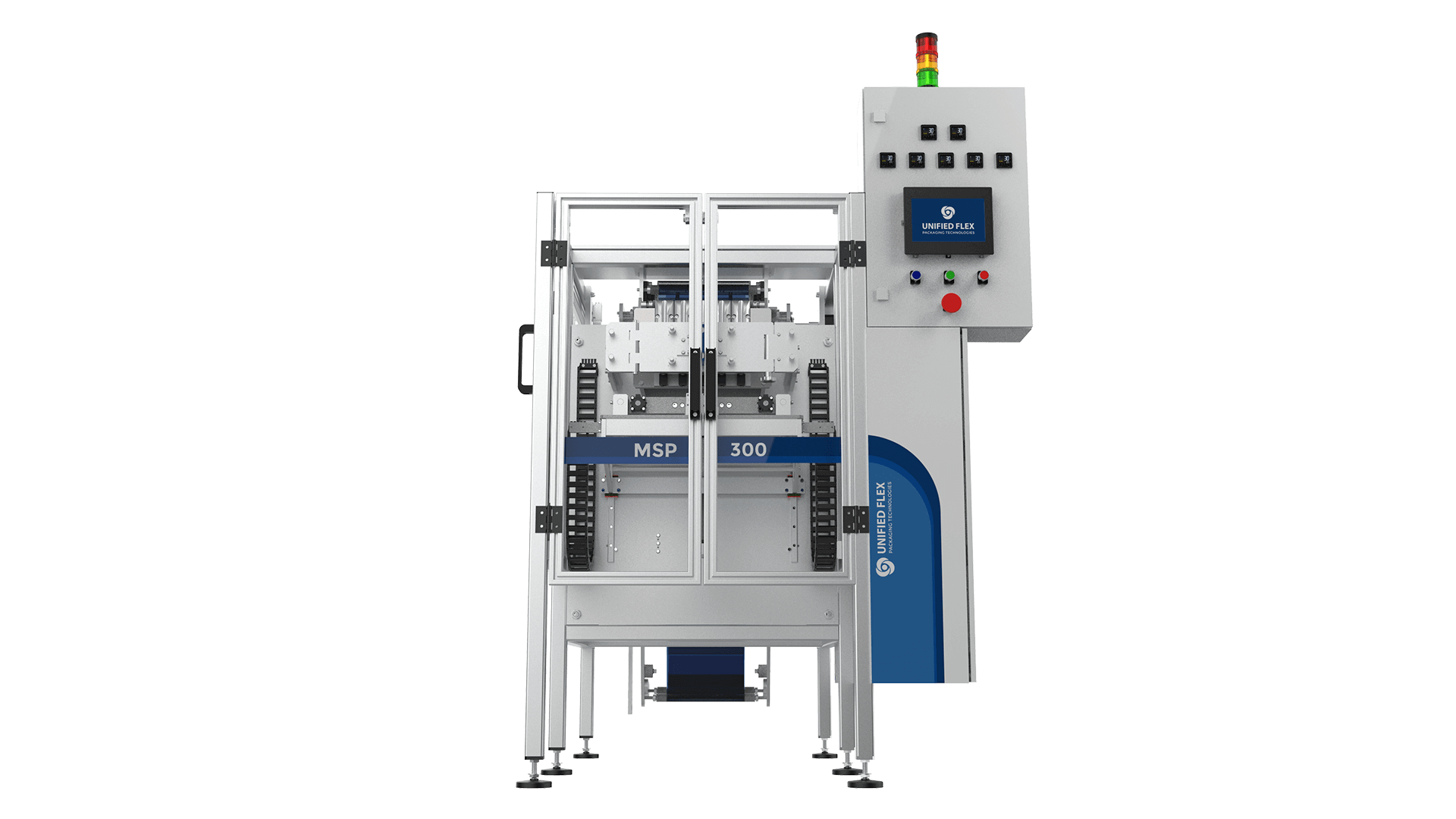
At Unified Flex, we design Ashwagandha packaging systems that remove that risk. The multilane stick pack MSP 440 machine delivers controlled, repeatable nutraceutical powder packaging, so every stick looks, feels, and performs exactly the same.
Ashwagandha powder seems simple until you try to scale it.
It behaves differently across blends, reacts to humidity, and doesn’t always flow uniformly. Add flavor variations, multiple SKUs, and high production demand, and inconsistency becomes inevitable without the right system.
Most nutraceutical powder packaging setups aren’t built for that level of control. They compensate instead of stabilizing.
The result?
The MSP 440 was built to eliminate those variables, not manage them.
The MSP 440 Ashwagandha packaging system uses a controlled multilane form-fill-seal process that keeps powder movement stable and dosing precise. Each stick pack is formed, filled, and sealed in a synchronized cycle, minimizing powder loss, reducing exposure, and maintaining uniformity across every unit.
Applications include:
In a market where products look similar, execution is what separates brands.
The MSP 440 is built for brands that are past experimentation and into scale. It delivers high-speed nutraceutical powder packaging without sacrificing accuracy, cleanliness, or control.
Each system is engineered around your powder’s behavior, not a generic configuration. Before installation, we validate performance with your product to ensure dosing accuracy and stable flow.
After installation, Unified Flex supports your operation with responsive service, parts availability, and technical guidance, so your line stays running when demand increases.
This is packaging you can rely on when volumes grow.
Up to 400 stick packs per minute*
Available in a 5–9 lane configuration, supporting higher output through simultaneous lane operation.
Controlled film movement + repeatable sealing
Servo-controlled film pulling, a pneumatic horizontal seal mechanism, and digital temperature controllers support consistent indexing and repeatable sealing conditions during production.
Wide stick pack size range for flexible applications
Supports stick pack widths from 18 mm to 38 mm and lengths from 50 mm to 200 mm, allowing flexibility across different product types and packaging requirements.
Off-the-shelf non-proprietary parts
Built with non-proprietary components to support routine service and part replacement without specialized proprietary systems.
Today’s supplement buyers expect more than functionality — they expect responsibility.
The MSP 440 supports efficient film usage and recyclable materials, helping brands reduce waste while maintaining packaging integrity. Precise dosing also minimizes product loss, an often overlooked sustainability factor in nutraceutical powder packaging.
Less waste. More control.
A system that aligns with how modern brands operate.
Our packaging machines are designed for easy upkeep with routine cleaning and lubrication. With proper care, they are built to perform reliably over time. Â
Yes. FlexEdge is Unified Flex’s vendor-exclusive packaging equipment financing program for qualified U.S.-based end-user manufacturers. It’s designed to help you move quickly, secure the automation you need, and pay on terms that fit your operation. FlexEdge can cover the full project scope, including equipment, freight, installation, and training, subject to credit approval. Schedule a consultation now.
Ashwagandha powder is a fine, cohesive material that reacts to airflow, vibration, and handling conditions. Small shifts in bulk density or aeration can affect how the powder feeds into the dosing system, leading to variation in fill weight across runs.
Because these changes are not always visible during short trials, inconsistency often appears during extended production, restarts, or batch changes rather than at startup.
Understanding how the powder behaves under real operating conditions, not just ideal test scenarios, helps reduce variability and improve repeatability.
Have questions about your product behavior? Speak with a Packaging Expert.
Seal failures typically occur when fine powder particles migrate into the sealing area, interfering with bond formation. Even minor contamination can weaken seals, particularly when operating within a narrow sealing window or when film behavior is inconsistent.
Entrained air and product movement during filling can further disrupt seal formation, especially in fine powder applications where product behavior is less predictable.
Seal reliability also depends on maintaining stable sealing conditions. Variations in temperature, pressure, and dwell time—or inconsistencies in film properties, can increase sensitivity and reduce repeatability over time.
In powder applications, maintaining controlled sealing conditions and managing product behavior near the seal zone are often more critical than simply increasing sealing temperature.
Contact us to review your current sealing challenges.
Sealing consistency depends on maintaining stable, repeatable conditions throughout production. Systems that use controlled sealing pressure and digitally regulated temperature help reduce variability during the sealing event, especially in fine powder applications.
Consistent film movement and accurate registration also play a role. Features such as servo-controlled film pulling and print mark registration support more predictable film handling, which contributes to more consistent sealing.
In powder applications, maintaining controlled and repeatable sealing conditions is critical to achieving reliable package integrity over time.
Have questions about improving seal consistency? Speak with a Packaging Expert.
Consistent performance in ashwagandha powder packaging depends on stable machine control throughout the production run. Systems that use servo-controlled film pulling and PLC-controlled functionality help maintain synchronized operation, while digital temperature controllers and controlled sealing mechanisms support repeatable sealing conditions.
When film movement and sealing conditions remain consistent, the process is better positioned to deliver stable output over time.
Have questions about improving production consistency? Contact us today.