
Sauces and Condiment Packaging Machine: The Real Reasons Sachet Lines Get Messy (and How to Keep Yours Boring, in a Good Way)

In sauces and condiment sachet production, small variation becomes expensive fast. This blog outlines the most common stability failure points and what to look for in a sauces and condiment packaging machine designed for repeatable sealing and consistent throughput.
Sustainable Condiments and Sauce Packaging: Choosing Film That Cuts Waste Without Turning the Line Into a Science Project
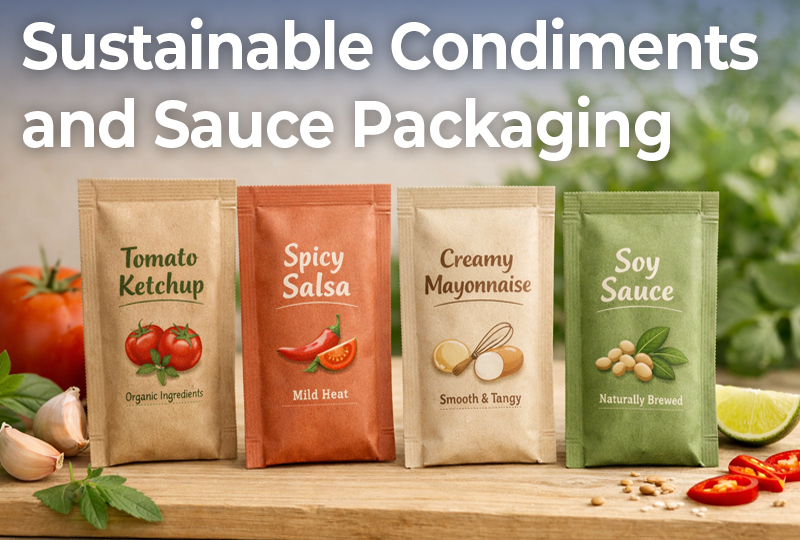
Sustainable condiment and sauce packaging only works when film performance holds up in real production. This blog explains how to choose rollstock that runs consistently on VFFS equipment, reduces waste through controlled COF, thickness and sealing performance, and cuts preventable print scrap before film ever reaches the line.
Liquid Detergent Packaging: Why Spouted Pouches Are a High-Performance Choice
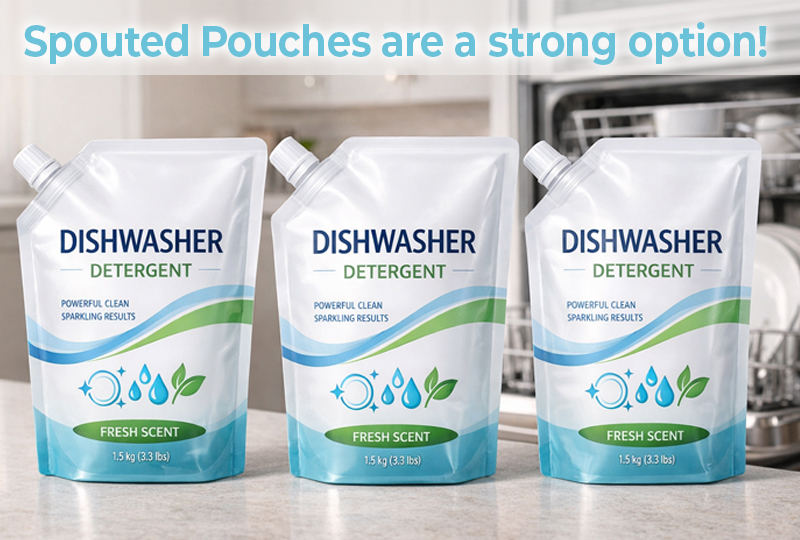
Detergent packaging doesn’t get tested at the line; it gets tested at the sink, in storage, and in transit. This blog explains why spouted pouches are a high-performance choice and what needs to be specified to keep them stable at scale. Read on to see what matters most.
Liquid Detergent Packaging Machine: The Real Reasons Spouted Pouch Lines Get Messy (and How to Keep Yours Boring, in a Good Way)

If your spouted pouch line is messy, it’s usually a repeatability problem, not a pouch problem. This post maps the most common failure points in a Liquid Detergent Packaging Machine and what keeps the process steady across long runs and changeovers. Read more.
Sustainable Detergent Packaging: Choosing Film That Cuts Waste and Runs Clean

Sustainable detergent packaging isn’t measured by material claims; it’s measured by how the film behaves on the production floor. When film performance drifts, sustainability shows up as longer startups, higher scrap, more stops, and downstream cleanup. This blog takes a film-first approach to liquid detergent packaging, breaking down where waste really comes from and what needs to be controlled so packaging runs predictably, seals reliably, and holds up through real distribution conditions. Read the blog.
Spice Packaging Machine for Bulk Packaging: From Failure Points to Stable Output
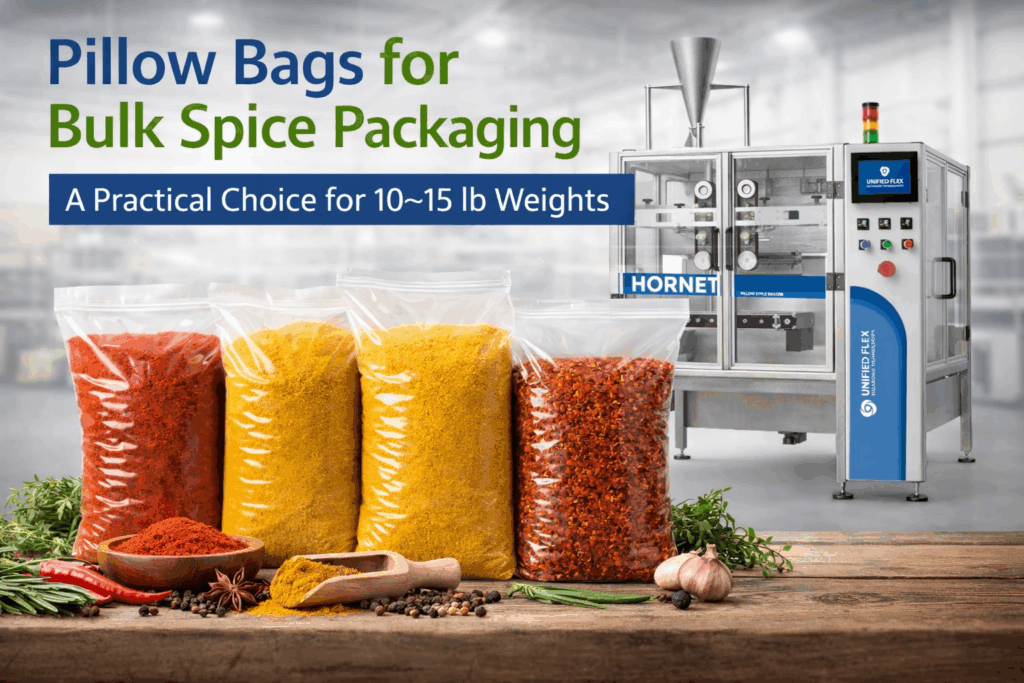
Bulk spice packaging doesn’t fail at the discharge; it fails in handling, case packing, and transit. Here’s what breaks first at 10–15 lb and what to prioritize in a VFFS configuration to maintain consistent sealing and bag presentation.
Sustainable Flexible Packaging for Bulk Spice: Using Film to Cut Waste Without Slowing the Line
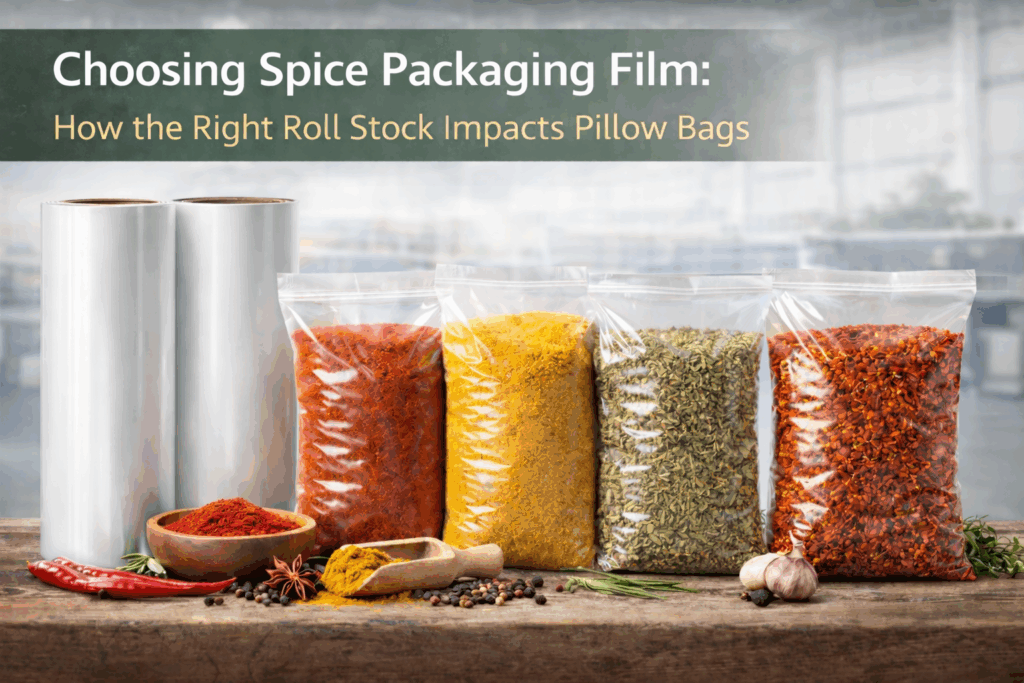
Sustainable flexible packaging for 10–15 lb bulk spice is won or lost at the film level. This post shows where waste quietly builds, scrap, overbuilt barriers, print rejects, and thin films that fail, and how a film-first, test-backed approach cuts waste without slowing production.
Spice Packaging for 10–15 lb Bags: Why Pillow Bags Are a High-Performance Choice
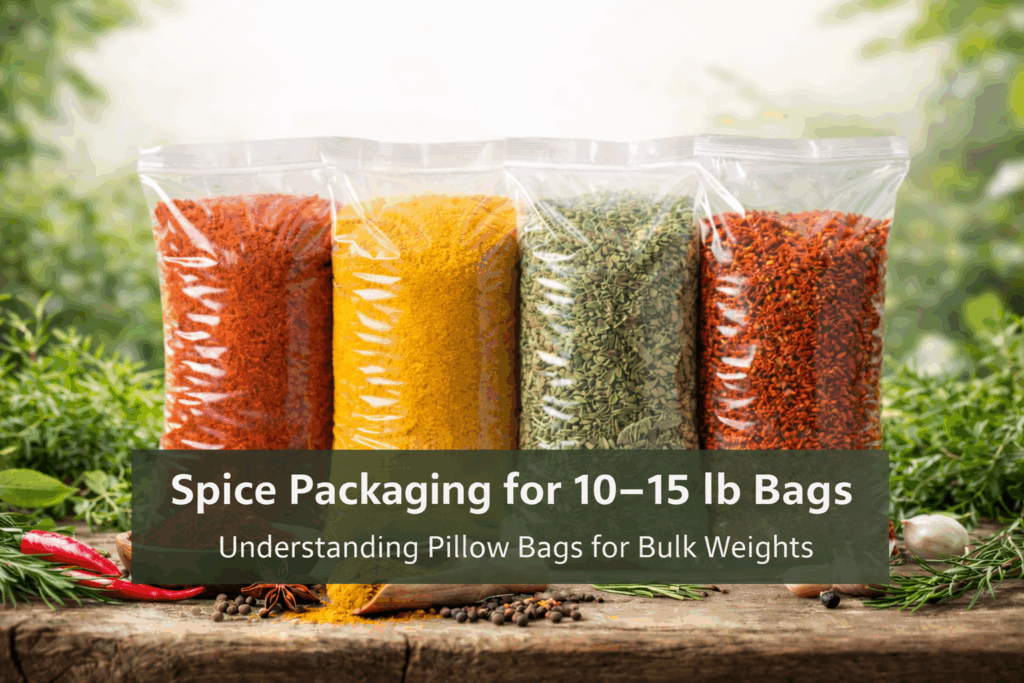
Spice packaging at 10–15 lb is a performance game; dust, moisture, and handling stress expose weak specs fast. This post explains why pillow bags and pillow bags with side gussets are a strong bulk format, and what to focus on in sizing, barrier, sealing, and distribution durability to keep cases clean and product free-flowing.
The Quiet Evolution of Beans, Rice, and Pasta Packaging
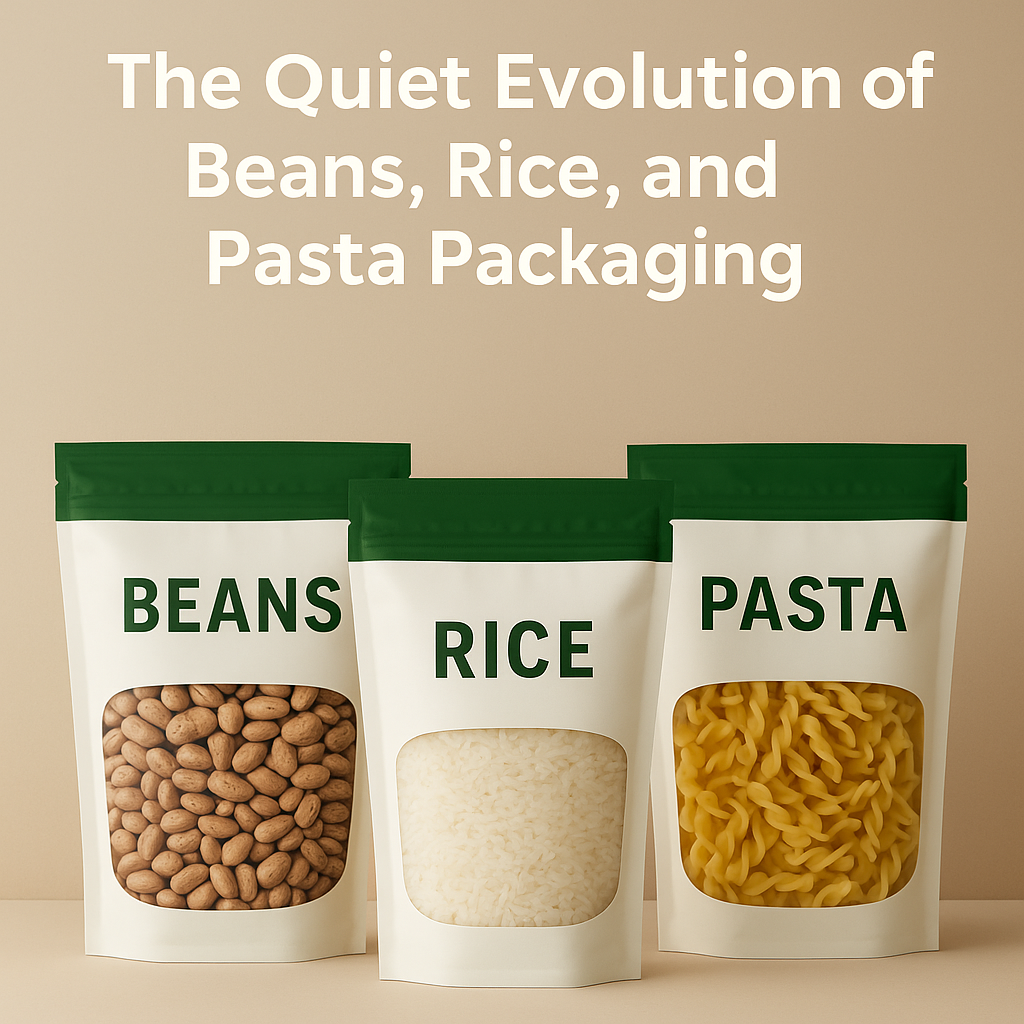
Packaging dry staples like beans, rice, and pasta demands precision. This article explores how balanced film engineering, proven process control, and machine integration deliver measurable reliability, from film performance to consistent output, in modern flexible packaging systems.
How Rice, Beans, and Pasta Packaging Machines Are Powering a New Era for Dry Goods
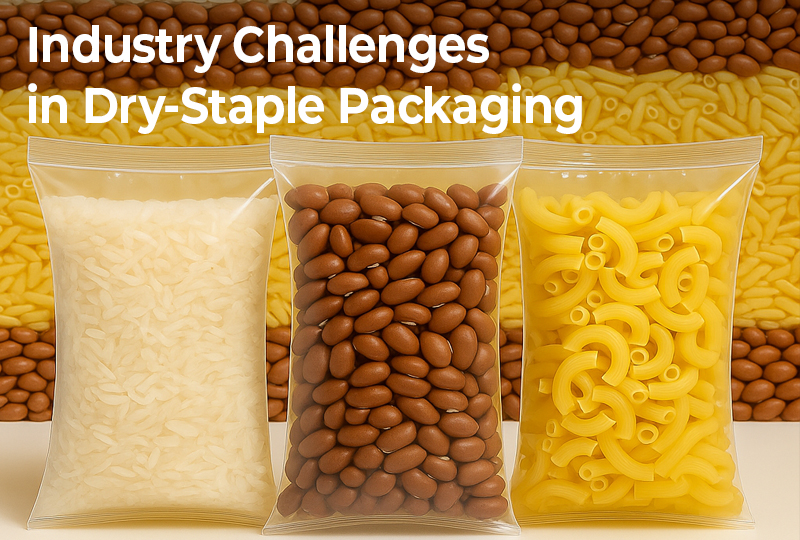
Packaging pasta, beans, and rice demands accuracy and adaptability. This article explores how modern pasta packaging machines combine servo precision, film control, and modular design to deliver consistent seals, faster changeovers, and scalable performance across every production scale, from compact automation to high-speed industrial systems.