
From Inconsistent Fills to Process Stability: Phibro’s Medicated Feed Packaging Story
Market Context
The animal health and medicated feed additive market continues to grow as producers demand higher performance, tighter quality control, and regulatory compliance. With that growth comes increased complexity, particularly when handling high-value, pharmaceutical-grade powders.
Unlike free-flowing granular materials, fine medicated additives are often cohesive, compressible, and prone to dusting. They require controlled handling, precise dosing, reliable sealing, and safe dust management. For manufacturers, packaging performance directly impacts yield, compliance, and profitability.
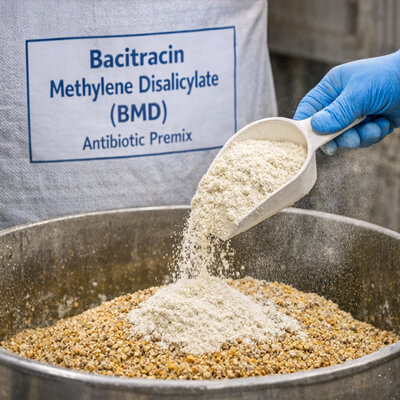
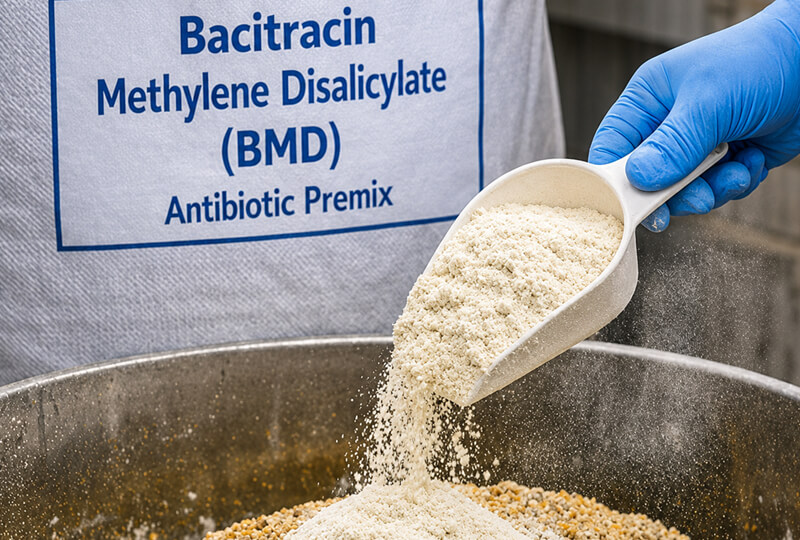
Phibro Animal Health encountered these challenges while packaging Bacitracin Methylene Disalicylate (BMD), a soluble feed additive requiring tight weight control and clean operation.
The Challenge
BMD is a fine, pharmaceutical-grade powder with visible airborne fines during handling. It exhibits cohesive behavior, traps air, and does not flow like a typical granular product. Density testing confirmed high compressibility and poor natural flow characteristics, conditions that can destabilize auger dosing and increase dust generation. Phibro’s legacy packaging system was struggling. Fill weights fluctuated due to inconsistent head pressure and outdated dosing mechanisms. Vertical seal integrity was unreliable because the forming system did not evenly distribute sealing forces. Mechanical hot-stamp coding occasionally punctured the 3.75 mil foil laminate. As a result, operators were manually inspecting every bag before secondary packaging. Beyond performance issues, the product itself demanded careful containment. BMD carries combustible dust potential when dispersed in air, and the packaging room operates under controlled-access conditions with strict spatial limitations. Phibro needed more than a new machine; they needed a stabilized process.
How Unified Flex Stabilized the Packaging Process
Unified Flex approached the project as a full-system engineering exercise rather than a simple equipment replacement. The VFFS Hornet platform was selected as the foundation, but the solution was built around product behavior. Every major subsystem, transfer, dosing, forming, sealing, and
dust control, was evaluated against the physical characteristics of the powder and the realities of the installation environment. The objective was clear: eliminate root causes, not symptoms.
The Unified Flex Solution
The upstream transfer screw conveyor was engineered to maintain stable product delivery while improving cleanability and product reclaim. Given the high value of BMD, the conveyor was designed with sectional access and clean-out capability along its length to allow recovery of residual material.
Inside the auger filler, dosing geometry was intentionally engineered to manage compressibility and entrained air. Auger dimensions, pitch configuration, and clearances were optimized to stabilize head pressure and ensure consistent fills. This approach enabled reliable dosing at 100 g and 116 g within a ±2 g tolerance at 20 bags per minute.
Seal integrity was addressed through mechanical redesign. A full-body forming tube evenly reacted vertical sealing forces, eliminating the non-uniform pressure distribution that caused leakage in the previous system. Spring-loaded top sealing jaws were incorporated to evacuate excess air immediately before final seal, reducing headspace and improving package density without requiring vacuum packaging.
To eliminate film damage, mechanical hot-stamp coding was replaced with non-impact printing technology, removing puncture risk entirely.
Dust control and safety were treated as primary design drivers. The Hornet system was configured to support containment, sealed bearings, and Class 2 Division 2 compliance, ensuring safe operation in a compact 16 ft × 16 ft controlled packaging room.
The Results
By engineering the system around the product’s physical behavior, Unified Flex delivered stable, repeatable performance.
Fill weights achieved consistent accuracy within specification. Vertical seal integrity improved through uniform force distribution. Package headspace was reduced, enabling more consistent carton and pail pack-out without manual compression. Film puncture events were eliminated.
Most importantly, the need for routine 100% manual inspection was removed. Process reliability replaced reactive quality control.
Conclusion
Cohesive, dusty, high-value powders require engineered packaging systems, not standard configurations.
Through the Hornet platform, Unified Flex delivered a solution built around dosing precision, dust containment, seal integrity, and cleanability. The result was not just improved packaging performance, but long-term operational stability for Phibro Animal Health.
For manufacturers in animal health, nutraceuticals, and pharmaceutical-grade powder markets, this project demonstrates what is possible when packaging is engineered around product behavior from the start.