
Curd & Shredded Cheese Packaging: Choosing the Right Bag Format for Distribution Performance
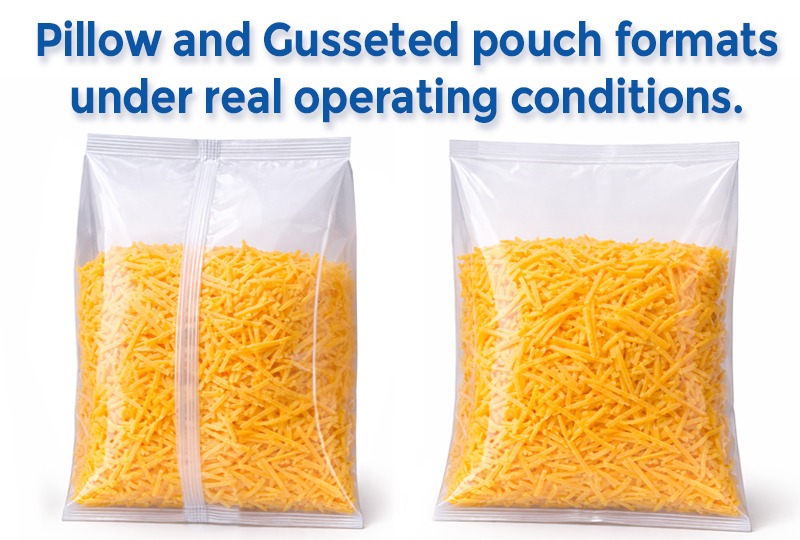
Curd and shredded cheese packaging respond differently to stacking and distribution stress. This article explains how pillow bags and gusseted formats manage compression, load distribution, and geometry retention under real operating conditions.
Cheese Packaging Equipment: Designing VFFS Lines for Stability in Shredded Cheese and Curd Production
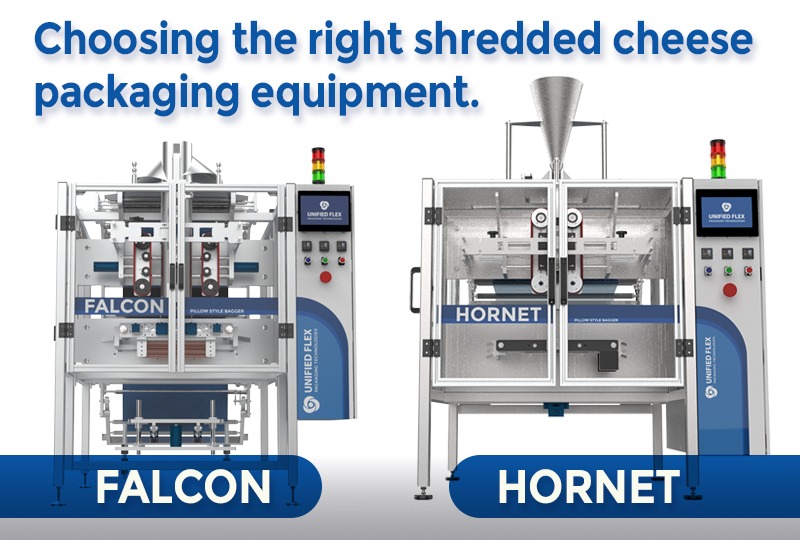
Cheese packaging equipment is tested after startup, during long shifts, roll changes, and repeated changeovers. This blog explains why shredded cheese and curds expose drift in forming alignment, film indexing, and horizontal seal engagement, and how a repeatable VFFS architecture preserves pouch geometry and seal integrity under sustained production.
Sustainable Cheese Packaging: Choosing Film That Cuts Waste Without Making the Line Fragile
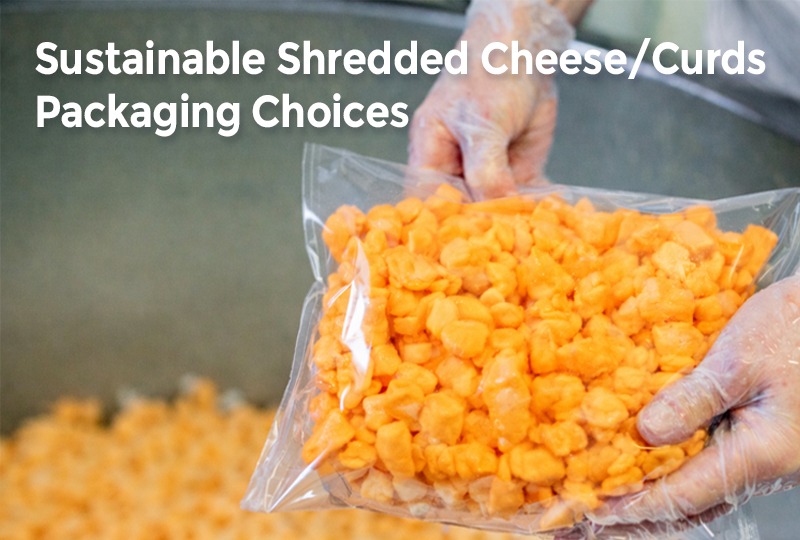
Sustainable cheese packaging only works when film performance holds up in real production. This blog explains how to choose rollstock that runs consistently on VFFS equipment, reduces waste through controlled COF, thickness, and sealing performance, and cuts preventable print scrap before film ever reaches the line, without compromising shelf life in cold-chain distribution.
Powder Packaging Machines for Animal Feed Additives: When Equipment Design Controls, or Reintroduces, Risk

Fine, dusty products like Bacitracin Methylene Disalicylate quickly expose weaknesses in machine design. A Powder Packaging Machine for Animal Feed Additives must maintain forming stability, repeatable motion, and consistent sealing as normal variation accumulates. This engineering review explains where failures begin and what to look for in equipment built for medicated feed additive applications.
Packaging Film for Medicated Feed Additives: Engineering a Laminate That Preserves Seal Integrity in a Dusty Powder Process

When medicated feed additives start leaking or drifting mid-run, the problem often begins with film. This article examines how laminate design influences seal tolerance, dimensional stability, and restart performance in dusty powder applications.
Animal Feed Additives in Powder Form: Where Packaging Formats Succeed and Where They Struggle
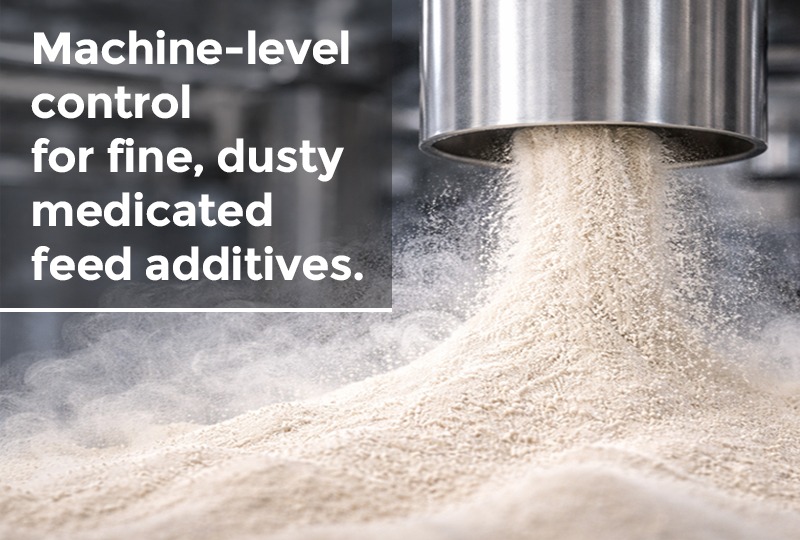
Fine, pharmaceutical-grade feed additives behave very differently from bulk feed ingredients. This article reviews common packaging failure modes and explains how packaging format selection influences dust control, seal integrity, and long-term reliability in medicated feed additive applications.
Pet Food Packaging in Bulk Applications: Where Formats Succeed, and Where They Struggle

Bulk pet food packaging introduces challenges that don’t appear in lighter applications. This article examines common failure modes, instability, opening inconsistency, and seal variability and explains how pouch format design influences performance on the plant floor.
Bulk Pet Food Packaging Machines Fail Quietly — Until They Don’t
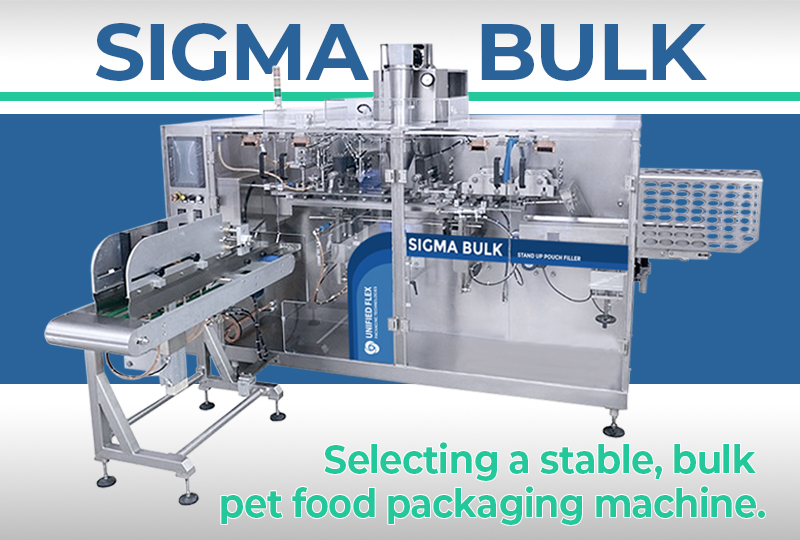
Bulk pet food packaging machines are tested once product mass enters the pouch. This article examines where lines lose stability and how machine design supports consistent opening, filling, and sealing across real operating conditions.
Sustainable Pet Food Packaging: Choosing Film That Cuts Waste Without Making the Line Fragile
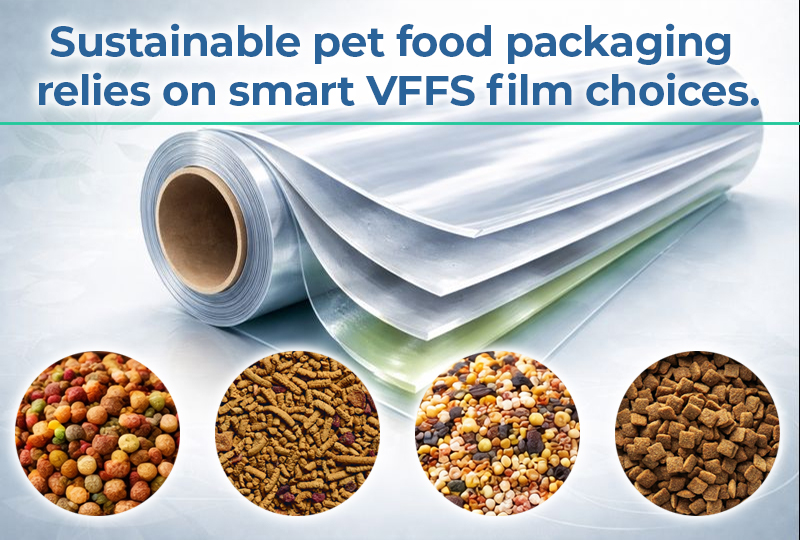
Sustainable pet food packaging only works when film performance holds up in real production. This blog explains how to choose rollstock that runs consistently on VFFS equipment, reduces waste through controlled COF, thickness and sealing performance, and cuts preventable print scrap before film ever reaches the line.
Sauces and Condiments Packaging: Why Sachets Are a High-Performance Single-Serve Format
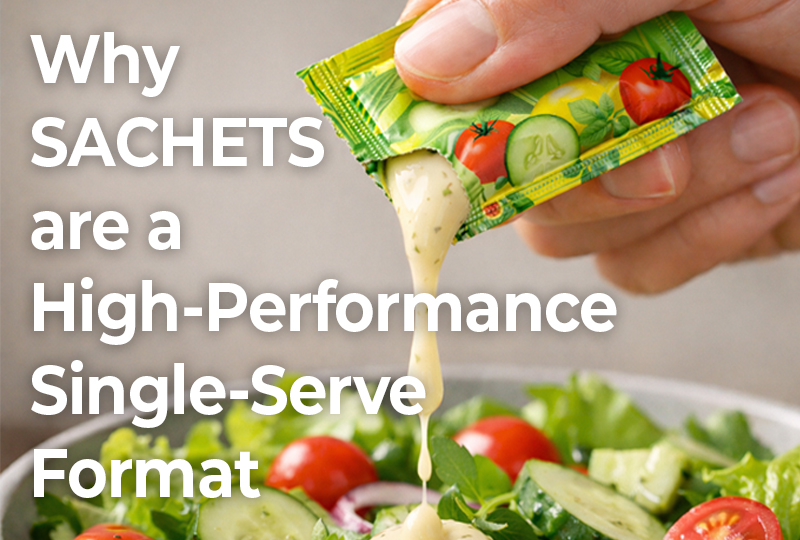
Sachets continue to play a critical role in sauces and condiments packaging because they’re designed for real-world use. This blog explores why the format works, what defines a well-designed sachet, and how brands can avoid common specification mistakes.