
Sustainable Frozen Food Packaging: Turning Efficiency into Environmental Performance
Sustainability has become the central conversation in frozen food packaging. Retailers are demanding measurable reductions in packaging waste, regulators are introducing stricter environmental standards, and consumers are rewarding brands that align with their values. For frozen food producers, these pressures come on top of the daily challenge of maintaining uptime, hygiene, and product quality in cold, high-moisture environments.
Pillow bags and other flexible formats have emerged as the clear path forward; they use less plastic, store more efficiently, and keep product integrity through freezing and transport. But the transition to sustainable packaging isn’t as simple as switching materials. It depends on how well packaging equipment performs under real plant conditions: during washdowns, changeovers, and continuous production.
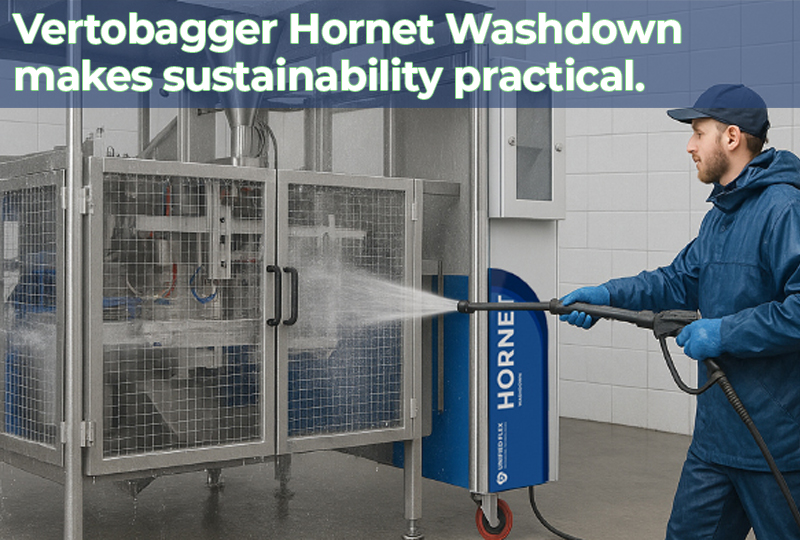
That’s where the Vertobagger Hornet Washdown makes sustainability practical
Why Sustainable Frozen Food Packaging Matters
Rising Environmental Accountability
Across North America, extended producer responsibility (EPR) frameworks are expanding. Provinces and states are adopting rules that shift the cost of packaging waste back to manufacturers. Non-compliance means not only financial penalties but also restricted access to key retail channels that are tightening sustainability requirements.
Retailer and Consumer Expectations
Major grocery chains now evaluate suppliers based on sustainability metrics, from recyclability and package-to-product ratios to energy usage in production. For consumers, a lighter, recyclable pillow bag signals efficiency and responsibility. A rigid, oversized alternative does not. In frozen aisles, sustainability and shelf appeal now go hand in hand.
Operational Pressure from Within
Sustainability isn’t just an environmental goal; it’s an operational one. Energy use, water consumption, and film waste directly affect the cost per unit. Every inefficiency on the packaging line has both economic and ecological consequences. Sustainable frozen food packaging succeeds only when it reduces waste across both fronts.
The Challenges of Sustainable Frozen Food Packaging
The frozen food environment magnifies small inefficiencies into major sustainability costs. Real progress depends on solving the problems that happen where the product meets the package.
Condensation and Seal Integrity
When room-temperature products are sealed and then frozen, the air trapped inside the package cools rapidly. As it does, moisture can condense on the inner film surface or product, and pressure changes may stress the seal. Weak or marginal seals can open under these conditions, leading to freezer burn, product loss, and energy waste in cold storage. Eliminating trapped air and ensuring strong, consistent seals before freezing are key to maintaining package integrity and sustainability.
Frequent Washdowns and Resource Use
Frozen food plants require constant sanitation to meet food safety standards. Every cleaning cycle consumes significant water, chemicals, and power, especially when equipment isn’t built for washdown efficiency. Machines that need disassembly or long drying times extend downtime and increase environmental impact.
Material Compatibility
Recyclable films often have narrower sealing windows and different mechanical properties than traditional laminates. Without precise temperature and pressure control, leaks and rework increase. Sustainability is undermined when “green” materials drive higher reject rates.
Downtime and Energy Waste
Each unplanned stop wastes more than time; it wastes energy and labor. Power continues running, refrigeration systems keep operating, and crews wait while the line resets. Sustainability in frozen packaging depends on keeping lines stable and predictable.
How the Hornet Washdown Makes Sustainability Practical
The Vertobagger Hornet Washdown was engineered for exactly these conditions: wet environments, frequent sanitation, and demanding seal performance. Every design decision reflects both operational reliability and environmental responsibility.
Efficient, Verified Washdowns
Built from stainless steel with IP69K-rated components, the Hornet Washdown withstands full high-pressure cleaning without corrosion or water intrusion. Its open-frame design, continuous welds, and sloped surfaces allow complete drainage, cutting cleaning time and validation steps. Shorter sanitation cycles mean less water, fewer chemicals, and more production hours.
Precise Sealing on Sustainable Films
The Vertobagger Hornet Washdown uses servo-controlled horizontal sealing jaws and digital temperature controls to help maintain consistent sealing conditions. This level of control supports the use of modern, thinner film structures and helps reduce variation that can lead to weak seals. By improving sealing consistency and reducing rework or rejected packages, producers can lower material waste and improve overall line efficiency.
Reduced Film and Product Waste
Accurate web control and consistent seal strength minimize film scrap and rework. For IQF vegetables, diced meats, or fruit blends, that means less wasted product and packaging, conserving both raw materials and energy used in production.
Energy and Throughput Efficiency
Servo motion control systems provide smooth and consistent movement throughout each cycle. This level of control supports stable throughput during extended production runs and helps reduce unnecessary mechanical strain or idle time. When a line runs more efficiently, with fewer interruptions and restarts, it naturally uses less energy and produces less waste.
Adaptable for Sustainable Formats
The Hornet Washdown handles pillow bags and pillow bags with side gussets, the most material-efficient formats for frozen products. These flexible packages use significantly less plastic than rigid alternatives and stack compactly, improving cold-chain storage and reducing transportation energy.
Operational Sustainability in Action
In frozen food operations, sustainability only matters if it delivers results where it counts — on the plant floor. The Vertobagger Hornet Washdown helps turn sustainability goals into daily performance gains.
- Shorter sanitation cycles mean fewer gallons of water and cleaning solution used per shift.
- Lower reject rates mean less product and film wasted.
- Compact, flexible pillow bags reduce shipping weight and maximize cold storage efficiency.
- Consistent uptime minimizes electricity and labor lost to restarts.
Each of these efficiencies compounds over time, translating operational precision into measurable environmental performance.
Conclusion: Sustainable Frozen Food Packaging That Works
The frozen food industry’s sustainability goals are no longer optional. Retailers, regulators, and consumers expect proof, not promises. Achieving that proof depends on more than materials; it depends on equipment designed for the realities of cold, wet, high-output environments.
The Vertobagger Hornet Washdown delivers that foundation. With hygienic construction, precise sealing, and efficient washdowns, it helps manufacturers meet sustainability targets without sacrificing performance.
In a business where every liter of water, every kilowatt, and every rejected bag counts, the Hornet Washdown turns sustainable frozen food packaging from an aspiration into an advantage.