Pet food Packaging
Blogs

Powder Packaging Machines for Animal Feed Additives: When Equipment Design Controls, or Reintroduces, Risk 

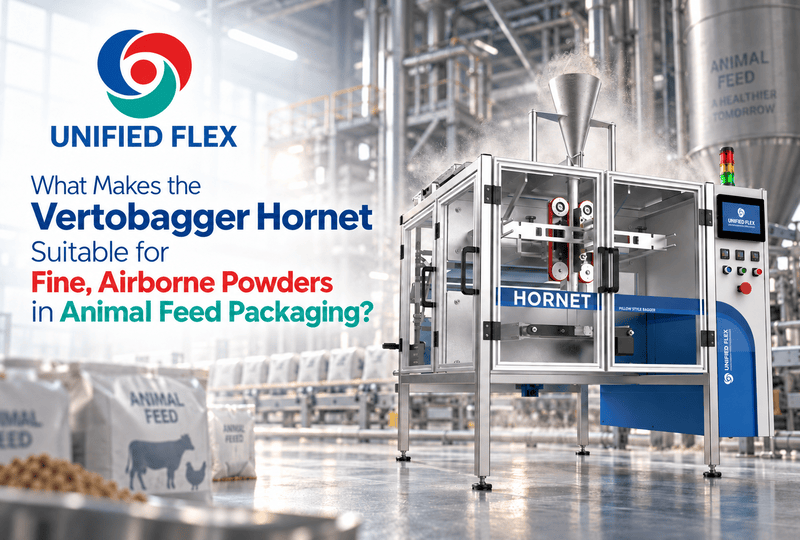
Vertobagger Hornet vertical form fill seal machine for packaging animal feed additives with Bacitracin Methylene Disalicylate bag and product sample.
Fine, dusty products like Bacitracin Methylene Disalicylate quickly expose weaknesses in machine design. A Powder Packaging Machine for Animal Feed Additives must maintain forming stability, repeatable motion, and consistent sealing as normal variation accumulates. This engineering review explains where failures begin and what to look for in equipment built for medicated feed additive applications.

Packaging Film for Medicated Feed Additives: Engineering a Laminate That Preserves Seal Integrity in a Dusty Powder Process 

Flexible multilayer packaging film displayed over fine powder used for Bacitracin Methylene Disalicylate feed additive packaging.
When medicated feed additives start leaking or drifting mid-run, the problem often begins with film. This article examines how laminate design influences seal tolerance, dimensional stability, and restart performance in dusty powder applications.

Animal Feed Additives in Powder Form: Where Packaging Formats Succeed and Where They Struggle 

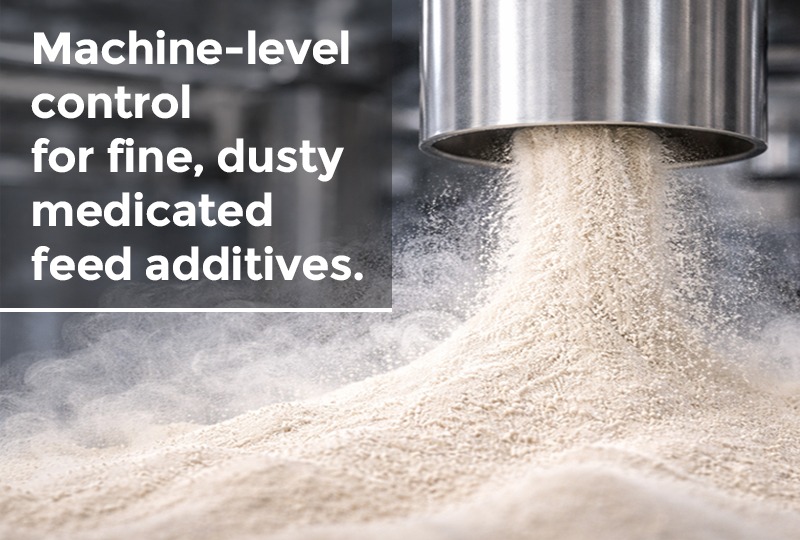
Fine, dusty medicated feed additive powder flowing from a stainless steel hopper with visible dust control during automated packaging.
Fine, pharmaceutical-grade feed additives behave very differently from bulk feed ingredients. This article reviews common packaging failure modes and explains how packaging format selection influences dust control, seal integrity, and long-term reliability in medicated feed additive applications.

Pet Food Packaging in Bulk Applications: Where Formats Succeed, and Where They Struggle 

Grain-free dog food bags displayed in modern pet fodd packaging, with a dog eating from a bowl in the background.
Bulk pet food packaging introduces challenges that don’t appear in lighter applications. This article examines common failure modes, instability, opening inconsistency, and seal variability and explains how pouch format design influences performance on the plant floor.

Bulk Pet Food Packaging Machines Fail Quietly — Until They Don’t 

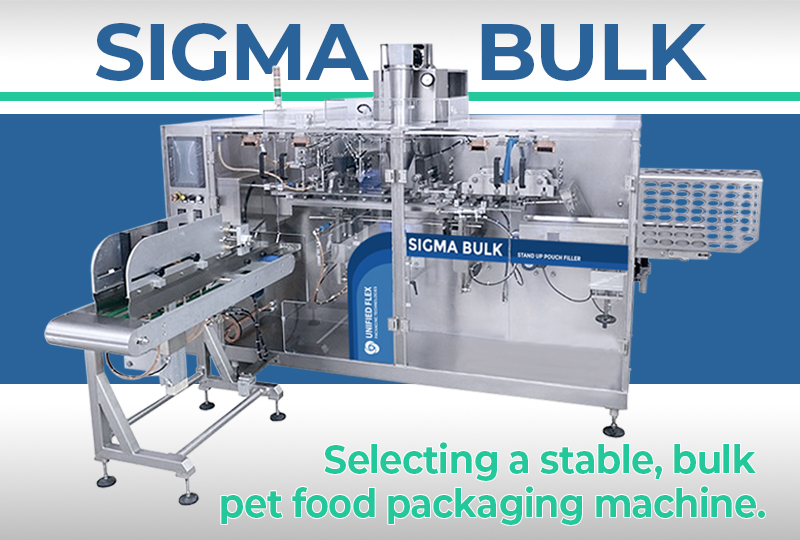
Sigma Bulk petfood packaging machine shown with integrated conveyor and automated pouch filling system.
Bulk pet food packaging machines are tested once product mass enters the pouch. This article examines where lines lose stability and how machine design supports consistent opening, filling, and sealing across real operating conditions.

Sustainable Pet Food Packaging: Choosing Film That Cuts Waste Without Making the Line Fragile 

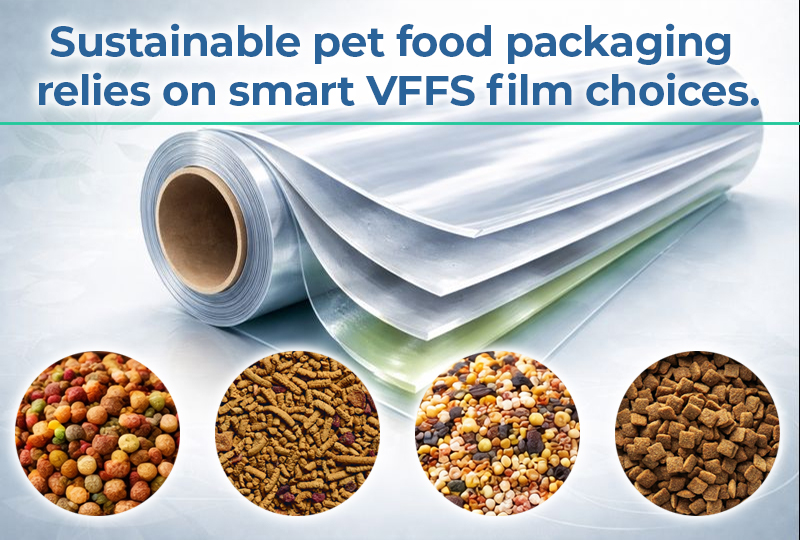
Rolls of flexible packaging film used for sustainable petfood packaging, shown alongside different types of dry pet food.
Sustainable pet food packaging only works when film performance holds up in real production. This blog explains how to choose rollstock that runs consistently on VFFS equipment, reduces waste through controlled COF, thickness and sealing performance, and cuts preventable print scrap before film ever reaches the line.

What Are the Top Industries That Depend on Stand-Up Pouch Machines?

Find out which industries rely on stand up pouch packing machines to improve throughput, reduce waste, and boost shelf appeal.
Learn how advanced stand-up pouch machines solve challenges like inconsistent fills, leaky seals, product contamination, and production bottlenecks, helping businesses scale efficiently without compromising quality. Curious which industries rely on these machines the most and why they’re absolutely mission-critical? Read the full blog to find out.