Drink Mix & Other Powdered Food Products/ Food Packaging
Blogs

Turmeric Powder Packaging: Choosing Film That Supports Stable Production 

Turmeric stick packs on turmeric powder highlighting turmeric powder packaging and film protection
Turmeric powder packaging requires more than selecting a film that works in trials. This blog explains how film properties influence process stability and what to consider for consistent, real-world production.

Choosing the Right Turmeric Packaging Machine: Why the AP-140 Stands Out 

AP-140 turmeric packaging machine for stick pack production with controlled output and flexible operation
Choosing the right turmeric packaging machine is critical for consistent production. This blog explores the challenges of turmeric packaging and how the AP-140 offers a practical, reliable solution for pouch packaging.

Struggling with Turmeric Packaging? Here’s Why Stick Packs Are Taking Over 

Turmeric stick pack pouring powder into a cup, showing convenient turmeric packaging format
As turmeric demand grows, packaging is becoming a key differentiator. This blog explores the challenges of handling turmeric and why stick packs are emerging as a practical, scalable solution.

How Do Multi-Function Pharma Packaging Machines Handle Liquids, Pills, and Powders

How Do Multi-Function Pharma Packaging Machines Handle Liquids, Pills, and Powders-
Multi-function pharma packaging machines manage various forms like liquids, tablets, and powders with accuracy and flexibility. Their adaptable systems support efficient operations while ensuring proper dosing, hygiene, and reliable packaging output.

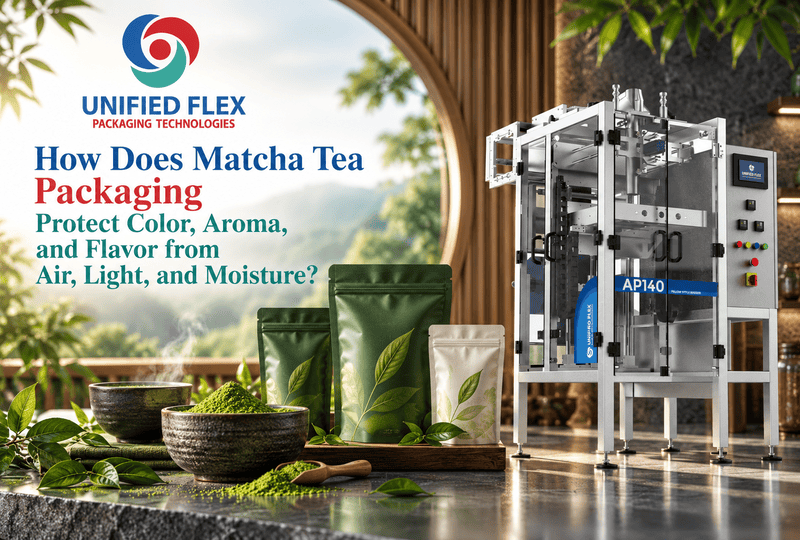
Matcha Packaging Formats: How to Protect Product Integrity Across Every Use 

Different matcha packaging formats including sachets, stick packs, and pouches displayed on matcha powder
Matcha is highly sensitive to oxygen, moisture, and light, making packaging format a critical factor in maintaining product quality. This blog explores how different formats, single-serve, multi-use sachets, and bulk packaging, manage exposure over time, and how those differences affect consistency across the product lifecycle.

Tea Powder Packaging Machines for Matcha: Maintaining Repeatability in Controlled Production 

AP-140 tea powder packaging machine for matcha with automated pouch filling system
Matcha packaging doesn’t fail at startup, it becomes inconsistent over time. This blog breaks down where variability appears, why repeatability becomes the real constraint, and how tea powder packaging machines are evaluated in controlled production environments.

Matcha Tea Packaging: Choosing Film That Maintains Stability Without Creating Fragile Processes 

Hand holding matcha tea sachet packaging with stick packs and pouch in background
Film selection in matcha tea packaging directly impacts process stability. This blog breaks down how material behavior, sealing tolerance, and variability affect consistent production.

Can Powder Filling Machines Handle Multiple Types of Powders Without Waste?

Learn how Unified Flex powder filling machines handle multiple powders efficiently, reducing waste and maximizing production margins.
Can automatic powder filling machines handle fine, dusty, or moisture-sensitive powders without waste? See how precision dosing, sealing, and dust control keep multiple powders consistent across production lines.

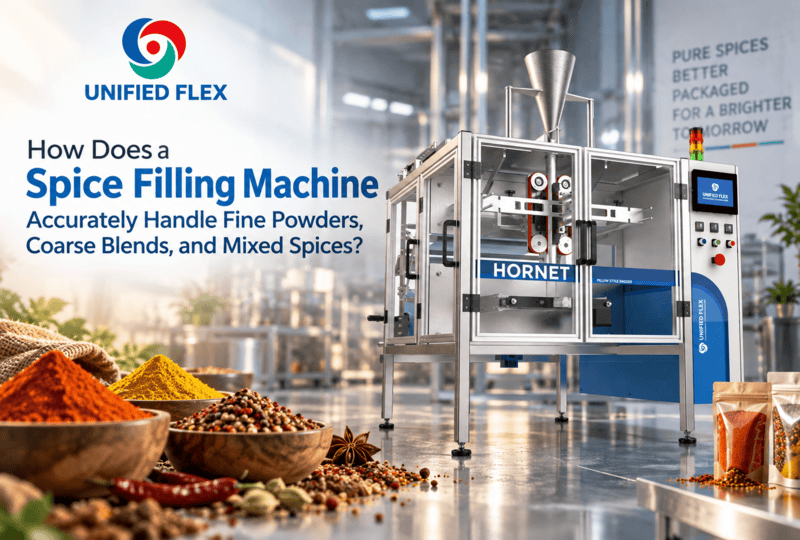
Spice Packaging Machine for Bulk Packaging: From Failure Points to Stable Output 

Spice packaging machine forming 10–15 lb pillow bags filled with bulk spices on a production floor.
Bulk spice packaging doesn’t fail at the discharge; it fails in handling, case packing, and transit. Here’s what breaks first at 10–15 lb and what to prioritize in a VFFS configuration to maintain consistent sealing and bag presentation.

Sustainable Flexible Packaging for Bulk Spice: Using Film to Cut Waste Without Slowing the Line 

Spice packaging film rolls and clear pillow bags filled with bulk spices used in spice packaging applications.
Sustainable flexible packaging for 10–15 lb bulk spice is won or lost at the film level. This post shows where waste quietly builds, scrap, overbuilt barriers, print rejects, and thin films that fail, and how a film-first, test-backed approach cuts waste without slowing production.