
Spice Packaging for 10–15 lb Bags: Why Pillow Bags Are a High-Performance Choice
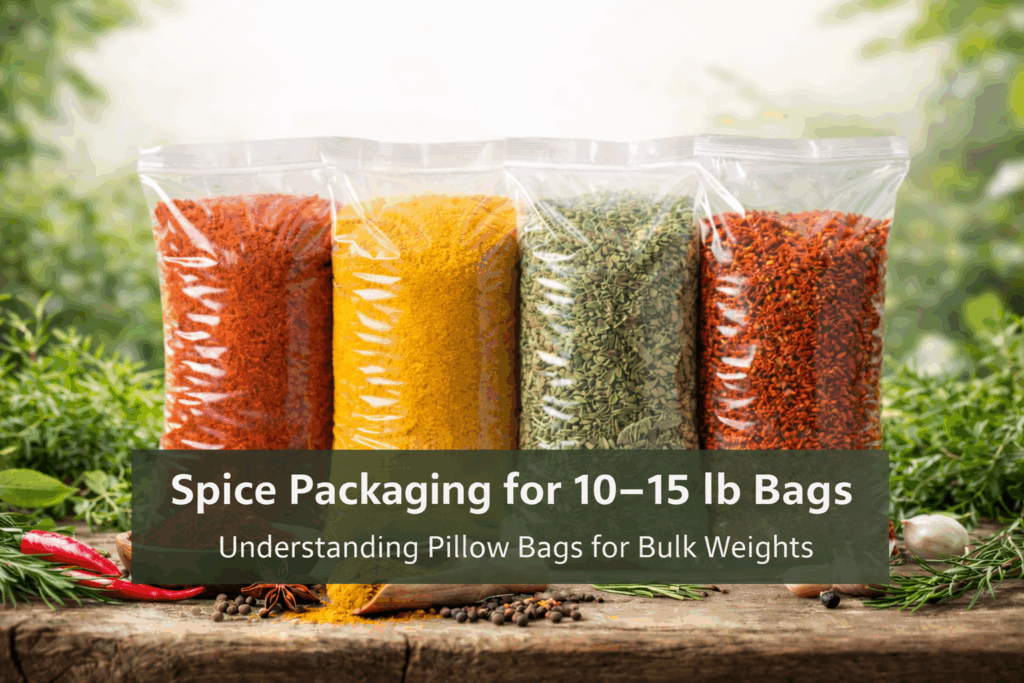
When most people think about spice packaging, they think small: jars, shakers, and consumer-friendly sizes built for the kitchen counter. But in many supply chains, the real volume moves in bulk. Ten-to-fifteen-pound bags are the workhorses behind foodservice, commissaries, co-pack programs, and back-of-house refills, where the packaging doesn’t just represent the brand. It has to perform.
At this weight range, the format needs to do three jobs well. It needs to protect the spice from moisture and environmental exposure, it needs to hold up through case packing and distribution, and it needs to run consistently on the line. That’s exactly where pillow bags, often pillow bag with side gussets, are a strong fit for 10–15 lb spice packaging. They’re efficient, scalable, and designed for reliable handling when specified properly.
What “good” looks like in bulk spice packaging
Bulk spice packs succeed when the customer can store them easily, open them cleanly, and use the product without fighting clumps or dealing with leaks. For distributors and retailers, success looks like cases that arrive clean and stable, with minimal handling issues and fewer claims. For brands, it looks like consistent product presentation and fewer quality complaints that are actually packaging problems in disguise. For operations teams, it looks like stable throughput, predictable changeovers, and packaging that doesn’t demand constant adjustment.
Those are practical outcomes, and they’re the right lens to use when evaluating any bulk format.
Why is spice packaging challenging at 10–15 lb?
Spices aren’t difficult because they’re unpredictable. They’re difficult because they’re variable.
Fine powders create dust, and dust has a way of traveling, especially around forming and sealing areas. In bulk formats, dust matters because it can compromise seals, and seal failures usually don’t show up at the most convenient moment. They often appear later, after the bag has been handled, case packed, or moved through shipping vibration.
Moisture is the second constraint. Many spices and blends can clump with relatively small increases in humidity. Even if the product is safe, clumping changes how customers perceive quality and usability. If a customer has to break up a seasoning blend to use it, they don’t blame the warehouse. They blame the product.
Finally, spice SKUs behave differently. Grind size, particle shape, and oil content influence how well a spice flows and how much dust it produces during filling. A bulk packaging format needs to absorb this reality without turning every SKU into a custom operating procedure.
Pillow Bag Packaging: Structure, Performance, and Weight Suitability
A pillow bags is formed from rollstock film, sealed vertically along the back, and sealed across the top and bottom. For 10–15 lb fills, pillow bag with side gussets are commonly used because they increase volume and help the filled bag sit more predictably in a case. The result is a bulk pack that is efficient to produce and generally well suited for transport and storage in secondary packaging.
Pillow bags are widely used in bulk programs because they balance material efficiency with consistent forming and sealing. In other words, the format supports what bulk spice packaging demands: repeatable output and distribution-ready packs.
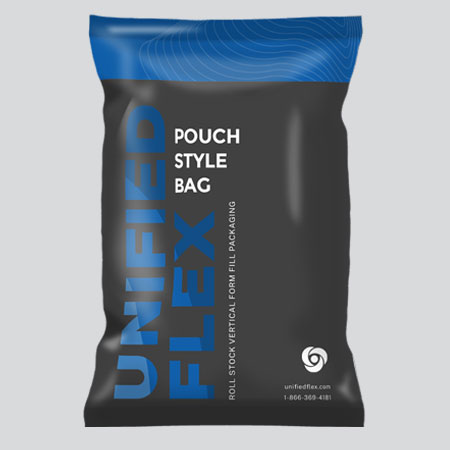
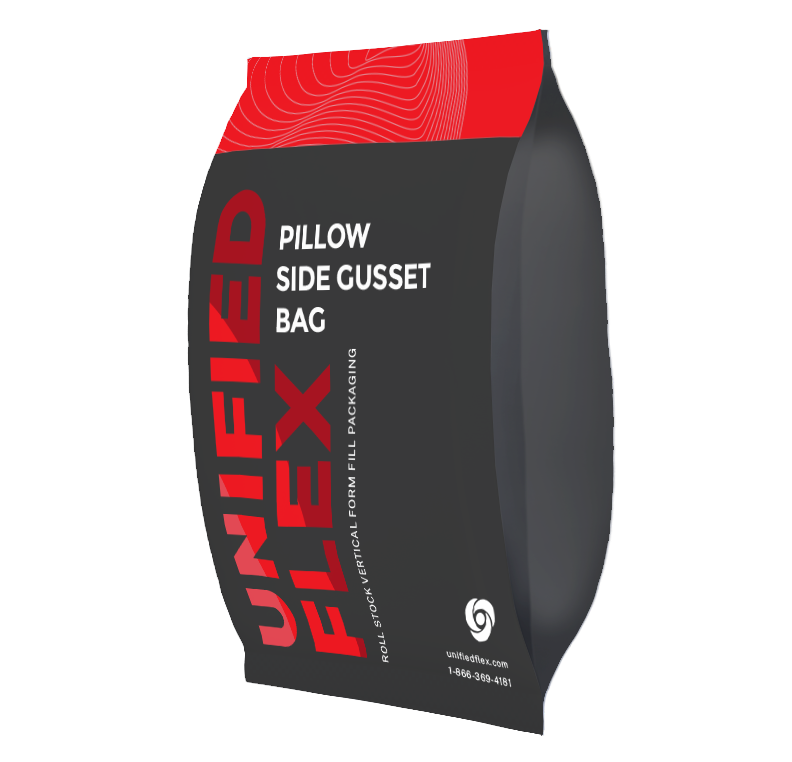
Why pillow bags are a strong option for 10–15 lb spice packaging
The simplest advantage of a pillow bag is that it is scalable. The format is compatible with high-throughput production because it is straightforward to form, fill, and seal using rollstock. For bulk programs with multiple SKUs, that matters because the most expensive packaging decision is often the one that adds process complexity.
Pillow bags also match how 10–15 lb packs are typically handled. These bags are usually case packed and palletized. They don’t need to stand perfectly on a retail shelf on their own. They need to fit cleanly in corrugated, survive stacking pressure, and tolerate movement through distribution. A properly sized pillow bag, especially with gussets, tends to support those needs well.
From a brand perspective, pillow bags provide ample print area for clear labeling and strong product identification. In bulk channels, that clarity matters. It reduces mis-picks, supports compliance requirements, and communicates professionalism without needing a premium-format structure.
The performance factors that matter most for pillow bag spice packaging
A pillow bag format performs well when the program is built around the realities of spices. In bulk packaging, the critical performance factors are not complicated, but they are non-negotiable.
Seal integrity in a dusty product environment
In spice packaging, seal quality is one of the biggest predictors of downstream performance. Spice dust can interfere with seal formation if the product migrates into the sealing zone. That’s why pillow bag programs for spices should prioritize a process that keeps sealing conditions stable and reduces opportunities for product contamination in the seal area. Strong, consistent seals help protect against leaks that show up later during handling and transit, when failures become more costly.
Moisture protection to maintain flow and quality perception
For many spices, moisture barrier performance is central to customer experience. The goal is to keep the product free-flowing and usable throughout storage and distribution. Selecting film structures and barrier performance should be tied to the spice or blend and the conditions it will face, including humidity swings during warehousing and transport. When barrier performance matches the product, clumping risk decreases, and product quality holds up longer in the customer’s environment.
Clean and consistent filling
Bulk spice packaging is often limited by how the product behaves during feeding and dosing. Some spices flow easily. Others bridge, compact, or create more airborne dust. Inconsistent flow can lead to unstable weights, more dust around the sealing area, and an inconsistent pack appearance. Pillow bags provide a reliable container format, but consistent results depend on stable product handling and disciplined verification practices.
Distribution and handling durability
Ten to fifteen pound packs experience more stress than smaller retail units. They are heavier, they are often stacked tightly, and they spend more time moving through case packing, palletizing, and transport vibration. Film selection and seal strength must support those realities. A pillow bag can be a durable bulk format, but durability is achieved through specification, not assumption.
How to think about specifications for a 10–15 lb pillow bag program
Bulk bag sizing should start with the product’s density and flow behavior, not a standard bag dimension. A fluffy ground spice may require significantly more volume than a dense whole spice at the same weight. If the bag is undersized, it becomes harder to achieve consistent fills, case packing becomes less stable, and seals can experience more stress. If the bag is oversized, handling can become less predictable and material use increases unnecessarily.
Side gussets are often a practical choice at 10–15 lb because they support volume and improve how the bag presents and packs inside a case. In bulk channels, case fit matters. A bag that nests well reduces shifting, reduces the risk of damage, and improves pallet stability.
From there, film structure and barrier selection should reflect the product and its storage conditions. Many spice programs prioritize moisture protection to reduce clumping and maintain flow. Seal performance and verification expectations should be defined early, because seal integrity is one of the strongest levers for preventing leaks and avoiding claims.
Secondary packaging should be treated as part of the design. Case count, case dimensions, and pallet pattern influence how bags are compressed, how they shift during transport, and how often handling damage occurs. In bulk spice packaging, the case is not just a shipping container; it is part of the system that protects the product until it reaches the customer.
Conclusion: Choose the format that keeps bulk spice packaging consistent
For 10–15 lb spice packaging, pillow bags are a strong, proven choice because they support consistent production and distribution-ready performance. They are efficient to run at scale, well-suited to case packing, and capable of protecting product quality when the program is built around the fundamentals: reliable seals in a dusty environment, moisture protection that matches the product, stable filling behavior, and durability through handling.
In bulk channels, the best packaging is the kind that stays out of the way. When bags arrive intact, cases stay clean, and the spice pours freely, the packaging has done its job. That consistency is what keeps bulk programs running, and it’s why pillow bags continue to be a high-performance option for 10–15 lb spice packaging.