
Sauces and Condiment Packaging Machine: The Real Reasons Sachet Lines Get Messy (and How to Keep Yours Boring, in a Good Way)
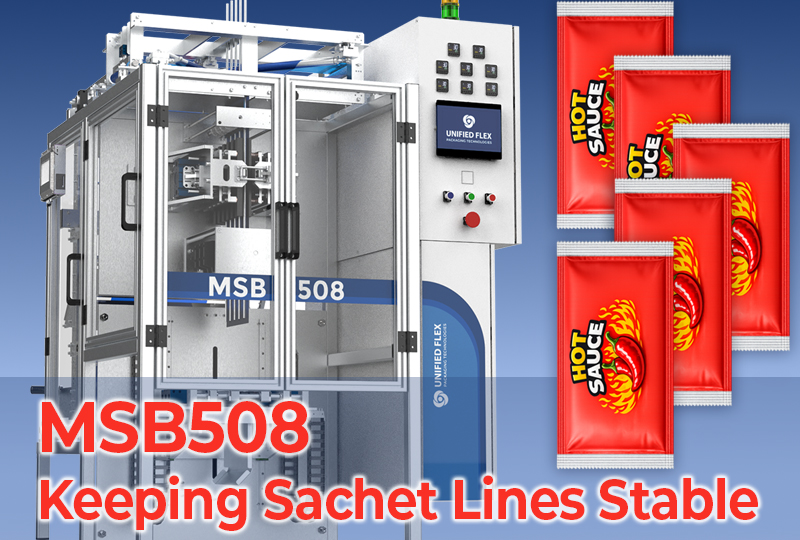
3-side and 4-side seal sachets show up everywhere in sauces and condiments for a reason. They’re portioned, compact, easy to kit, and they travel well through foodservice, delivery, travel, and sampling programs. When the experience is good, nobody thinks about the packaging at all. Tear. Squeeze. Done.
But the format usually isn’t where the biggest losses come from.
The real test starts when the line has to run, when film needs to track cleanly, seals need to close the same way cycle after cycle, and your product (thin, thick, oily, or slightly particulate) needs to get into the pack without contaminating the seal area. That’s where small variation becomes big cost: scrap, cleanup, downtime, and “mystery leaks” that show up after case packing.
So the sauces and condiment packaging machine decision isn’t just “can it make sachets?” It’s whether it can keep the process predictable over time, at the speeds and conditions that matter most.
Here are the failure points that tend to show up first, and what stable lines do differently.
Where sauce and condiment sachet lines tend to go off track
1) Leaks that show up after the line did “everything right.”
A 3-side and 4-side seal sachets can leave the machine looking perfect and still fail later under case compression, vibration, and normal handling. When that happens, the first sign is rarely a reject bin. It’s a wet case downstream, sticky cartons, or a customer complaint that feels “random” until you map it back to seal consistency.
2) Seal contamination that doesn’t look dramatic, until it is.
Sauces are great at finding the one place they shouldn’t be: the seal area. Viscous products can smear. Oily products migrate. If the product gets into the seal zone intermittently, you end up with intermittent leaks, hard to predict, hard to troubleshoot, and very good at draining patience.
3) Lane-to-lane variation that multiplies scrap.
Multilane sachet production is how you hit volume. It also means variation gets multiplied. If one lane is drifting, you’re not making “a few rejects.” You’re making a stream of defects until someone catches it, and by then the cost is already baked in.
4) Film handling issues that show up as wrinkles, poor cuts, or messy presentation.
If film isn’t being pulled consistently, you’ll see it where it hurts: at the seals, at the cut, and in how the finished sachet looks. Wrinkling can compromise seal quality. Cut inconsistencies can leave ugly edges. Registration drift makes packs look sloppy even when the product is premium.
5) Cleaning friction that stretches small issues into real downtime.
Condiment lines don’t stop cleanly. When the machine is hard to access, cleaning becomes slower, stops get longer, and restarts get messier. That’s not “operator error.” That’s design friction.
6) Restarts that take too long to settle.
The minutes spent stopping are only part of the cost. The expensive part is the “settling period” after restart, when the line needs extra adjustment before it returns to steady output. Those minutes add up, especially in multi-SKU environments.
7) Higher throughput that exposes cycle variation.
As you push output, the process has less time to absorb small inconsistencies. Variations that were invisible at lower speeds become visible as rejects. The line becomes less forgiving.
8) Maintenance friction that turns small issues into long interruptions.
When service access is tough or parts are proprietary and slow to source, minor issues stretch into downtime. And in a sauce environment, longer downtime often equals more cleaning, more resets, and more lost output.
The MSB-508 solution: What stable sachet lines do differently
Most sauce sachet lines don’t get messy because the team makes bad decisions. They get messy because the process loses its rhythm. Real product builds residue. The film behaves slightly differently as the roll changes. A lane drifts. A restart takes longer than it should. And suddenly you’re not “running sachets” anymore—you’re managing leaks, cleanups, and interruptions.
The Multilane Sachet Bagger – MSB 508mm is a multilane sachet system (2–12 lanes) designed to handle viscous and free-flowing liquids. In sauces and condiment packaging, the goal is simple: keep every lane producing the same seal quality, cycle after cycle, over long runs, so the line stays predictable instead of turning into a constant intervention.
1) Leaks that show up later: stabilize the seal cycle so “weak packs” don’t slip through
This is one of those issues where the fix isn’t downstream inspection, it’s keeping the seal-and-cut cycle steady so you don’t create weak outliers in the first place. Practically, that means film pull, jaw closure, and cut timing stay in the same relationship cycle after cycle, lane after lane. If that relationship drifts, the sachet can look fine at discharge and still become a leak after compression and handling.
MSB-508 is built around synchronized form/fill/seal motion control and an intermittent jaw motion design that supports repeatable sealing and cutting.
The payoff is stability: fewer seal-strength outliers that turn into “random” leaks downstream.
2) Seal contamination: make cleaning fast enough to be routine, not a production event
With sauces, residue is normal. The line stays stable when operators can actually access sealing areas quickly, because that’s how you prevent buildup from turning into intermittent leaks and stop-start chaos. MSB-508’s vertical sealing jaws open 90° for easier access during cleaning, supporting frequent, realistic cleaning without requiring a teardown for every cleanup.
3) Lane-to-lane variation: control film drive and separation so every lane behaves the same
Multilane only works when lane consistency is treated as the primary task. Stable lines reduce variation by keeping film movement controlled and lane separation consistent, because that’s what prevents one lane from becoming the “problem lane.”
MSB-508 utilizes servo-driven film control and rotary slitting, designed for multilane separation, which supports the kind of lane-to-lane uniformity that prevents scrap from accumulating.
4) Film wrinkles and cut drift: keep film pull and jaw motion repeatable so defects don’t creep in
When film handling isn’t stable, the symptoms show up where you can’t hide them: wrinkling at seals, inconsistent edges, and packs that look “off.” Stable lines reduce this by keeping film movement and jaw motion consistent enough that the process doesn’t need constant correction. MSB-508’s intermittent film pull and horizontal jaw arrangement are designed around repeatable motion, rather than “close enough” timing, which helps prevent gradual drift from becoming visible rejects.
5) Cleaning friction: build around access so small stops don’t turn into long downtime
This is separate from contamination itself. Even when a stop is unavoidable, stable lines shorten its impact by making access and recovery straightforward.
The 90° jaw opening mentioned earlier is a design choice that supports faster intervention and quicker return to steady output.
6) Slow restarts: reduce “settling time” by keeping adjustments minimal after a stop
The most expensive time isn’t the stop; it’s the time spent getting the line back into a stable rhythm. Stable lines minimize how much has to be re-tuned after a restart by keeping motion and film tracking consistent by design.
MSB-508’s synchronized motion control supports repeatability across cycles, which is what reduces the need for extended “dialing in” after interruptions.
7) Throughput pressure: scale output with lanes instead of forcing the cycle into instability
When volume targets climb, it’s tempting to solve it with speed. That’s also when sachet lines tend to get less forgiving. Film behaves a little differently from roll to roll. Product flow shifts with viscosity and temperature. If you squeeze the cycle too hard, those normal variations start showing up as inconsistent seals, rejects, and more intervention.
The more stable way to scale is to increase output without compressing the cycle. That’s where multilane capacity matters. MSB-508 runs as a 2–12 lane platform, so you can raise throughput by producing more sachets per cycle instead of pushing a single lane into a fragile operating range. And because real output in sauces depends on fill time, sachet length, and film behavior, stable projects treat speed as something you confirm with the actual product and format, not something you assume from a single published number.
8) Maintenance friction: keep parts and service practical so small issues don’t become long stops
Stable lines aren’t just mechanical; they’re logistical. When parts are hard to source or components are overly proprietary, minor issues take longer to fix, and the line becomes inconsistent over time. MSB-508 uses off-the-shelf components, supporting faster turnaround on routine service needs.
The Unified Flex Approach to Stable Sachet Packaging
Sauce and condiment sachet lines don’t become unreliable overnight. They drift there slowly, after long runs, restarts, roll changes, and routine cleaning, when small variables are allowed to stack up. Unified Flex reduces that risk by customizing each system around how the product behaves, how the film seals, and how the line will actually be operated day to day, not how it looks on paper. That work is backed by real sachet experience, with design decisions aimed at preventing the leaks, lane variation, and cleanup-driven downtime that typically show up later. Projects are executed through a defined, process-driven approach because serious buyers expect structure when they’re investing in capital equipment. Built in North America, the MSB-508 is designed with practical, non-proprietary, off-the-shelf components to simplify maintenance and sourcing. Supported by responsive parts and service, issues are resolved quickly, and the line returns to steady output. The result is a system that stays predictable, requires fewer interventions, and does what it should, running quietly in the background.
Conclusion: A sauce and condiment packaging machine decision is a stability decision
Sachet lines don’t usually fail on day one. They fail later, after long runs, after restarts, after handling and case packing, when small variation has had time to turn into leaks, scrap, and interruptions. That’s why choosing a sauce and condiment packaging machine should start with the failure points you’re trying to avoid, not just the output number you want to hit.
The practical takeaway is simple: prioritize repeatability. Scale output in a way that protects sealing consistency. Make cleaning and service access easy enough to be routine. And validate performance with the actual sauce and film combination you plan to run. When film handling and sealing stay predictable over time, the line gets quieter, fewer interventions, less cleanup, fewer downstream surprises.