
How is Gen Z changing retail packaging compliance?
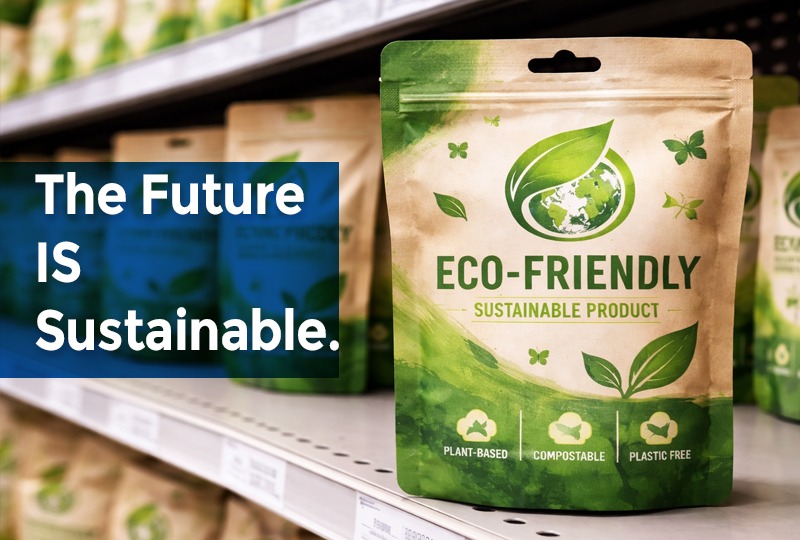
Retailers rarely announce when they’re changing course; the aisles reveal it long before the press releases do. Walk through a Walmart, Loblaw, Target, or Costco today, and the shift is unmistakable. Packaging is slimmer. Formats are lighter. Shelves look more intentional. And the brands that haven’t updated their packaging are starting to look out of step.
This isn’t a design fad. It’s a response to a generational pivot in buying behavior. Gen Z and Gen Alpha grew up expecting brands to take environmental responsibility seriously, and the data is impossible for retailers to ignore. Research highlighted by the World Economic Forum shows that 75% of Gen Z prefer sustainable purchases over brand names in their decision-making. Deloitte’s consumer sustainability research confirms that many shoppers are more likely to buy from brands offering sustainable products. An IBM–National Retail Federation study also finds that a significant share of consumers are willing to change their purchasing habits to reduce environmental impact. McKinsey data show that products with sustainability-related claims are driving measurable sales growth in many categories.
Retailers aren’t debating whether this matters; they’re reorganizing their packaging expectations around it. That’s why sustainable flexible packaging isn’t a trend; it’s becoming the new center of gravity in North American retail.
*This article is general information for packaging professionals and should be applied in line with your product requirements, internal quality procedures, and any applicable regulatory expectations.
Table of Contents
Retailers Are Reacting to a New Kind of Shopper
For older generations, packaging was an afterthought. For Gen Z, it’s the first handshake. It signals whether a brand “gets it” or is simply adding a green leaf icon to old behavior. This generation doesn’t tolerate excess, not in messaging, not in waste, not in design. A rigid tub for something that could be in a lightweight pouch feels outdated. Oversized bottles feel irresponsible. Layers that don’t need to exist feel dishonest.
Retailers watch this more closely than anyone. They have internal teams mapping Gen Z shopping journeys, tracking category migration, and evaluating how sustainability-linked packaging affects dwell time, conversion, and basket building. And they’ve discovered something powerful:
When packaging looks visibly overbuilt, Gen Z walks right past it.
That behavior is rewriting retailer scorecards faster than regulation ever could.
Sustainability Becomes a Business Advantage, Not a Penalty Box
The old belief that sustainable packaging costs more is collapsing. The economics have swung in the opposite direction.
Sustainable flexible packaging uses less plastic, weighs significantly less than rigid alternatives, and moves through distribution far more efficiently. A lighter footprint reduces freight emissions and freight costs. Slimmer formats fit more units per pallet, more pallets per truck, and more product per warehouse footprint. And in every province in Canada and in states like California, Oregon, Maine, and Colorado, lighter packaging directly reduces Extended Producer Responsibility (EPR) fees.
Retailers love sustainability. But they love lower cost-to-serve even more.
For the first time, they don’t have to choose.
This is why major North American retailers are accelerating toward packaging structures that deliver both sustainability cues and operational efficiencies.
Compliance Pressure Is Real, and Retailers Are Pushing It Downstream
The U.S. and Canada now operate in a regulatory environment where packaging has moved from “nice to improve” to “mandatory to prove.” EPR systems require detailed reporting, transparency in packaging compositions, and year-over-year reduction performance.
Retailers are accountable to those systems, so they’re holding their vendors accountable, too.
Scorecards that once focused on recyclability are now measuring:
- resin weight
- structure efficiency
- material reduction
- barrier-to-material ratios
- supply-chain durability
- portioning and right-sizing
The message is clear:
If a brand makes packaging decisions that complicate a retailer’s sustainability report, that brand becomes a liability.
Sustainable flexible packaging is the format solving the most problems with the least friction, which is why adoption is accelerating across so many categories.
Retailer Value Now Depends on Vendor Packaging Choices
A retailer’s sustainability promise lives or dies by the packaging choices of the brands it stocks. When vendors choose overly thick laminations, rigid containers without justification, or multi-material constructions that can’t be sorted or reported efficiently, retailers foot that bill.
But when vendors shift to thoughtfully engineered, sustainable flexible packaging, retailers gain room to breathe. They reduce EPR fee exposure. They reduce backroom waste. They improve shelf efficiency. They signal to Gen Z instantly that they carry brands aligned with modern expectations.
This isn’t talk. Retailers are already adjusting:
- which vendors move up the planogram
- which ones get cut from assortment
- which categories get prioritized for format transitions
Packaging has become an enrollment test for future retail partnerships.
Brands that understand that win shelf space. Brands that don’t learn too late.
Category Behavior Is Shifting, And Gen Z Is Steering the Wheel
One of the most interesting changes is how packaging reduction shows up differently across categories.
Snacks have embraced upright pouches — slimming down resin while keeping that vertical billboard retailers depend on. Powdered categories (protein, pancake mixes, supplements) are migrating from bulky tubs to gusseted pouches that cut plastic drastically while improving cube efficiency. Liquids are moving toward flexible spouted formats that eliminate heavy molded plastics. Frozen foods use durable flexible films that withstand compression without relying on rigid structures. And stick packs — a Gen Z favorite — are transforming hydration, energy, and wellness categories through portion control and portability.
None of these shifts feel forced. They feel like the natural outcome of a generation that values reduction, mobility, and simplicity.
Reduction Works Only If Shelf Life Works; That’s Where Barrier Science Comes In
Gen Z expects packaging to use less plastic, but they also expect freshness, safety, and consistency. Retailers expect the same. That’s where barrier science becomes the engine behind sustainable flexible packaging.
OTR (oxygen transmission rate) and WVTR (water vapor transmission rate) determine how well packaging protects a product. High-barrier flexible films make it possible to reduce material without increasing shrinkage, complaints, or returns.
This is where film structures matter.
Foil or clear high-barrier laminations protect against oxygen, moisture, and chemical exposure, extending shelf life in demanding supply chains. Metalized laminations, including metalized BoPET, metalized BOPP, and metalized polyester, offer strong barrier protection and light resistance with far lower material usage than rigid containers. OPP and BOPP-based laminations combine clarity, stiffness, and moisture resistance, giving brands strength and visibility without unnecessary resin. EVOH and HDPE co-extruded structures add sealing performance and oxygen control at thin gauges.
This is the part of sustainability consumers never see — but retailers monitor closely.
Because material reduction only works when protection doesn’t suffer.
Unified Flex’s Role: Upstream Material Expertise for a New Packaging Reality
Unified Flex sits at the intersection of sustainability, retail performance, and material science, and that’s why our focus begins with rollstock. Real sustainability doesn’t start on the shelf; it starts in the film. Everything retailers now expect from packaging, lower resin, stronger barrier performance, cleaner reporting, and consistent shelf behavior, lives or dies in the structure of the rollstock itself. That’s where our team does its best work.
We engineer rollstock designed for the realities of modern retail: laminations calibrated to oxygen and moisture sensitivity, metalized and OPP-based films selected for clarity, stiffness, or durability, and co-extruded structures that deliver strong, consistent seals even at reduced gauges. These aren’t aesthetic decisions; they’re material strategies that determine how a package performs in EPR reporting, in distribution, and in the aisle.
We don’t overclaim.
We guide, calibrate, and design, so brands can make packaging decisions that match category needs, retailer expectations, and consumer values.
That partnership is what keeps packaging changes from feeling risky and instead makes them feel inevitable.
The Packaging Future Is Already Here
Sustainability used to be a marketing story. Today it’s a retail strategy, written by Gen Z, validated by regulations, and made possible by smarter material engineering.
Sustainable flexible packaging isn’t trending; it’s becoming the default.
Brands that embrace it now will be the ones building trust with the next generation of consumers, and building confidence with the retailers who serve them.
The brands that hesitate?
Retailers are already rewriting their shelves without them.