
How Do Pharmaceutical Packaging Machines Help Maintain Sterility and Safety?
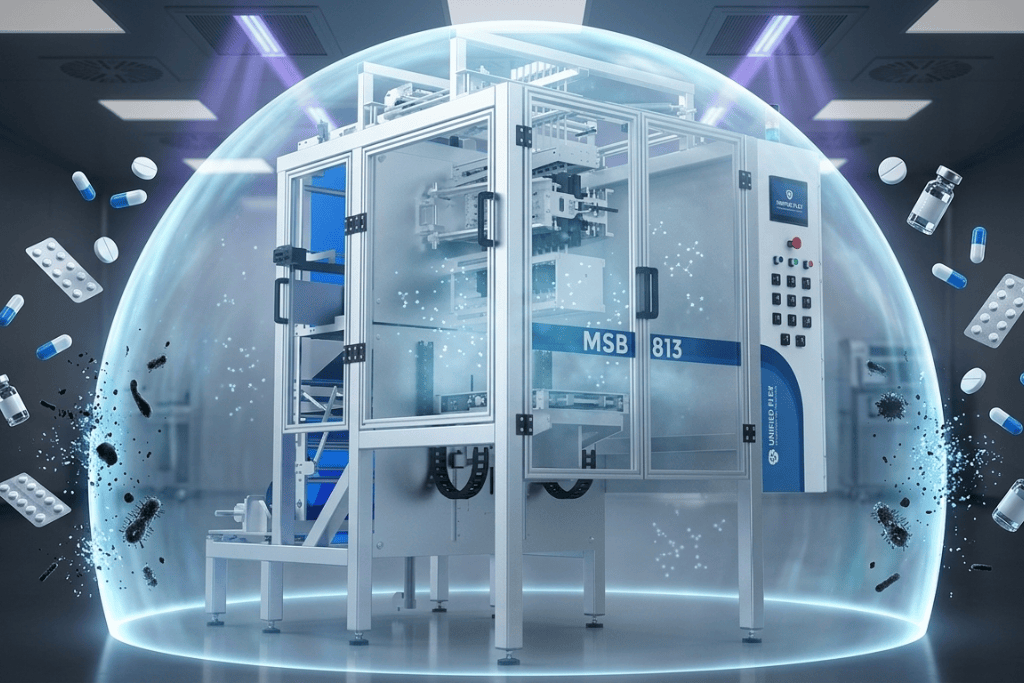
A product doesn’t fail in the lab; it fails on the line.
Between filling, sealing, and handling, even a minor inconsistency can expose pharmaceutical and nutraceutical products to contamination, dosage errors, or degradation. That’s why packaging isn’t just the final step; it’s a critical control point for sterility and safety.
Unified Flex systems are engineered to eliminate these risks through precision, automation, and controlled packaging environments.
Let’s break down how modern packaging systems ensure sterility and safety at every stage.
Why Sterility and Safety Are Non-Negotiable
Pharmaceutical and nutraceutical products, whether powders, capsules, or liquids, are highly sensitive to environmental exposure.
Without proper packaging systems, risks include:
- Microbial contamination
- Moisture and oxygen exposure
- Degradation of active ingredients
- Incorrect dosage delivery
- Labeling errors leading to compliance issues
In high-speed production environments, even a fractional sealing inconsistency (less than 1%) can result in significant product rejection rates and regulatory risk.
That’s why advanced pharmaceutical packaging machines play a central role in maintaining controlled environments and consistent product quality.
Regulatory Framework: The Foundation of Safe Packaging
To ensure sterility and safety, packaging systems must align with global standards:
- GMP (Good Manufacturing Practices) → Ensures controlled production and hygiene
- FDA Guidelines → Focus on labeling accuracy, traceability, and safety
- ISO Standards → Equipment quality and process consistency
Unified Flex, as one of the most trusted packaging machine suppliers, engineers its pharmaceutical packaging systems to support these frameworks through:
- Repeatable processes
- Validatable performance
- Integrated quality control systems
For engineers and QA teams, this ensures audit readiness, documentation traceability, and compliance confidence.
Key Technologies That Ensure Sterility and Safety
These core technologies work together in high-quality automatic packaging machine to protect product integrity and ensure consistent sterility.
High-Integrity Sealing Systems
In real-world operations, inconsistent sealing is one of the most common causes of product rejection, especially in high-speed sachet and stick pack lines. Unified Flex machines are engineered with precision sealing technology to create airtight barriers.
How it helps:
- Prevents ingress of moisture and oxygen
- Protects against microbial contamination
- Maintains product potency over time
For engineers, this means repeatable seal integrity under varying production speeds, which is critical for GMP compliance.
Precision Filling & Dosing Systems
Accurate dosing is critical, especially in pharmaceuticals and nutraceuticals where dosage errors can impact efficacy and compliance.
A modern pharmaceutical packaging machine integrates:
- Auger fillers (ideal for powders)
- Volumetric cup fillers (ideal for granules)
- Piston fillers (ideal for liquids)
- Combination weighers (for multi-product accuracy)
For example, protein powder manufacturers often face aeration challenges that affect fill consistency. Calibrated auger systems help stabilize dosing despite variations in bulk density.
Operational benefits:
- Eliminates under/overfilling risks
- Ensures dosage consistency
- Reduces product waste
For operations managers, this translates to lower variance, fewer rejects, and higher throughput efficiency.
Controlled Atmosphere Packaging (MAP Technology)
Many Unified Flex systems support vacuum sealing and nitrogen flushing.
Why it matters:
- Reduces oxidation
- Extends shelf life
- Preserves sensitive active ingredients
This is particularly critical for probiotics and herbal formulations, where exposure to oxygen can degrade active compounds rapidly.
Hygienic Machine Design (Built for GMP Environments)
Unified Flex pharmaceutical packaging machines are built with:
- Stainless steel construction
- Smooth, easy-to-clean surfaces
- Minimal product contact zones
In practice, poorly designed machines with hard-to-clean areas can increase downtime and contamination risk during sanitation cycles. Hygienic design directly reduces these operational bottlenecks.
Impact:
- Reduces cross-contamination risks
- Simplifies sanitation cycles
- Meets strict hygiene standards
For engineers, this ensures compliance with GMP and FDA-aligned practices without excessive downtime.
Smart Sensors & Automation Controls
Automation enhances both safety and efficiency.
Key features include:
- Bag detection sensors
- Fault detection systems
- Automated rejection mechanisms
Benefits:
- Prevents improper sealing or filling
- Reduces human error
- Improves batch traceability
In high-speed lines (500–1000 bags/min), these systems are essential to maintain consistent quality without manual intervention.
Tamper-Evident & Traceability Features
Regulatory compliance requires full product traceability.
Unified Flex supports:
- Date coding
- Batch/lot printing
- Tamper-evident seals
Why it’s critical:
- Ensures transparency
- Builds consumer trust
- Simplifies recall management if needed
In regulated industries, traceability is not just a requirement; it is a safeguard that minimizes financial and reputational damage during recalls.
Role of Flexible Packaging in Safety and Compliance
Flexible packaging formats, such as stick packs, sachets, and stand-up pouches, offer additional safety advantages:
- High-barrier films protect against environmental factors
- Single-serve formats reduce contamination risk
- Resealable options improve consumer safety
Unified Flex provides customizable flexible packaging solutions designed to meet both regulatory requirements and market expectations.
How to Choose the Right Packaging Machine
For engineers and decision-makers, selecting the right system depends on:
- Product type (powder, liquid, capsules)
- Required packaging format
- Production volume
- Compliance requirements
- Integration with existing systems
Expert Tip:
In real manufacturing environments, the most common mistake is prioritizing speed over validation capability. A system must be accurate, cleanable, and compliant before it is fast.
Always evaluate:
- Seal integrity performance
- Filling accuracy tolerance
- Cleaning and maintenance time
- Scalability of the system
Unified Flex offers custom-engineered solutions, ensuring that automatic packaging machines are calibrated to your product’s unique characteristics.
Common Challenges in Maintaining Sterility (and How to Overcome Them)
In high-speed pharmaceutical packaging environments, even minor process inefficiencies can compromise sterility and product safety.
- Inconsistent sealing at high speeds
Solution: Advanced temperature and pressure-controlled sealing systems
- Product contamination during transfer
Solution: Enclosed conveying and minimal exposure design
- Human error in manual processes
Solution: Automation and sensor-based validation
- Difficulty in cleaning and validation
Solution: Hygienic machine architecture with quick-change parts
Why It Matters for Your Business
Pharmaceutical and nutraceutical packaging machines are not just operational tools; they are critical control points for sterility, safety, and compliance.
If you are an:
- Engineer → Focus on system compatibility, hygiene design, and integration
- Operations Manager → Prioritize uptime, scalability, and quality control
- Business Owner → Invest in systems that protect brand reputation and reduce risk
The Bottom Line:
A well-designed packaging system ensures:
- Product integrity from production to consumption
- Regulatory compliance (FDA, GMP)
- Scalable and efficient operations
- Long-term customer trust
Join forward-thinking pharmaceutical and nutraceutical brands that rely on Unified Flex for safe, efficient, and scalable packaging solutions.
Get a quote from Unified Flex.