
Ashwagandha Powder Packaging: Why the Right Powder Packaging Machine Matters
Introduction: When the Format Isn’t the Problem
Stick pack packaging is often a strong fit for ashwagandha powder. It supports precise dosing, portability, and aligns well with how the product is used in the nutraceutical market.
But selecting the right format is only part of the decision. Once that choice is made, the focus shifts to execution and whether the process can remain stable under real production conditions.
This is where many manufacturers run into difficulty. Fill weights begin to drift, seal consistency becomes harder to maintain, and output varies from run to run. What looked stable during setup becomes less predictable over time.
At that point, the question is no longer whether stick pack packaging is the right format. The question is whether the powder packaging machine can run that format reliably.
Table of Contents
The Problem: Where Powder Packaging Breaks Down
Ashwagandha powder introduces a combination of challenges that don’t always show up during short test runs but become very apparent during full production.
Inconsistent Fill Weights
Fine powders like ashwagandha are highly sensitive to handling conditions. Small shifts in aeration or bulk density can affect dosing accuracy, especially in stick pack applications where fill weights are low and tolerances are tight.
As a result, the same volume of powder does not always produce the same weight. That inconsistency creates immediate pressure on production.
It can lead to:
- Underfilled packs that create compliance concerns and product claim risk
- Overfilling is used as a safety margin, which increases product giveaway
- Tighter tolerances are becoming harder to maintain without frequent adjustment
Over time, even minor overfills can add up to meaningful material loss, making fill inconsistency a quality issue and a cost issue at the same time.
Seal Contamination and Weak Seals
With fine powders, sealing is not just a closing step. It is a critical control point.
During filling, airborne particles can enter the seal area. Even small amounts of contamination can interfere with seal strength, particularly in higher-speed operations where consistency is harder to maintain.
This can lead to:
- leaking stick packs
- reduced shelf life
- higher rejection rates during quality checks
What makes seal problems especially difficult is that they are often intermittent. A line may appear stable, yet occasional contamination can still create failures that are harder to trace, correct, and prevent over time.
Dust Spread and Cleaning Interruptions
Dust is an expected part of working with fine powders, but once it is no longer contained, it becomes a production issue.
During transfer and dosing, particles can disperse and settle across forming areas, sealing zones, and mechanical components. That buildup affects more than cleanliness. It disrupts operating conditions and makes the process harder to keep stable over time.
This can lead to:
- increased cleaning frequency
- more downtime between runs
- greater variability during production
Over time, dust accumulation can also affect component performance, adding another layer of inconsistency to the process.
Throughput Limited by Instability
Increasing output should be a simple way to improve productivity, but with powders like ashwagandha, higher speed often introduces new problems instead of solving them.
As speed increases:
- powder aeration tends to rise
- flow becomes less predictable
- dosing accuracy becomes harder to maintain
The result is that production does not scale as cleanly as expected. Instead, instability begins to limit throughput, making it harder to increase output without sacrificing consistency.
Performance Drift Over Time
A system that performs well at startup is not necessarily stable over the course of a full production run.
Over time, factors such as:
- powder buildup in critical areas
- shifts in humidity or temperature
- batch-to-batch variation
can gradually change how the process behaves.
This is one of the most overlooked challenges in powder packaging. Performance rarely drops all at once. More often, it drifts slowly, making the problem harder to detect until it begins affecting fill accuracy, seal quality, or overall output.
The Solution: A Powder Packaging Machine Built for Real Conditions
Solving these challenges requires more than selecting the right packaging format. It requires a powder packaging machine designed to maintain control under variable conditions.
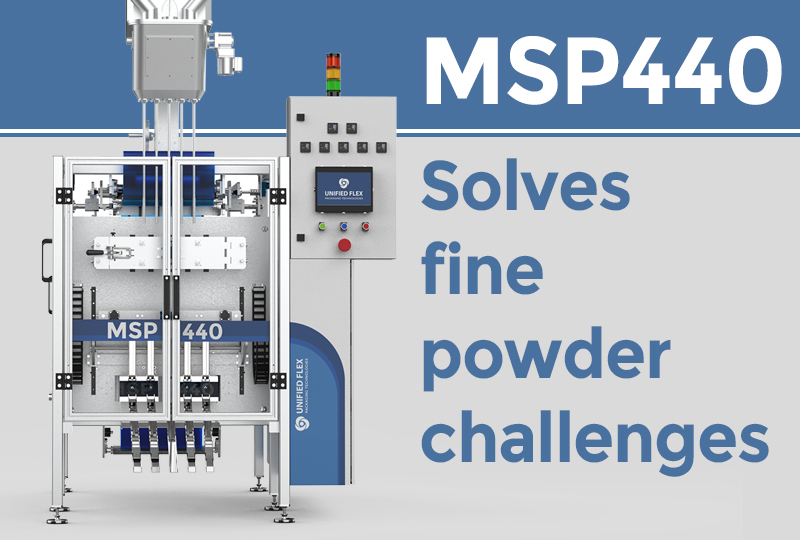
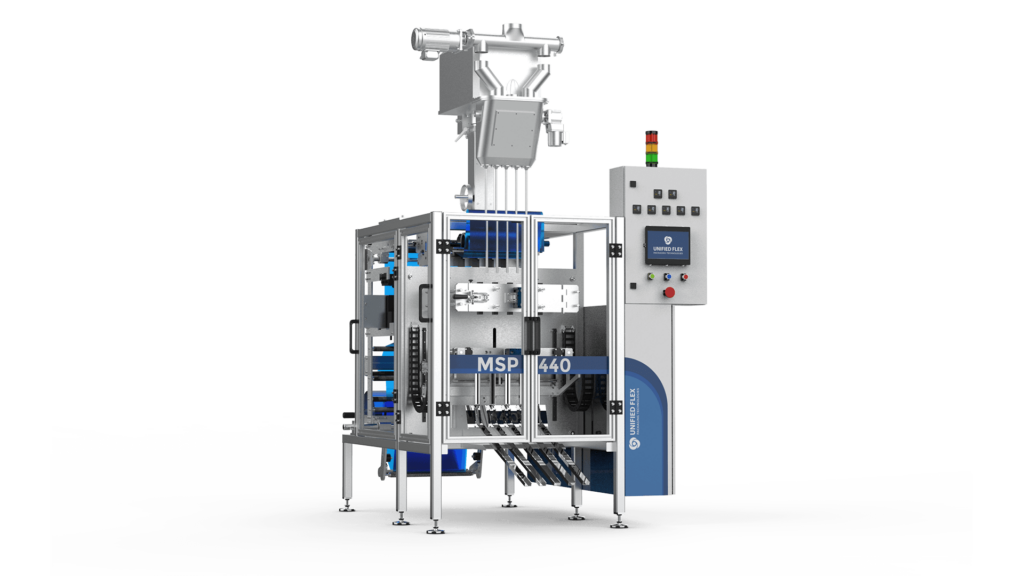
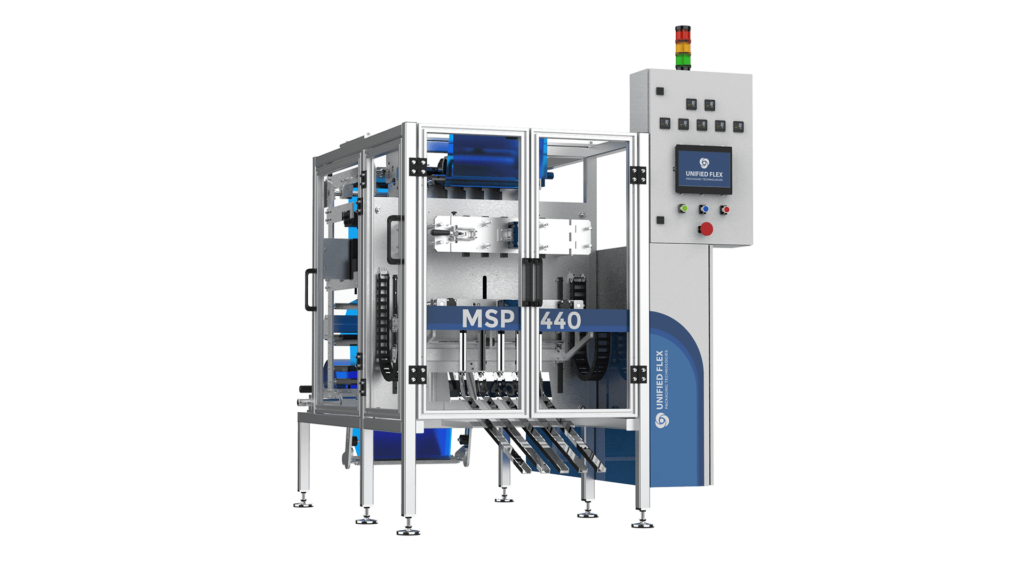
The Multilane Stick Pack MSP440 machine is built specifically for this type of application.
It is designed to handle:
- Fine and coarse powders
- Dusty and non-dusty products
- Applications requiring consistent dosing at small fill weights
Rather than assuming ideal conditions, it is designed to perform under real production variability.
How the MSP440 Addresses These Challenges
The MSP440 runs 5 to 9 lanes and can reach up to 400 stick packs per minute in a 9-lane configuration, depending on product and stick length.
For ashwagandha powder applications, increasing output is not just about running faster. As speed increases, powder behavior can become less consistent, which directly affects fill accuracy and seal quality.
The MSP440 provides a throughput range suited for low- to medium-volume stick pack production, allowing manufacturers to increase output while maintaining control over the process.
More Reliable Sealing Under Real Conditions
Seal integrity depends on consistency during operation, not just on how the machine is set at startup.
The MSP440 includes pneumatic horizontal sealing and digital temperature controllers, both of which are directly relevant to maintaining repeatable sealing conditions.
For ashwagandha powder packaging, that matters because seal performance can be affected when operating conditions begin to shift over the course of a run. Features that support sealing consistency help reduce variation at a point in the process where small issues can quickly become pack quality problems.
Dust Managed Within a Controlled Process
Dust is a practical concern in powder packaging, especially with products like ashwagandha.
The MSP440 is designed to handle dusty and non-dusty powders and is built with a simple, clean, and robust design using #304 stainless steel construction. For manufacturers packaging fine powders, that matters because it means the machine is intended for the realities of powder stick pack production rather than limited to cleaner or easier-flowing products.
Stability Over Long Production Runs
Long production runs put more pressure on consistency. What matters is whether the machine can continue operating in a controlled way as the run progresses.
The MSP440 includes a servo-controlled film pulling mechanism, PLC-controlled functionality, and off-the-shelf non-proprietary parts. Together, these features support a machine design focused on controlled operation and maintainability, both of which matter when production needs to remain consistent over time.
Why the Right Machine Still Needs the Right Partner
Once the conversation shifts from packaging format to packaging machine, the next question is whether that machine is being applied the right way. With ashwagandha powder, that starts with customization. Flow, density, and dust behavior can vary from one application to the next, so the machine and setup need to reflect the product, not just the format.
That is where Unified Flex comes in. Experience matters because there is often a difference between what should work in theory and what keeps working in production. Features matter for the same reason. Their value is not in the spec itself, but in what they mean on the floor: more consistent fills, more reliable seals, and a process that stays steady over time.
Just as important is process. Manufacturers making this kind of investment already understand that without process, projects fail. And once the machine is running, support becomes part of the value too. At that point, the question is not where the machine was built. It is how quickly parts and service are available when they are needed.
Conclusion: From Packaging Format to Process Reliability
Ashwagandha powder packaging will always involve a level of variability because that is inherent to how the product behaves. The objective is not to eliminate that variability, but to control how it influences the process over time. The right powder packaging machine supports that control by enabling more consistent dosing, improving seal integrity, managing dust within the system, and maintaining stable performance across longer runs. When these factors are addressed, the process becomes more predictable and easier to manage, turning a packaging setup into a more reliable production system.