Efficiency
Blogs

Cheese Packaging Equipment: Designing VFFS Lines for Stability in Shredded Cheese and Curd Production

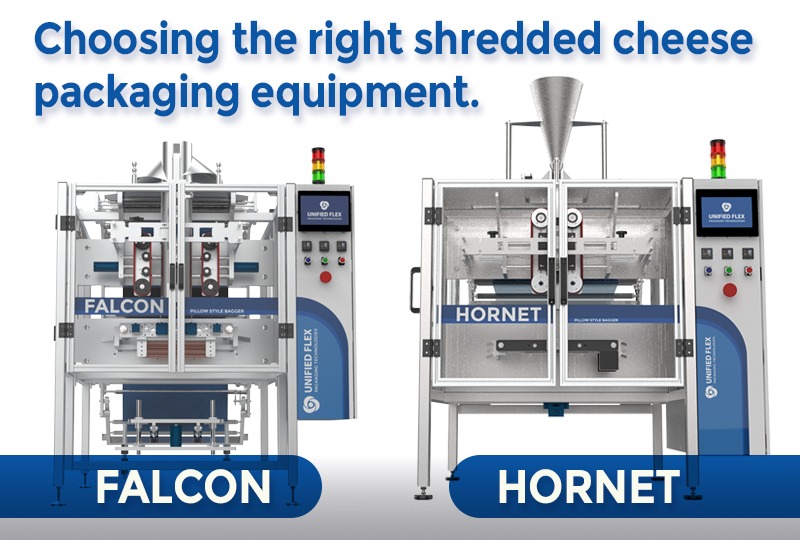
Falcon and Hornet vertical form fill seal machines used as Cheese Packaging Equipment for shredded cheese applications.
Cheese packaging equipment is tested after startup, during long shifts, roll changes, and repeated changeovers. This blog explains why shredded cheese and curds expose drift in forming alignment, film indexing, and horizontal seal engagement, and how a repeatable VFFS architecture preserves pouch geometry and seal integrity under sustained production.

Powder Packaging Machines for Animal Feed Additives: When Equipment Design Controls, or Reintroduces, Risk 

Vertobagger Hornet vertical form fill seal machine for packaging animal feed additives with Bacitracin Methylene Disalicylate bag and product sample.
Fine, dusty products like Bacitracin Methylene Disalicylate quickly expose weaknesses in machine design. A Powder Packaging Machine for Animal Feed Additives must maintain forming stability, repeatable motion, and consistent sealing as normal variation accumulates. This engineering review explains where failures begin and what to look for in equipment built for medicated feed additive applications.

Bulk Pet Food Packaging Machines Fail Quietly — Until They Don’t 

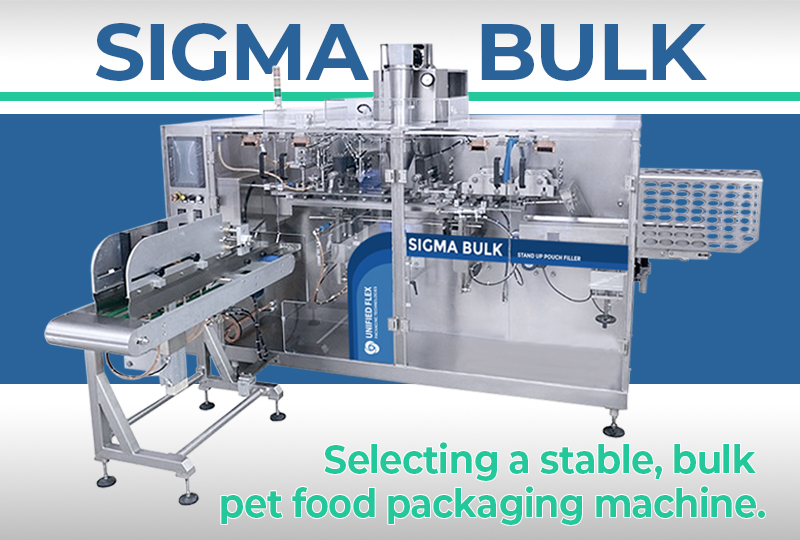
Sigma Bulk petfood packaging machine shown with integrated conveyor and automated pouch filling system.
Bulk pet food packaging machines are tested once product mass enters the pouch. This article examines where lines lose stability and how machine design supports consistent opening, filling, and sealing across real operating conditions.

Sauces and Condiment Packaging Machine: The Real Reasons Sachet Lines Get Messy (and How to Keep Yours Boring, in a Good Way) 

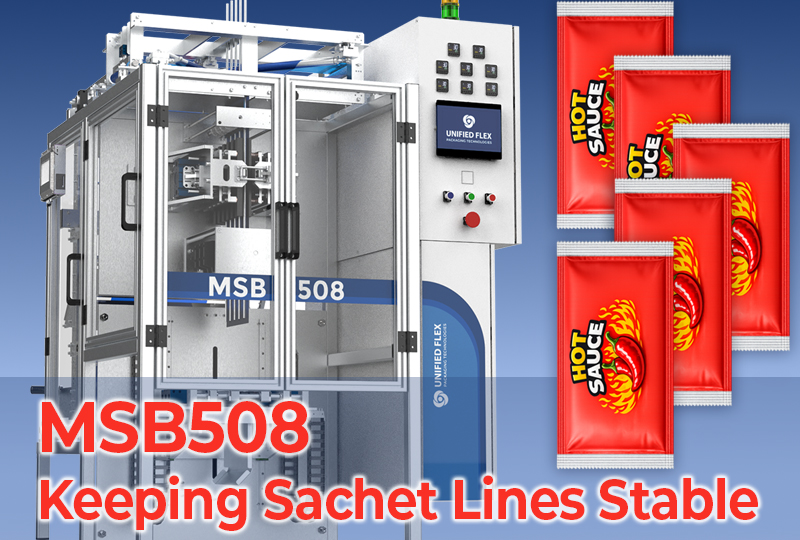
Condiment packaging machine MSB508 shown with finished sauce sachets for single-serve applications
In sauces and condiment sachet production, small variation becomes expensive fast. This blog outlines the most common stability failure points and what to look for in a sauces and condiment packaging machine designed for repeatable sealing and consistent throughput.

Liquid Detergent Packaging: Why Spouted Pouches Are a High-Performance Choice 

Three spouted pouches of dishwasher detergent displayed on a kitchen counter in front of an open dishwasher.
Detergent packaging doesn’t get tested at the line; it gets tested at the sink, in storage, and in transit. This blog explains why spouted pouches are a high-performance choice and what needs to be specified to keep them stable at scale. Read on to see what matters most.

Liquid Detergent Packaging Machine: The Real Reasons Spouted Pouch Lines Get Messy (and How to Keep Yours Boring, in a Good Way) 

Automated spouted pouch filling and capping machine shown with a finished dishwasher detergent spouted pouch.
If your spouted pouch line is messy, it’s usually a repeatability problem, not a pouch problem. This post maps the most common failure points in a Liquid Detergent Packaging Machine and what keeps the process steady across long runs and changeovers. Read more.

Spice Packaging Machine for Bulk Packaging: From Failure Points to Stable Output 

Spice packaging machine forming 10–15 lb pillow bags filled with bulk spices on a production floor.
Bulk spice packaging doesn’t fail at the discharge; it fails in handling, case packing, and transit. Here’s what breaks first at 10–15 lb and what to prioritize in a VFFS configuration to maintain consistent sealing and bag presentation.

What Are the Top Industries That Depend on Stand-Up Pouch Machines?

Find out which industries rely on stand up pouch packing machines to improve throughput, reduce waste, and boost shelf appeal.
Learn how advanced stand-up pouch machines solve challenges like inconsistent fills, leaky seals, product contamination, and production bottlenecks, helping businesses scale efficiently without compromising quality. Curious which industries rely on these machines the most and why they’re absolutely mission-critical? Read the full blog to find out.

Stick Pack Machines vs. Sachet Machines: Which Is Better for You?

A comparison scene showing a stick pack machine beside a sachet packaging machine with small product samples on a table in front of them.
Choosing between stick packs and sachets is not just a matter of shape, it affects speed, material use, and the way your product reaches customers. This blog breaks down how each machine works, what they handle best, and how they influence production flow so you can decide which setup fits your line with clarity and confidence.

How Rice, Beans, and Pasta Packaging Machines Are Powering a New Era for Dry Goods 

Three clear plastic bags filled with rice, beans, and pasta displayed in front of a background made of the same dry staples, with the text “Industry Challenges in Dry-Staple Packaging.
Packaging pasta, beans, and rice demands accuracy and adaptability. This article explores how modern pasta packaging machines combine servo precision, film control, and modular design to deliver consistent seals, faster changeovers, and scalable performance across every production scale, from compact automation to high-speed industrial systems.