
Keeping the Crunch: Why Pillow Bags and Side-Gusset Bags Work for Nuts Packaging
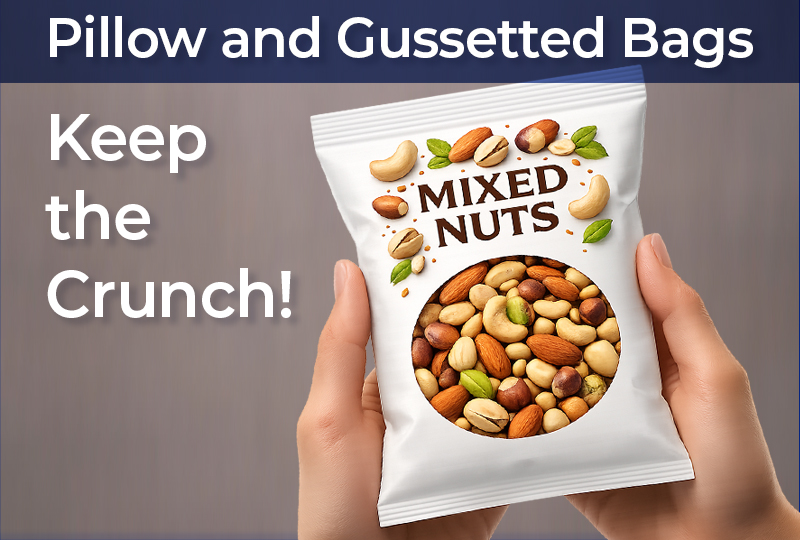
Nuts packaging can appear stable at the point of fill. Almonds, cashews, pistachios, and trail mixes are portioned accurately, seals are verified, and finished bags leave the packaging line square and uniform. At this stage, the packaging process looks predictable and under control.
The real test begins once packaged products move into storage, transportation, and retail distribution. During this stage, packages are subjected to stacking pressure, pallet compression, vibration during transport, and repeated handling cycles. At the same time, the packaging must protect the product’s flavor, texture, and shelf life.
For nut processors and snack manufacturers, selecting the right bag format is therefore more than a visual or branding decision. It is a structural choice that influences how nuts packaging performs throughout the distribution chain.
Two of the most widely used formats in nuts packaging are standard pillow bags and pillow bags with side gussets. Each format interacts differently with the physical behavior of nuts and dry fruits. Understanding these differences helps manufacturers select packaging that preserves product quality while maintaining operational efficiency.
Table of Contents
Product Behavior Drives Packaging Performance
Nuts and dry fruits behave differently from many other snack products because of their density, shape, and oil content.
Whole almonds, peanuts, pistachios, and similar products are relatively rigid. When packaged in flexible bags, the product mass inside the bag carries a portion of the external load created during pallet stacking. Unlike lightweight snacks that compress easily, nuts transfer force through multiple contact points between individual kernels.
This creates a packaging environment where pressure inside the bag is not always evenly distributed.
Mixed products such as trail mixes introduce additional complexity. Ingredients of different sizes and densities shift during transportation, with heavier components gradually settling toward the bottom of the package while lighter ingredients migrate upward.
Over time, this settling changes how internal pressure is distributed within the bag.
Dry fruits can behave differently again. Their softer structure and irregular shapes may make them more sensitive to sustained compression during pallet stacking.
These product characteristics mean that nuts packaging must balance several critical requirements simultaneously:
Structural stability during stacking and transport
• Protection from oxygen exposure and moisture
• Consistent package presentation at retail
Packaging format plays an important role in meeting these requirements.
Distribution Conditions Shape Packaging Demands
Three operational variables typically determine how well packaging maintains its geometry during distribution.
Stacking Height
Each additional pallet layer increases the compressive load on the bags below. As stacking height rises, the lowest tier of packages must absorb greater pressure from the layers above.
Fill Weight
Heavier packages naturally increase the load transmitted through the product mass inside the bag. Larger retail bags, therefore, experience greater internal pressure than smaller snack-size packs.
Transportation Exposure
Long transportation distances introduce vibration and repeated handling. Over time, this movement allows products to settle inside the package, changing how pressure is distributed across the bag.
These factors define the structural demand placed on the packaging format. Understanding how pillow bags and gusseted bags respond to these conditions helps manufacturers choose the most suitable design.
How Packaging Format Responds to Distribution Stress
Once stacking pressure, fill weight, and transport exposure are understood, the next step in nuts packaging is evaluating how the package structure manages those forces.
Flexible packaging formats do more than contain product; they determine how the load is distributed through the product mass during pallet stacking and distribution.
Different bag geometries respond differently to compression and vibration. Some formats concentrate pressure within a smaller footprint, while others distribute load across a wider base. These structural differences influence how well the package maintains its shape during transport and how consistently the product is presented at retail.
In nuts packaging, the two formats most commonly used for this purpose are standard pillow bags and pillow bags with side gussets. Each provides different structural characteristics depending on fill weight, distribution conditions, and product behavior.
Pillow Bags in Nuts Packaging
Standard pillow bags remain among the most widely used formats for nuts packaging.
The structure of a pillow bag typically includes a longitudinal back seal, often a fin seal or lap seal, combined with two horizontal seals that form the top and bottom of the package. This geometry creates the familiar pillow-shaped bag commonly produced on vertical form fill seal (VFFS) packaging machines.
Because of this design, pillow bags are efficient to manufacture and widely used in snack packaging lines.
In moderate fill weights and controlled distribution environments, pillow bags maintain stable geometry during transport and storage. The format performs particularly well for retail snack sizes and smaller portion packs, where stacking pressure and internal load remain relatively low.
Operationally, pillow bags offer several advantages. Their simple geometry allows predictable forming and sealing conditions, efficient film usage, and compact case packing.
However, the format has limitations under heavier structural demand.
Because the base footprint of a pillow bag is relatively narrow compared with gusseted designs, stacking pressure can become concentrated in a smaller area. As fill weights increase or pallet stacking becomes higher, the product mass inside the bag absorbs more localized force.
Under these conditions, packages may begin to show visible deformation or shifting during transport and distribution cycles.
This does not make pillow bags unsuitable for nut packaging. Rather, it highlights the operating conditions where additional structural margin may be beneficial.
Pillow Bags with Side Gussets
Pillow bags with side gussets introduce a structural modification designed to improve stability under higher distribution loads.
Side gussets expand the bag’s base once it is filled, creating a wider footprint than a standard pillow bag. This wider base allows compressive forces from pallet stacking to spread across a larger area.
For nuts packaging, this change can significantly improve geometry retention.
When stacking pressure is distributed across a broader base, internal pressure within the package becomes less concentrated. This reduces the likelihood of localized stress points forming within the product mass.
The benefits of gusseted pillow bags become more noticeable in situations such as:
Larger retail package sizes
• Heavier fill weights
• Taller pallet stacking configurations
• Longer distribution cycles
Trail mixes and mixed nut blends particularly benefit from this format. Because these products contain ingredients with different densities, the wider base helps distribute pressure more evenly as components settle during transportation.
Side gussets do not eliminate all compression effects. Nuts remain dense products, and some internal shifting during distribution is unavoidable.
However, gusseted pillow bags provide greater structural tolerance, allowing the package to maintain shape and stability under more demanding operating conditions.
Shelf Life Considerations in Nuts Packaging
Structural stability is only one part of effective nuts packaging. Protecting product freshness is equally important.
Nuts contain natural oils that are sensitive to oxygen and moisture exposure. Over time, these factors can affect flavor, aroma, texture, and overall product quality.
While packaging film plays a central role in shelf life protection, bag format also matters. The way a package holds its shape during storage and distribution can influence how consistently the product is protected throughout the supply chain.
For this reason, format selection should be considered not only in terms of stacking and transport performance, but also in relation to the product’s freshness and shelf-life requirements.
Why a Process-Driven Packaging Partner Matters
Choosing between a pillow bag and a side-gusset bag is really a question of fit. The right format depends on how the product behaves, how much weight the package carries, and what it will face in storage and distribution. That is why Unified Flex does not treat nuts packaging as a one-size-fits-all decision.
That application knowledge matters because almonds, cashews, pistachios, trail mixes, and dry fruits do not all place pressure on a package the same way. Understanding those differences helps connect the format choice to what manufacturers actually need: better shape retention, better freshness protection, and more reliable performance across the supply chain.
Just as important, that recommendation has to come from a clear process. Unified Flex takes a process-driven approach to packaging decisions, which gives manufacturers greater confidence that the format is being matched to real operating conditions, not guesswork. And once the line is running, the practical concern becomes support. What matters most at that stage is how quickly parts and service are available, which is why access to non-proprietary parts remains an important part of long-term reliability.
Conclusion
Nuts’ packaging performance is defined not by how the bag looks at the point of fill, but by how well it protects product quality throughout distribution.
For moderate fill weights and controlled shipping conditions, standard pillow bags offer an efficient and reliable solution.
When fill weights increase or distribution demands become more intensive, pillow bags with side gussets provide additional structural support by spreading compressive forces more effectively.
The right format depends on matching bag geometry to product behavior, shelf-life goals, and real operating conditions. When that alignment is achieved, nut and dry fruit packaging can maintain freshness, preserve appearance, and deliver the crunch consumers expect.