
Liquid Detergent Packaging Machine: The Real Reasons Spouted Pouch Lines Get Messy (and How to Keep Yours Boring, in a Good Way)
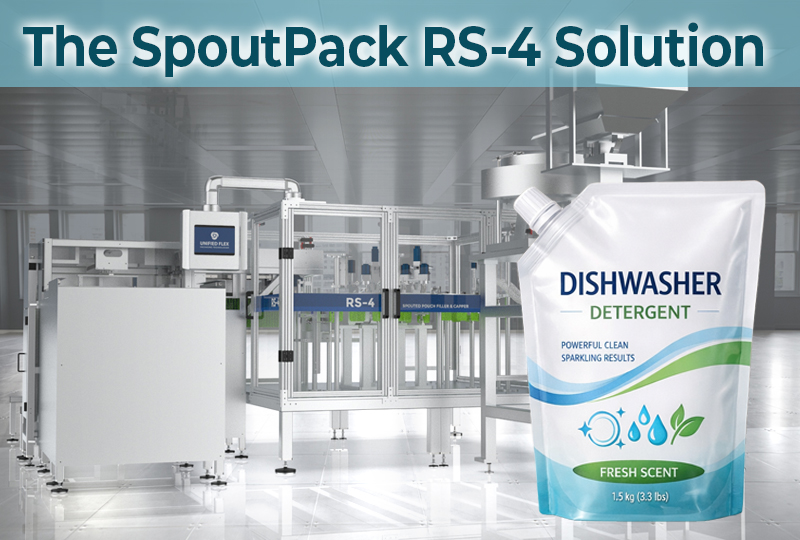
Spouted pouches are increasingly appearing in liquid detergent packaging and for good reason. They pour more cleanly than a torn corner, reseal better than a “fold-and-hope,” and they fit refill and multi-use programs without creating the mess that flexible packs sometimes do.
But the format usually isn’t where the biggest losses come from.
The real test is when the line has to run, when each pouch needs to be picked, placed, filled, capped, coded, and sent downstream the same way, cycle after cycle, shift after shift. That’s where a small variation can turn into scrap, extra cleanup, and inconsistent output.
So the liquid detergent packaging machine decision isn’t just “can it run spouted pouches?” It’s whether it can maintain consistency in the process at the times and conditions that matter most.
Here are the failure points that tend to show up first, and what stable lines do differently.
Where spouted pouch detergent lines tend to go off track
1) Leaks that show up after the line did “everything right.”
A pouch can leave the machine looking fine, then fail later under case compression, vibration, and normal handling. When that happens, the first sign is rarely a reject bin. It’s a wet case downstream.
2) Pouch presentation that shifts just enough to matter
Pre-made spouted pouches depend on consistent handling. If presentation varies cycle-to-cycle, position, height, and timing, variation tends to show up later as inconsistent outcomes at filling and capping.
3) Preventable waste when a cycle continues without a correctly presented pouch
When the process runs through a bad cycle, the cost is immediate: product loss, cleanup, and time spent resetting the line. It’s the kind of waste that doesn’t show up as “scrap rate” until someone adds it up.
4) Feeding interruptions that increase operator intervention
If pouch feeding isn’t consistent, operators step in to keep output moving. That may keep the line running, but it also makes the process less repeatable across shifts and long runs.
5) Changeovers that restart slowly
The minutes spent changing tooling are only part of the cost. The other part is the “settling period” after restart, when the line needs extra adjustment before it returns to steady output.
6) Date coding that disrupts flow
When coding isn’t integrated cleanly into the process, it can create avoidable stops, rework, or scrap, especially when placement consistency matters.
7) Higher throughput that exposes cycle variation
As speed increases, the process has less time to absorb small inconsistencies. Variations that were manageable at lower output become more visible as rejects.
8) Maintenance friction that stretches small issues into downtime
Detergent environments are real-world environments. When service access is difficult or parts aren’t easy to source, minor issues tend to take longer to resolve and can contribute to inconsistent output.
The Spouted Pouch Filler & Capper RS-4 solution: What to look for in a liquid detergent packaging machine
If you line up the most common spouted pouch detergent issues, leaks that show up after case packing, pouch presentation drift that makes capping inconsistent, wasted product from “bad cycles,” feeding interruptions, slow restarts after changeovers, and more rejects as you push throughput, they usually trace back to the same question:
How well does the machine keep pouch handling, filling, and capping predictable over time?
RS-4 is a spouted pouch filler and capper built to run premade spouted pouches, with liquid detergents listed among its non-edible applications.
The parts that matter most in liquid detergent packaging are the ones that directly support repeatability.
Capping consistency (to reduce downstream leakers)
Detergent doesn’t forgive “mostly tight.” If caps aren’t applied consistently, the first sign often shows up later, wet cases, cleanup, and rework. RS-4 uses four independent capping heads with torque-out capability, which is exactly the kind of configuration aimed at keeping cap application more consistent across long runs.
Pouch presentation control (to prevent drift before it becomes a capping problem)
With premade spouted pouches, you’re not forming the pack; you’re handling it. When pouch placement shifts cycle-to-cycle, everything downstream has to compensate, and that’s where variability starts to creep in. RS-4 is built around easy pouch handling from magazine load to placement on the rotary table, including automatic pick and placement and a heavy-duty rotary indexer designed for precise placement each cycle.
Guardrails that prevent avoidable waste (when something isn’t right)
One of the fastest ways a detergent line turns messy is when the process keeps running through a bad cycle. Missing pouch? Mis-presented pouch? If the fill still fires, you’re immediately paying in product loss and cleanup. Spouted Pouch Filler & Capper RS-4 includes pouch detection with “No Pouch – No Fill” capability, which is designed to prevent that avoidable kind of waste.
Filling built for liquids that vary (to keep output consistent)
Detergent isn’t one consistent liquid forever; viscosity and behavior can vary by SKU, temperature, or product family. The machine needs a filling approach that’s stable and adjustable without becoming fragile. RS-4 is built to pack viscous and free-flowing liquids (including those containing particulates) and includes four filling piston pumps with easy volume adjustments, along with a servo-controlled filling station.
Changeovers that don’t turn into long restarts (to reduce “settling time”)
Changeovers cost more than the minutes spent changing parts. The expensive part is the restart, when alignment drifts, adjustments pile up, and the line takes too long to return to steady output. Spouted Pouch Filler & Capper RS-4 supports running various pouch sizes with tooling configured for easier changeovers, helping keep size changes from disrupting the flow of production.
Date printing in-line (so it doesn’t become a rework loop)
When date marking sits outside the flow, it tends to create stops and rework, especially if placement needs to be consistent across SKUs. Spouted Pouch Filler & Capper RS-4 includes ink jet print heads for “Best Before” date printing, keeping date printing inside the process instead of pushing it downstream.
Motion stability as throughput increases (because timing gets less forgiving)
As you push output, the process has less time to absorb variation. That’s when “small inconsistency” becomes “visible rejects.” Spouted Pouch Filler & Capper RS-4 uses an Omron Motion Controller for synchronous and smooth motion and is designed for production output, including up to 20 cycles/minute per filling head and possible speeds up to 80 pouches/minute with a four-filler configuration.
Serviceability that supports uptime (because detergent lines aren’t pristine)
Detergent environments involve residue, cleanup, and routine wear. When parts are slow to source, small issues turn into long stops. RS-4 supports click-to-order non-proprietary parts, which helps reduce delays when service is needed.
Quick fit check (so the machine actually matches the program)
RS-4 is designed within a defined operating window: pouch width 3.15–6.5 in, pouch length 5.12–10 in, and fill range 20 ml to 2000 ml. If your pouch geometry or fill volume sits outside that range, it’s better to know early, before you design a process around exceptions.
How Unified Flex approaches liquid detergent spouted pouch projects
Unified Flex approaches spouted pouch detergent projects by focusing on the parts of the system that most often determine long-term stability: how the product behaves, how the pouch and fitment are handled, and how the line will actually be operated day to day. Projects start by aligning on the detergent formulation, pack format, throughput targets, and handling conditions, then engineering the system around those realities rather than assumptions. Systems are tested in-house before shipment and reviewed with customer teams during Factory Acceptance Testing, so expectations are clear before installation. From there, installation, training, and ongoing support are handled with North American service and parts, keeping the line reliable as production volumes and SKUs change.
Conclusion: A liquid detergent packaging machine decision is a stability decision
In liquid detergent packaging, problems rarely show up at startup. They show up later, after pouches have been handled, stacked, shipped, and used. That’s why spouted pouch lines hold up best when the equipment choice starts with the failure points you’re trying to avoid: inconsistent pouch handling, variable capping, preventable waste from bad cycles, and long restarts after changeovers.
The practical takeaway is straightforward. Choose a liquid detergent packaging machine and system configuration that’s built around repeatability in your operating conditions, then confirm performance through application testing. When pouch presentation, filling, and capping stay consistent over time, the line gets quieter, fewer interventions, less cleanup, and fewer surprises downstream.