
Liquid Detergent Packaging: Why Spouted Pouches Are a High-Performance Choice
Introduction
In liquid detergent packaging, performance is measured after opening, not just at discharge. Detergent gets poured, resealed, stored, moved, and used again. That repeated handling is where most issues show up: slow leaks during storage, messy dispensing, and case damage when a small failure spreads into corrugated.
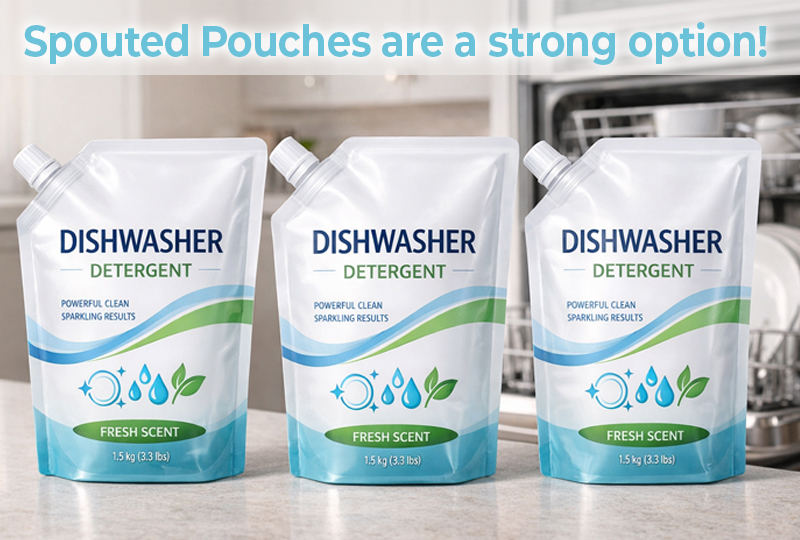
And those failures don’t stay local. One minor leak can turn into wet cases, rework, cleanup, and claims. Poor dispensing turns into wasted product and customer complaints labeled as “quality,” even when the formulation is fine. That’s why spouted pouches are a strong option for liquid detergent packaging: they’re built for controlled pouring and reliable reseal, and they create clear interfaces that teams can specify and validate for real-world use conditions.
A practical scorecard for liquid detergent packaging
Good liquid detergent packaging has to earn its place in the real world, not just on a spec sheet. At a minimum, it needs to deliver three outcomes consistently:
- Dispense cleanly: provide controlled flow that reduces drips, splashing, and product loss during everyday pouring. If dispensing is messy, the package creates waste and cleanup every time it’s used, not just once.
- Reseal reliably: maintain closure integrity between uses so the pack can be stored, moved, and handled after opening without weeping or slowly leaking. This is where many detergent packages fail, because “between-use” performance is harder than “first-use” performance.
- Hold up under stress: maintain integrity through case compression, transit vibration, drops during handling, and temperature swings that can amplify weaknesses over time. In bulk and refill channels, especially small durability issues don’t stay small; they spread into corrugated, pallets, and downstream operations.
This becomes the benchmark for evaluating detergent formats. If a package misses any one of these, the impact is predictable: higher waste, more operational disruption, and more customer friction that gets blamed on the product rather than the package.
What is a spouted pouch?
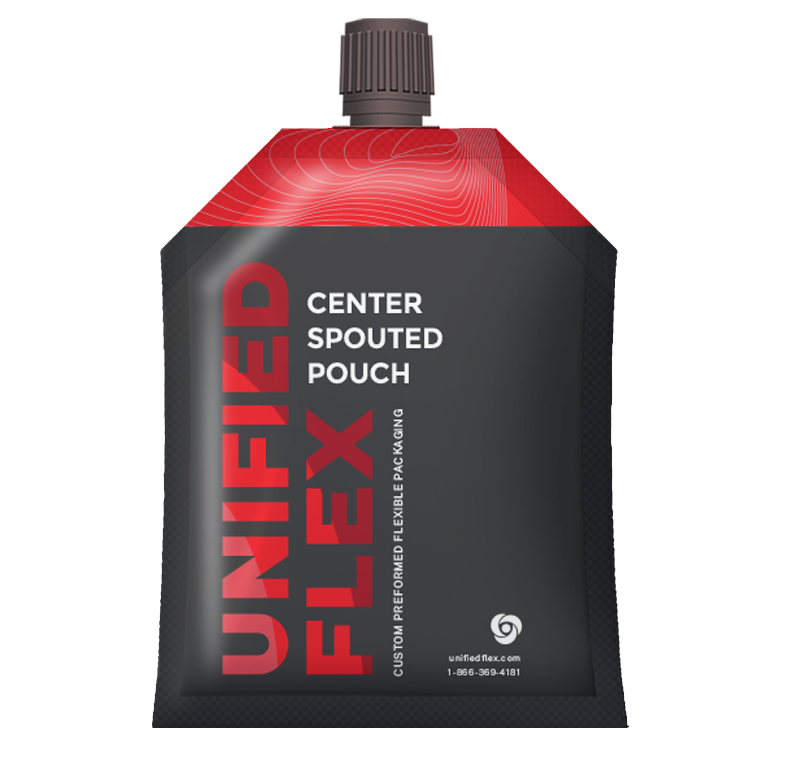
A spouted pouch is a flexible package made up of three basic components: a pouch body, a fitment (spout), and a cap. The pouch body forms the main container, while the fitment and cap create a defined opening that’s designed for dispensing and resealing.
In practical terms, the spout changes flexible packaging behavior from “open-and-pour” to “open, pour, close, and use again.” That’s a better match for liquid products, especially detergents, because the package is rarely emptied in one use. It has to dispense cleanly, reseal reliably, and stay intact through repeated handling without turning storage and transport into a leak risk.
Why spouted pouches are a good option
A) Controlled dispensing
Spouted pouches manage flow direction and pour rate. In liquid detergent packaging, this reduces drips, surging, and splashing during use, which reduces wasted product and cleanup. For refill and back-of-house environments, controlled dispensing is a functional requirement because packages are handled quickly and often stored near other products and surfaces that cannot tolerate spills.
B) Resealability for repeated use
Detergent packaging is exposed to between-use risk: storage after opening, movement while partially full, and repeated handling. A spouted pouch uses a closure designed for repeated reseal, reducing slow leaks during storage and reducing the likelihood of cross-contamination on shelves, in totes, or in cases after partial use.
C) Fit for refill and multi-use programs
Spouted pouches align with refill and multi-use detergent programs because they support repeat access without relying on improvised reseal methods. The format supports practical storage and repeated pouring while maintaining a defined closure interface. This is where spouted pouches outperform tear-open flexible formats that depend on corner pouring and clip-style reseal behavior.
D) Containment as a system (not one seal)
In liquid detergent packaging, containment can be engineered across three interfaces: pouch seals, fitment attachment integrity, and cap closure performance. This makes the system more controllable and diagnosable. If leakage appears downstream, investigation can focus on which interface is failing, rather than treating leaks as random outcomes of “flexible packaging.” The result is faster root-cause identification and more targeted corrective action.
E) Distribution handling advantages (when designed correctly)
Detergent packages experience compression in corrugated, pallet loads, vibration during transport, and drop events during handling. Spouted pouches can perform well in distribution when secondary packaging is designed to manage these stresses: case count, orientation, corrugated strength, internal fit, and pallet pattern determine how compression loads are applied. When case design supports load distribution and limits shifting, the pouch is less likely to experience stress concentrations that lead to leakage.
F) Brand and operations benefits without premium complexity
Spouted pouches provide stable panel space for labeling and SKU identification. In multi-SKU programs, clear identification reduces mis-picks and handling errors. Operationally, consistent pouch geometry and label placement support more uniform case packing and inspection practices compared to formats where opening and reseal methods vary in the field.
A quick reality check: why detergent elevates format risk
What makes detergent tricky is that its behavior and its environment can change over time. Viscosity shifts with temperature, foaming can vary by formulation, and certain ingredients can interact differently with packaging materials as the product ages. Those effects don’t always appear in early trials, but they can influence long-term package performance.
The practical outcome is that borderline material or interface decisions tend to fail later, not immediately. A package can look stable at startup and then degrade after weeks in storage, transport, and day-to-day use. That’s why formats built around controlled, resealable interfaces are a safer bet in detergent applications: their critical interfaces can be specified and validated against real conditions, instead of assuming performance will stay consistent over time.
Key Considerations for Consistent Spouted Pouch Performance
For spouted pouches to behave predictably at scale, a small set of variables must be locked down. These are the points where variation shows up first if they’re not controlled.
- Fitment integrity: defined placement tolerances and attachment standards for the fitment interface
- Film structure and compatibility: material selection aligned to detergent chemistry and a stable operating seal window
- Seal zone cleanliness: fill and process conditions that prevent product or foam from entering seal areas
- Cap application consistency: closure parameters and verification methods that prevent slow, delayed leakage
- Durability validation: testing protocols matched to the actual distribution and handling environment
Together, these controls determine whether the format runs as a stable system or becomes sensitive to small process and handling variations.
From Distribution to Validation: A Practical Spec Path
Start by deciding where the package will be used and shipped. A pouch that goes through e-commerce will see more drops and rough handling than one that stays in a controlled institutional supply chain. A refill program also has different expectations because the pouch will be opened and used over time. Don’t pick materials or pouch size until this is clear.
Next, design the pouch and the case together. Decide how many pouches go in a case, how they will sit in the case, and how the case will be stacked on a pallet. Then choose the pouch size, shape, and fitment position so the pouches fit consistently and don’t shift or get crushed in transit.
After that, choose a packaging film based on what your detergent needs. Make sure the film works with the formulation and seals consistently within the machine settings you can run every day. The goal is a film that runs reliably, not a film that only works when everything is perfect.
Finally, prove it before you scale. Run tests that match your real route: leak checks, drop tests, compression tests, vibration exposure, and temperature cycling if the product will see heat or cold. If you confirm performance at this stage, you avoid finding problems later through damaged cases, cleanup, and claims.
From specification to real-world operation
Once a spouted pouch format is selected and specified, the remaining risk is almost always operational. For liquid detergent, that risk usually shows up at the intersection of filling and capping, how consistently those steps perform together on the actual product, at production speeds, and over time.
For this reason, detergent spouted-pouch programs are typically validated on dedicated filling and capping equipment designed for pre-made spouted pouches. Unified Flex offers spouted pouch filler and capper systems for liquid applications, which are used in this stage to confirm that the format performs as expected before volume ramps up.
Conclusion
In liquid detergent packaging, spouted pouches are a strong option because they provide controlled dispensing, reliable reseal, and containment interfaces that can be engineered and validated for real handling conditions. When fitment integrity, film compatibility, clean seal zones, cap consistency, durability validation, and secondary packaging design are treated as non-negotiables, the format can reduce leakage events, reduce dispensing-related waste, and improve downstream stability in distribution and use.