
Packaging Film on VFFS Lines: A Practical, Plant-Safe Guide to VFFS Troubleshooting
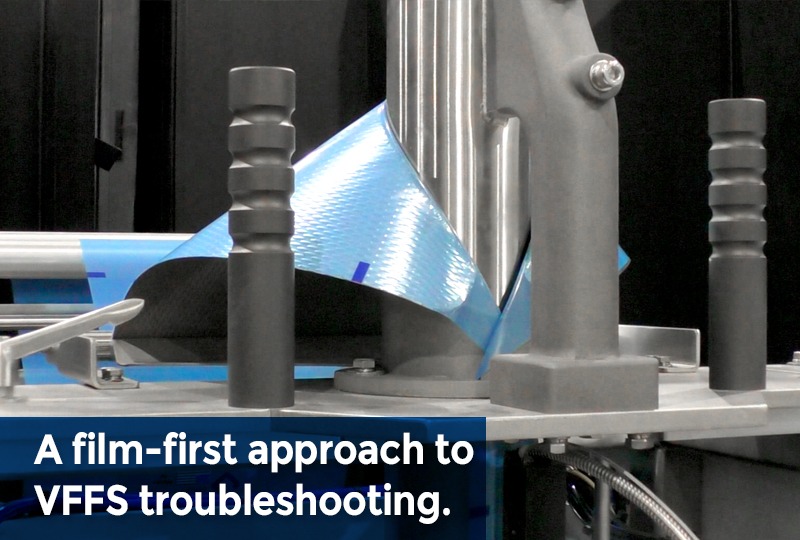
When a VFFS line starts acting up, the symptoms often show up at the sealing station: leaks, wrinkles running into the seal, registration drift, ugly packages, and unexplained scrap. The natural reaction is to chase sealing settings. But on many lines, packaging film is the real variable, either because the film itself changes (lot-to-lot variation, storage conditions, winding quality) or because the way the film is handled changes (tension, tracking, forming friction, static, contamination).
This blog is written for plant and maintenance teams who want a film-first approach to VFFS troubleshooting that is practical and responsible. It shares general considerations and common failure patterns. It does not replace your OEM manual, safety procedures, or film supplier specifications. Always follow site safety rules and OEM guidance, and validate any adjustments under your actual operating conditions and product requirements.
*This article is general information for packaging professionals and should be applied in line with your product requirements, internal quality procedures, and any applicable regulatory expectations.
Table of Contents
Why can packaging film create “machine problems”
A VFFS machine demands a lot from film in a short time. It pulls film through a web path at speed, guides it precisely, forms it around a collar and tube, seals it vertically and horizontally, and cuts it, over and over, with tight tolerances. Small changes in film behavior can ripple through the whole process.
Here’s the key idea that keeps VFFS troubleshooting grounded: the sealing station only sees the film you deliver to it. Suppose the film arrives wrinkled, mis-tracked, unevenly stretched, contaminated, or unstable in tension. In that case, the jaws will faithfully seal whatever they are given, and you may get defects that look like “seal failures” even though the upstream issue is film handling or film suitability.
First, name the symptom (film issues show up in patterns)
Packaging film problems are easier to solve when the team uses specific language instead of “it looks bad.” In practice, film-related symptoms tend to cluster into a few patterns.
If your line shows wrinkles that run into the seal area, you may be seeing unstable tension, tracking drift, off-center film entry to the forming set, or excess friction between film and forming components. If you see intermittent leaks with seals that look visually acceptable, film contamination and inconsistent web presentation into the jaws are common contributors, especially when fines, dust, or oils are present. If registration drifts or print positioning moves, web slip and tension instability are frequent suspects, but winding quality and roll condition can contribute as well. If the package looks distorted, “pulled,” or inconsistent in shape, film may be stretching or shrinking under heat and tension, or the web path may be applying uneven load.
These symptom-to-cause links are not guarantees. They’re practical starting points for VFFS troubleshooting that keep your team from changing five things at once.
Film verification: confirm you’re running what you think you’re running
Many film-related disruptions begin with an assumption: “Same film as always.” The reality is that “the same film” can behave differently due to structure, sealant layer characteristics, thickness variation, COF variation, or winding differences, especially across lot changes.
A responsible first step in VFFS troubleshooting is to confirm film identification and compatibility. Verify the film structure and the required sealing conditions from supplier documentation. Confirm the intended application matches the product being packaged, including any sensitivity to powders, oils, or heat. If a problem coincides with a new lot or flexible packaging roll, treat that timing as a valuable clue, not an inconvenience to ignore.
Also consider the packaging roll condition. Telescoping, damaged edges, poor winding, or inconsistent roll hardness can disrupt tracking and tension behavior long before the film reaches the forming collar. If you’re seeing problems that begin immediately after loading a roll, roll condition and winding quality should be part of the conversation.
Storage and handling: film can be “compromised” before it reaches the machine
Film is not immune to the plant environment. Dust and fine product residue can settle on film surfaces during staging. Oil mist in industrial areas can create a nearly invisible layer that undermines consistent sealing. Temperature and humidity exposure can change how film behaves, especially if rolls are stored outside recommended conditions.
You don’t need a laboratory to be practical. For VFFS troubleshooting, the question is simple: has the film been handled and stored consistently, and does the timing of defects correlate with changes in storage location, season, or shift practices? If yes, address film handling as part of the root cause, not as a “nice-to-have” improvement.
Web path stability: most “film problems” are tension and tracking problems
A film-first troubleshooting mindset is really a web-control mindset. The web path, rollers, guides, dancers (if applicable), and drive surfaces determine whether film arrives at forming and sealing consistently and centered.
If you’re correcting the same defect repeatedly, spend time observing web behavior under real conditions. Watch the film on startup, at steady-state, and during acceleration/deceleration. Defects that appear mainly during speed transitions often point to control response or mechanical issues in web handling. Defects that build over time can point to heat soak, static accumulation, drift in tension behavior, or gradual contamination.
Rollers deserve attention because their condition influences slip and tension stability. Build-up, glaze, wear, and alignment issues can cause intermittent web movement that shows up as registration drift or random wrinkling. In VFFS troubleshooting, it’s usually faster to inspect and restore web path integrity than to “fine-tune” sealing to compensate for unstable film delivery.
Forming collar and tube: friction points that turn small issues into defects
The forming set is where the film has to behave. A VFFS line can tolerate some variation upstream, but the forming collar and tube often expose the truth: if friction is high or film entry is misaligned, wrinkles and tracking problems can multiply quickly.
If the film is scuffing, sticking, or showing marks, friction may be too high for the current film and conditions, or contact surfaces may need cleaning or inspection. If wrinkles appear consistently at the same location relative to the collar, that repeatability often points to a forming interface issue. Good VFFS troubleshooting treats forming surfaces as quality-critical, because the goal is to deliver a flat, centered web into the vertical seal and jaw area every cycle.
Any changes to forming hardware or adjustments should follow OEM guidance, and the impact should be verified at production conditions, especially before returning to full speed.
Film and sealing interaction: why “more heat” isn’t a safe universal answer
Seals are where film differences become costly. Different structures and sealant layers respond differently to heat, pressure, and dwell time. If you increase heat to “power through” a defect, you can unintentionally create new issues, distortion, shrinkage, brittle seals, or cosmetic damage that causes customer complaints.
A more responsible approach to VFFS troubleshooting is to stabilize the film first (cleanliness, tracking, tension, forming), then verify sealing performance and only adjust sealing parameters carefully, one change at a time, with documentation. The point isn’t to be slow; it’s to avoid losing the baseline and making the problem harder to diagnose.
If your process requires seal verification, validate results using the methods appropriate to your product and industry. Avoid relying only on appearance. A seal can look uniform and still fail under handling or distribution conditions.
Static and humidity: the “soft variables” that aren’t soft at all
Static can make film cling, attract fines, and behave unpredictably at the forming and sealing zones. Humidity and temperature shifts can change friction and web behavior, especially in facilities that see large seasonal swings or frequent door openings.
If you notice defects that cluster by time of day, season, or weather patterns, it’s reasonable to treat environmental conditions as a variable during VFFS troubleshooting. Even if you don’t change the environment, simply recognizing the pattern helps you choose more stable film handling practices and adjust expectations during extreme conditions.
A repeatable film-first workflow for VFFS troubleshooting
When packaging film is suspected, a repeatable troubleshooting sequence keeps teams aligned and prevents random adjustments.
Start by capturing the defect clearly: what it is, where it occurs, when it started, and whether it correlates with a film roll change, lot change, speed change, or shift change. Confirm film identification and review the film’s intended sealing and handling requirements. Inspect film condition and storage/handling variables that could introduce contamination or changes in behavior.
Next, observe the web path and focus on stability: tracking, tension consistency, and roller/guide condition. Then assess the forming interface: cleanliness, friction behavior, and repeatable wrinkle patterns that point to specific contact locations. Only once the film is arriving at the sealing station stable, centered, and clean should you verify sealing performance and make cautious adjustments under OEM guidance.
Document what you changed and what improved. Over time, those notes become your plant’s fastest tool for VFFS troubleshooting, because they convert “tribal knowledge” into repeatable practices.
Preventing film-related disruptions without adding complexity
You don’t need a massive program to reduce film-driven downtime. You need consistency.
Standardize film receiving and staging practices so rolls aren’t damaged or contaminated before use. Track film lot numbers and correlate them with quality outcomes. Maintain web path components and form contact surfaces on a schedule that reflects your run time and product environment. Keep validated recipes tied to film structures and thickness ranges that you know perform well under your real conditions.
Most importantly, treat film as a controlled input, not a mystery variable. That mindset alone makes VFFS troubleshooting faster, calmer, and more effective.
Closing: stable film delivery is the foundation of stable packaging
When packaging film is stable, clean, centered, correctly tensioned, and compatible with the process, sealing and package quality become much more predictable. When film is unstable, the machine spends its time compensating, and defects show up as “random failures” that steal uptime.
A film-first approach to VFFS troubleshooting helps plant teams reduce scrap, shorten diagnosis time, and protect OEE without relying on guesswork. Validate changes safely, follow OEM guidance, and build a repeatable record of what works on your products and films. That’s how troubleshooting becomes operational excellence, not firefighting.