
Why Are Smart Sauce Packaging Machines Transforming the Food Industry?
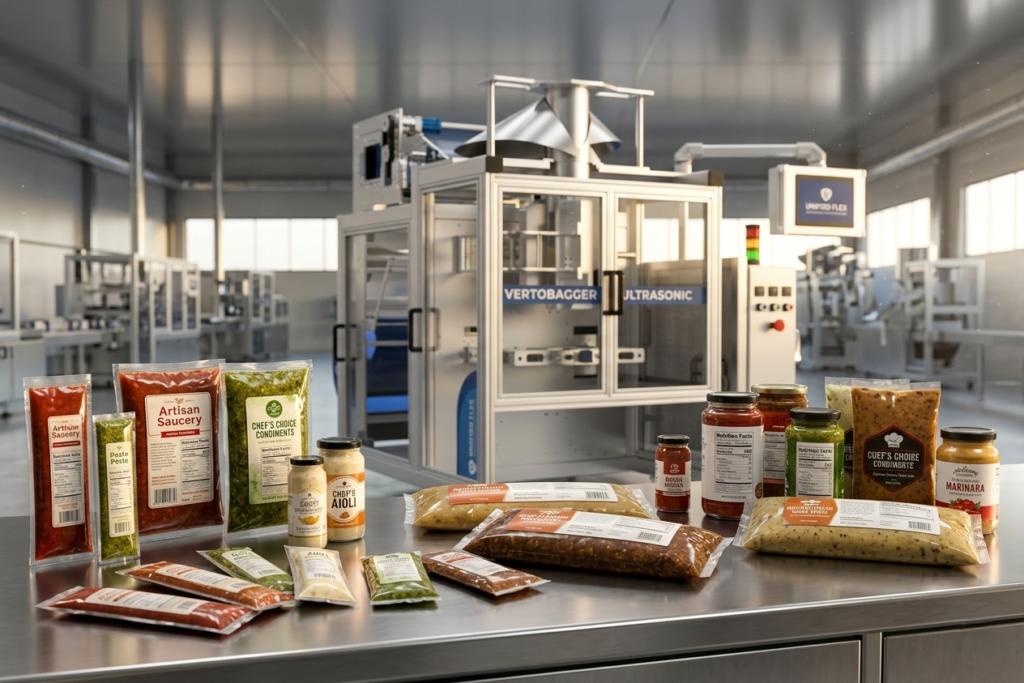
Packaging is no longer a secondary step in sauce and condiment manufacturing. It has become a critical control point that directly impacts product quality, cost efficiency, and overall operational stability. As demand continues to grow for single-serve formats, flexible packaging, and high-volume foodservice distribution, many traditional packaging systems are no longer able to meet modern production requirements.
Smart sauce packaging machines are addressing this shift by going beyond basic automation. Rather than simply increasing speed, these systems are engineered to manage the complex behavior of sauces, ensure consistent packaging performance, and reduce operational inefficiencies across high-volume production lines.
For engineers and manufacturers, the shift toward smart packaging equipment is less about technology hype and more about solving practical production problems: leaks, downtime, inconsistent portions, film instability, and costly restarts. When packaging machines are built around those realities, the entire production system becomes more predictable.
Packaging Is Where Sauce Production Either Succeeds or Fails
Sauces and condiments behave differently from most packaged foods. Some are thin and migrate easily. Others are thick and smear across surfaces. Oil-based formulations can creep into sealing areas, while particulate ingredients can interfere with dispensing and sealing.
In this environment, packaging performance becomes directly tied to product integrity.
A weak seal or inconsistent fill is not just a packaging defect. It can quickly become:
- Leaking cartons
- Contaminated cases
- Cleanup downtime
- Product loss
- Customer complaints
Smart sauce packaging machines are designed to prevent those outcomes by stabilizing the packaging process itself.
Instead of relying on constant operator adjustments, modern systems focus on maintaining consistent relationships between film movement, filling timing, and seal formation. That consistency is what protects product quality across thousands or millions of packages.
The Rise of Flexible Packaging in Sauces and Condiments
One of the biggest drivers behind advanced automatic packaging machines is the growth of flexible packaging formats.
Single-serve packets, sachets, stick packs, and spouted pouches are now common across:
- Quick service restaurants (QSR)
- Foodservice distribution
- Delivery and takeaway meals
- Travel and airline catering
- Sampling and promotional programs
- Meal kits and retail multipacks
Flexible packaging offers several operational advantages:
- Portion control
- Lower shipping weight
- Efficient storage
- Reduced material usage
- Easier distribution
However, these formats also require precise form-fill-seal operations. A small deviation in film tension, seal temperature, or fill accuracy can quickly multiply into large volumes of scrap.
Smart automatic packaging machines address this by engineering consistency into the system, rather than relying on trial-and-error adjustments during production.
What Makes a Sauce Packaging Machine “Smart”?
In an engineering context, “smart” does not simply mean automated. It means the machine is designed to maintain repeatable performance under real production conditions.
Several design principles define modern sauce packaging equipment.
Synchronized Motion Control
In flexible packaging systems, the forming, filling, and sealing stages must operate in perfect coordination. Even small timing variations can create weak seals or irregular cuts.
Smart machines use synchronized motion control systems to ensure that:
- Film movement
- Filling cycles
- Seal jaw operation
- Cutting actions
remain aligned across every cycle.
This synchronization helps maintain consistent seal strength and package geometry, reducing the risk of leaks during handling and distribution.
Precise Filling for Different Sauce Behaviors
Sauces vary widely in viscosity and flow behavior. Thin liquids like soy sauce behave very differently from thicker products like mayonnaise or barbecue sauce.
Smart machines integrate specialized filling systems to manage those differences, including:
- Piston fillers for viscous sauces
- Volumetric fillers for controlled dosing
- Combination weighers for particulate blends
- Product transfer pumps for smooth flow control
The goal is not just accurate filling, but repeatable dosing across long production runs. Consistent portions protect both product quality and cost control.
Stable Film Handling
Flexible packaging depends heavily on the behavior of the film itself. Variations in friction, thickness, or stiffness can cause film drift, wrinkles, or inconsistent sealing.
Advanced packaging machines address this with:
- Servo-controlled film drives
- Stable tension management
- Controlled film tracking
- Precise lane separation in multilane systems
Stable film handling helps prevent issues like:
- Seal contamination
- Uneven cuts
- Package misalignment
- Registration drift
In high-volume condiment production, these details directly affect scrap rates and downtime.
Multilane Efficiency Without Process Instability
High-volume sauce packaging often requires multilane sachet systems to reach production targets.
However, multilane equipment introduces another challenge: lane-to-lane consistency.
If one lane begins drifting out of tolerance, the defect rate multiplies quickly.
Smart packaging machines are designed to maintain uniform performance across all lanes by controlling:
- Film separation
- Dosing synchronization
- Seal timing
- Cutting precision
This allows manufacturers to increase output without compressing the packaging cycle beyond stable operating limits.
A practical example is the Multilane Sachet Bagger – MSB 508mm, engineered to support high-volume sauce and condiment packaging. Designed for multilane sachet production, the system uses synchronized motion control and precise film handling to maintain consistent sealing performance across multiple lanes during long production runs.
Hygienic Design for Real Cleaning Conditions
Sauce production environments involve frequent cleaning, product buildup, and occasional spills. If machines are difficult to access, routine cleaning becomes time-consuming and disruptive.
Smart packaging equipment incorporates hygienic design features such as:
- Stainless steel construction
- Accessible sealing areas
- Easy-open sealing jaws
- Simplified cleaning access
When operators can clean critical areas quickly, small maintenance tasks do not turn into extended downtime.
Smart Packaging Machines Improve Production Economics
From a business perspective, the biggest benefit of modern packaging equipment is not speed. It is process stability.
When packaging lines run predictably, operations teams and engineers begin to see measurable improvements across the production floor.
- Lower Material Waste: Film scrap often increases when machines require frequent adjustments or restarts. Stable packaging systems reduce startup losses and minimize rejected packs.
- Reduced Downtime: Consistent machine performance means fewer interruptions for troubleshooting, cleaning, or manual corrections.
- Better Product Protection: Reliable sealing prevents leaks that could damage cartons, cases, or surrounding packages during shipping.
- Improved Operational Confidence: Operators spend less time correcting issues and more time maintaining steady production.
Over time, these improvements translate into lower total packaging costs, even if the initial equipment investment is higher.
Why Smart Packaging Matters More in the Modern Food Industry
The food industry is evolving quickly. Distribution networks are more complex, consumer expectations are higher, and foodservice operations demand greater efficiency.
At the same time, food processing facilities and production teams are under pressure to:
- reduce packaging waste
- increase throughput
- maintain strict hygiene standards
- protect brand reputation
Smart packaging machines help address these pressures by creating stable, repeatable packaging processes.
Instead of treating packaging as a final step in production, manufacturers are beginning to treat it as a system engineering challenge. The companies that invest in reliable packaging infrastructure are better positioned to scale their operations without introducing unnecessary risk.
Unified Flex Expertise in Sauce and Condiment Packaging Technology
With over 17 years of experience in flexible packaging technology, Unified Flex has developed packaging systems specifically engineered for sauces, dressings, and condiments.
Rather than offering generic machinery, Unified Flex designs packaging platforms around the real challenges of sauce production, including viscous products, oil-based formulations, and high-volume single-serve formats.
Unified Flex offers multiple packaging technologies designed for sauce and condiment production lines:
- multilane sachet packaging machines
- stick pack machines
- vertical form fill seal (VFFS) systems
- Stand up pouch packaging machines
- spouted pouch filling and capping machines
These systems are designed to deliver stable packaging performance while supporting the wide range of formats used in sauce and condiment markets.
Each system is engineered based on product characteristics, packaging requirements, and production goals, ensuring that the equipment performs reliably before it reaches the production floor.
Turnkey Packaging Solutions for Complete Production Lines
Packaging machines rarely operate in isolation. Efficient production requires a fully integrated packaging line.
Unified Flex provides complete turnkey packaging solutions that include:
- fillers and dosing systems
- multi-head weighers
- infeed and outfeed conveyors
- mezzanines and production platforms
- rollstock and preformed pouch solutions
By integrating these components into a single system, manufacturers can achieve smoother production flow, improved accuracy, and easier system management.
This approach allows sauce production teams to focus on product quality and production output, rather than troubleshooting disconnected equipment.
In the End
Smart sauce packaging machines are transforming production by delivering repeatable performance, stable sealing, and precise portion control. Through synchronized motion control, advanced filling systems, and reliable film handling, these technologies help manufacturers reduce leaks, minimize scrap, and maintain consistent packaging quality.
With cutting-edge packaging systems and integrated solutions, companies like Unified Flex enable engineers and operations teams to build more stable, efficient, and scalable production lines.
Contact Unified Flex today!