
Your Brand Is Not Your Brand. Your Packaging Format Is.
The Branding Assumption Most Marketers Never Question
Marketing teams spend enormous energy crafting brand identity. Color palettes are debated. Typography is refined. Messaging frameworks are tested across campaigns. Entire brand books are written to ensure consistency across every touchpoint.
In this process, packaging is usually considered an extension of visual identity. Teams discuss label design, front-of-pack messaging, and logo placement. But one critical element is often overlooked: the packaging format itself.
Most marketers assume brand perception is shaped primarily by communication and design. Yet in many cases, consumers remember something far simpler: the packaging format of the product.
The container becomes the memory.
And that subtle shift changes how we should think about branding.
Table of Contents
What Happens If Logos Disappear?
Imagine walking through a grocery store where every logo, color, and graphic has been removed from the packaging.
No brand names.
No labels.
No typography.
Just shapes.
Even in that stripped-down environment, many products would still be instantly recognizable. A tall cylindrical can would immediately suggest Pringles. A triangular prism box would point to Toblerone. A slim metallic can would likely be associated with Red Bull. Heinz would still stand out through its distinctive upside-down squeeze bottle.
In each of these cases, the packaging format itself has become inseparable from the brand. Over time, consumers have learned to recognize the structure of the product long before they process its visual identity.
That recognition is not accidental. It is the result of repeated physical interaction with the product.
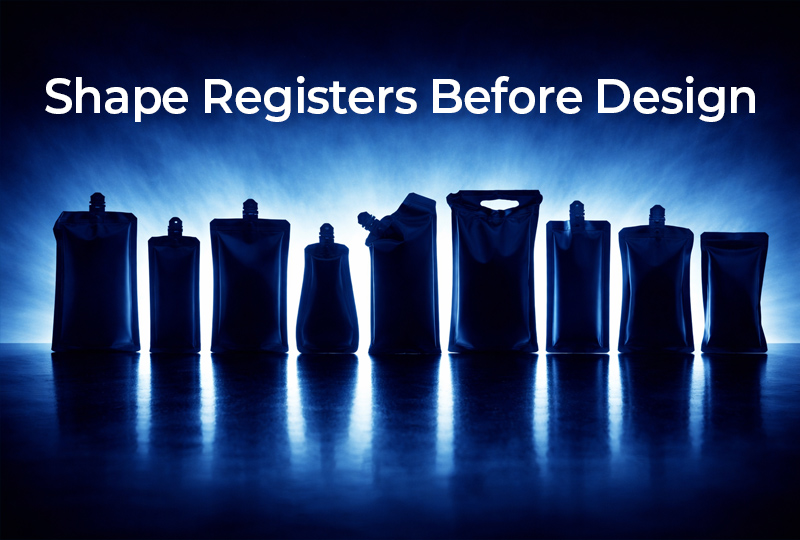
Why Shape Registers Before Design
Human perception works in layers. When shoppers scan a retail shelf, their brains process form before they process text or graphics.
This means that the silhouette of a package, the way it stands, curves, or occupies space, often becomes the first signal a consumer notices.
Think about how people refer to products in everyday conversation. Rarely do they describe typography or branding guidelines. Instead, they reference the object itself. Someone might ask for the squeeze bottle, the snack pouch, or the tall energy drink can.
Those descriptions reveal something important. Consumers often encode structural cues in memory before encoding brand messaging.
The package shape becomes a shortcut for identifying the product.
The Rise of Structural Branding
This phenomenon is sometimes called structural branding. It occurs when the physical format of a package becomes a defining element of the brand itself.
Rather than relying solely on graphics or advertising, the product becomes recognizable through its form.
Over time, this structure becomes a type of brand signature. Consumers remember how the product sits on a shelf, how it feels in the hand, how it opens, and how it is stored at home. These interactions reinforce brand memory in ways that visual marketing alone cannot replicate.
Some of the most recognizable consumer brands in the world benefit from this kind of structural identity. Their packaging formats are not just containers; they are symbols.
Packaging Is an Experience, Not Just a Design
Marketers often discuss packaging in visual terms, but packaging format influences something deeper: the physical experience of the brand.
The structure of a package determines how the product is held, opened, poured, and stored. It affects how easily it fits in a refrigerator, a pantry, or a bag. It shapes how frequently consumers interact with it throughout its lifecycle.
Each of these interactions becomes a subtle reinforcement of the brand.
Unlike advertisements that appear briefly and disappear, packaging remains present in the consumer’s environment. It lives in kitchens, offices, and backpacks. The structure of the packaging, therefore, becomes part of the everyday brand experience.
Why Flexible Packaging Is Expanding Structural Possibilities
Historically, many products relied on rigid containers such as glass bottles, cans, jars, and boxes. These formats offered durability and familiarity, but they also limited how much brands could differentiate structurally.
Advances in packaging technology are now expanding these possibilities. Flexible packaging formats, such as stand-up pouches, flat-bottom bags, spouted pouches, and resealable snack packs, allow brands to experiment with new forms.
These formats change how products are displayed on shelves and how consumers interact with them at home. A pouch may stand differently, a resealable bag may extend product life, and a spouted pouch may transform how a product is poured.
Each structural decision alters the way the product behaves in the consumer’s hands. Over time, those behaviors become part of the brand identity.
A Different Question for Marketers
Most packaging discussions begin with a familiar question: What should our packaging look like?
But structural branding invites marketers to think differently.
A more strategic question might be: What packaging format could become synonymous with our product?
When a packaging structure becomes distinctive enough, it creates recognition that goes beyond logos and graphics. The product begins to carry its identity through form.
That kind of recognition is difficult for competitors to replicate quickly.
When the Container Becomes the Brand
In crowded retail environments, visual branding evolves constantly. Colors refresh. Logos are redesigned. Campaigns change with seasons and trends.
Packaging structure, however, tends to remain consistent over time. Once a format becomes recognizable, it creates continuity for the brand.
Consumers may not consciously analyze packaging structures, but they remember them. And that memory shapes how products are identified, recommended, and repurchased.
For marketers thinking about long-term brand differentiation, the question may no longer be limited to design systems and communication strategies.
Sometimes, the most powerful branding decision is the one that determines the packaging format of the product itself.