
How Do Electrolyte Powder Packaging Machines Prevent Moisture Absorption and Clumping in Stick Packs?
By Unified Flex Editorial Team | Reviewed by Packaging Engineering Specialists | September 2026
Electrolyte powders are highly sensitive to moisture, and even small amounts of humidity exposure can lead to clumping, poor flow, and reduced product quality. For manufacturers producing electrolyte stick packs, maintaining powder stability during filling and sealing is a critical packaging challenge.
Modern electrolyte powder packaging machines are engineered to minimize moisture exposure and create airtight protection throughout the packaging process. From controlled powder handling to precision filling and reliable sealing, every stage plays a role in preventing moisture absorption.
This article explores the key technologies used in electrolyte stick pack packaging machines to maintain product integrity, improve shelf life, and ensure consistent production performance.
Table of Contents
Why Electrolyte Powders Absorb Moisture
Electrolyte formulations contain mineral salts and active ingredients that naturally attract water molecules from the air. When exposed to humidity, these particles begin absorbing moisture through a process called hygroscopic absorption.
This moisture interaction can create several manufacturing and product challenges:
Powder Clumping
When moisture bonds with electrolyte particles, the particles begin sticking together and forming larger aggregates. These hardened clusters reduce powder flowability and make it harder for consumers to dissolve the product properly.
Inconsistent Filling Accuracy
Powder that absorbs moisture loses its original flow characteristics. Instead of moving freely through the filling system, damp powder can create bridging, inconsistent feeding, and inaccurate fill weights.
Reduced Shelf Stability
Moisture exposure can accelerate chemical degradation of sensitive ingredients, affecting taste, appearance, and product effectiveness over time.
Poor Consumer Experience
A consumer expects a stick pack to open easily and dissolve instantly. A product containing hardened powder lumps creates frustration and damages brand perception.
Because of these risks, electrolyte manufacturers require packaging equipment designed around moisture prevention rather than simple powder filling.
The Role of Electrolyte Powder Packaging Machines in Moisture Control
An advanced electrolyte powder packaging machine prevents moisture absorption through multiple controlled stages:
- Controlled powder handling
- Accurate dosing systems
- Reduced exposure time during filling
- High-integrity sealing technology
- Compatibility with moisture-barrier films
Each stage helps maintain the chemical and physical properties of the electrolyte blend.
Precision Auger Filling Prevents Powder Exposure and Waste
One of the most important components in electrolyte stick pack production is the filling system.
Most electrolyte powder packing machines use servo-controlled auger fillers because they provide accurate dosing while handling fine and flow-sensitive powders.
Traditional mechanical filling systems can create inconsistent powder movement, especially with lightweight electrolyte formulations.
Variations in density and flow behavior may lead to:
- Overfilling
- Underfilling
- Powder compression
- Product buildup inside the filler
Servo-driven auger systems solve these issues by controlling rotation speed, filling volume, and timing with high precision.
Each filling cycle delivers a consistent amount of powder into the stick pack while minimizing the time the product remains exposed to the surrounding atmosphere.
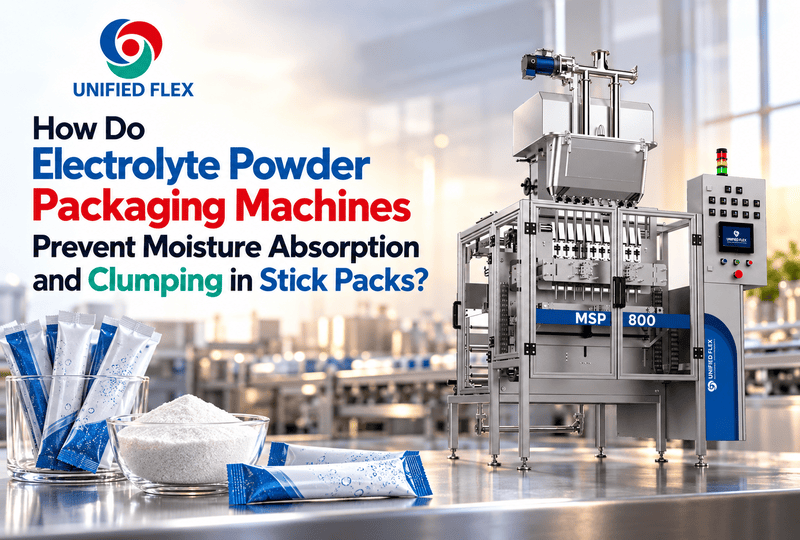
For high-output machines such as the Multilane Stick Pack – MSP 800mm, independent lane control allows each filling channel to maintain accurate dosing performance across multiple lanes simultaneously.
This precision reduces product giveaway while protecting powder quality.
Controlled Production Environment Reduces Humidity Exposure
Moisture protection begins before sealing.
During stick pack production, electrolyte powder is exposed briefly while moving from the hopper into the packaging material. The longer this exposure continues, the greater the possibility of moisture absorption.
Industrial electrolyte packaging machines reduce exposure through:
- High-speed filling cycles
- Automated film forming
- Closed powder transfer pathways
- Continuous production operation
A faster packaging process means less time for hygroscopic powders to interact with ambient humidity.
For manufacturers operating in humid climates, additional environmental controls may also be used, including:
- Dehumidified production rooms
- Temperature-controlled packaging areas
- Proper raw material storage conditions
The packaging machine functions as one part of a complete moisture management system.
High-Barrier Packaging Films Create a Moisture Barrier
The packaging material plays a major role in preventing clumping.
Electrolyte stick packs typically require films with strong moisture barrier properties. These films are designed to limit the water vapor transmission rate (WVTR), which measures how much moisture can pass through packaging material over time.
Common high-barrier structures may include:
- Laminated films
- Metallized films
- Specialty polyethylene barrier films
- Recyclable high-barrier film structures
The packaging machine must be capable of handling these materials without damaging their protective properties.
Advanced stick pack systems use:
- Servo-controlled film pulling
- Accurate film tension management
- Digital alignment control
These features prevent wrinkles, stretching, and seal inconsistencies that could compromise the moisture barrier.
Airtight Heat Sealing Locks Out Humidity
The sealing process is the final protection step.
A stick pack can contain the best electrolyte formulation and highest-quality film, but poor sealing can allow moisture penetration.
Modern electrolyte powder packing machines use precision heat sealing systems designed to create consistent airtight closures.
Key sealing technologies include:
Independent Temperature Control
Each sealing lane can maintain its own temperature settings, allowing manufacturers to achieve optimal sealing conditions across multiple lanes.
This is important because electrolyte films may require specific temperature ranges to achieve proper bonding without damaging the material.
Teflon-Coated Sealing Jaws
Teflon-coated sealing components prevent powder buildup and allow clean release during the sealing cycle.
This reduces:
- Seal contamination
- Film damage
- Production downtime
Controlled Pressure Application
Consistent sealing pressure ensures uniform seal strength across every stick pack.
This prevents micro-channels or weak points where moisture could enter.
Nitrogen Flushing for Sensitive Electrolyte Formulations
Some electrolyte products require additional protection beyond standard sealing.
Nitrogen flushing can be integrated into packaging systems to replace oxygen and moisture-containing air inside the package before sealing.
The process involves introducing food-grade nitrogen gas into the stick pack, reducing:
- Oxygen exposure
- Moisture presence
- Oxidation risks
This technique is commonly used for products requiring extended shelf stability.
The exact requirement depends on the electrolyte formulation, packaging material, and target shelf life.
Preventing Powder Contamination During Sealing
One of the biggest causes of weak seals is powder contamination in the sealing area.
When powder particles enter the sealing zone, they can interfere with film bonding and create leakage points.
Advanced electrolyte powder packing machines address this through:
- Precise filling timing
- Controlled powder drop height
- Film movement synchronization
- Sealing zone management
Keeping the sealing area clean improves package integrity and reduces rejected products.
For large-scale production, this directly impacts:
- Material waste
- Production efficiency
- Quality control costs
Faster Changeovers Protect Product Quality Across Multiple SKUs
Electrolyte brands often produce multiple flavors, formulations, and serving sizes.
Every product change introduces potential risks:
- Residual powder contamination
- Cleaning delays
- Incorrect settings
- Production inconsistencies
Modern stick pack packaging machines use tool-free changeover designs and digital controls to simplify switching between products.
This helps manufacturers achieve:
- Consistent sealing parameters
- Accurate filling settings
- Reduced downtime
For contract manufacturers producing multiple electrolyte brands, fast and reliable changeovers are essential.
Why Moisture Control Matters for Electrolyte Brands
Preventing moisture absorption is not only about avoiding powder clumping. It directly affects business performance.
Effective moisture protection helps manufacturers achieve:
- Longer Shelf Life: Stable electrolyte powders maintain quality throughout storage and distribution.
- Lower Product Returns: Fewer damaged packs mean fewer customer complaints and replacements.
- Better Brand Reputation: Consumers expect premium hydration products to perform consistently.
- Reduced Manufacturing Waste: Accurate filling and reliable sealing reduce rejected production batches.
Engineering Considerations When Selecting an Electrolyte Stick Pack Machine
For engineers and operations managers evaluating packaging equipment, several technical factors should be reviewed:
- Filling Accuracy: Look for servo-controlled dosing systems capable of maintaining consistent weight tolerances.
- Sealing Performance: Evaluate sealing temperature control, pressure consistency, and seal validation capabilities.
- Film Compatibility: The machine should support modern barrier films, including recyclable options where required.
- Production Capacity: Output requirements should match business growth plans without sacrificing quality.
- Maintenance Design: Easy access, standard components, and simple cleaning procedures reduce downtime.
Protect Your Electrolyte Brand With Reliable Stick Pack Technology
Choosing the right packaging machine is critical when product stability, production speed, and quality consistency matter. At Unified Flex, we engineer advanced stick pack packaging solutions designed to handle moisture-sensitive electrolyte powders with precision and reliability. From accurate dosing systems to high-integrity sealing technology, our electrolyte powder packing machines help manufacturers reduce waste, maintain product quality, and increase production capacity while maintaining quality standards.
Whether you are launching a new hydration product or expanding an existing production line, our team can help you select the right packaging solution for your requirements.