
From Challenge to Control: Achieving Sustainable Cosmetic Packaging with the MSB-406
Introduction: Redefining Sustainability in Cosmetic Packaging
Sustainability in cosmetics has evolved far beyond recyclable materials or minimal packaging design. Today, sustainable cosmetic packaging is a measure of how precisely a product can be manufactured, filled, and sealed, without excess material, wasted energy, or unnecessary rework.
Every step in the packaging line now counts toward environmental performance. From film gauge to sealing dwell time, even the smallest variables can determine whether a batch runs efficiently or wastes energy and resources.
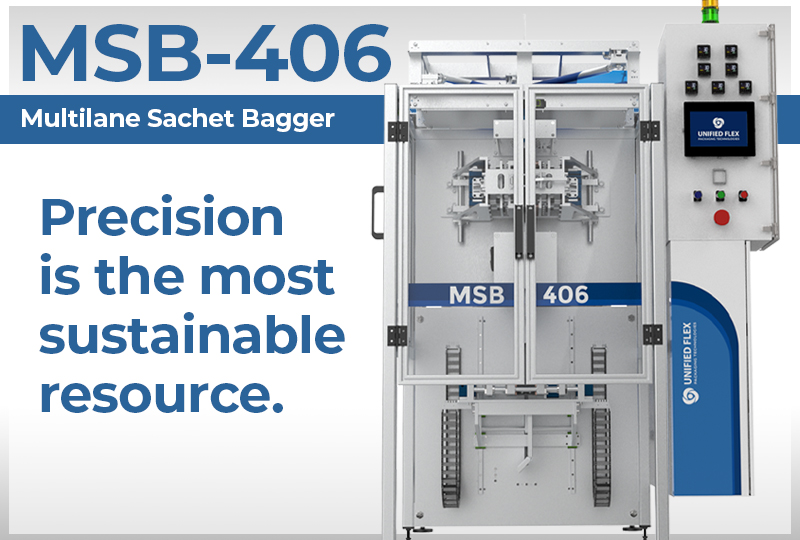
This shift is driving a new generation of cosmetic packaging technology, equipment designed not just for speed, but for process stability and material efficiency. The Multilane Sachet Bagger MSB-406, for instance, shows how sustainability can be achieved through engineering control, turning efficiency into an environmental advantage.
The Challenge: Sustainability Beyond Materials
While the cosmetic industry has made significant progress with recyclable and compostable packaging films, the next phase of sustainability reaches deeper, into the production floor itself. Achieving sustainable cosmetic packaging now depends as much on operational control as it does on material choice.
1. Managing Film Waste and Changeovers
Every reel of film represents not just packaging, but energy, resources, and cost. During production, even small misalignments in web tracking or trimming during setup can lead to large cumulative waste. Frequent product changeovers, especially across multiple SKUs, further increase the risk of scrap film and partial runs.
To maintain sustainability in practice, film handling must be engineered for precision, consistent web tension, stable pull rates, and minimal trim loss. Reducing these inefficiencies ensures that each meter of film contributes directly to finished product output rather than landfill waste.
2. Balancing Energy Efficiency and Output
Cosmetic production rarely stops, yet many packaging systems still draw energy at full load even when running below capacity. The challenge is no longer just minimizing total consumption but aligning energy use with real-time production demand.
A sustainable packaging line maintains throughput while dynamically regulating servo motion, heating, and compressed air. True efficiency is achieved when the machine works only as hard as required, delivering consistent quality with a smaller energy footprint.
3. Maintaining Hygiene Without Excess Cleaning Waste
Hygiene is non-negotiable in cosmetics, but cleaning cycles can be resource-intensive. Viscous products like body creams or sugar scrubs can leave residues that require repeated washdowns, consuming water, detergents, and labor hours.
The next step in sustainable operation is reducing cleaning waste through smarter design. Machines that offer open access, residue-resistant surfaces, and quick sanitation features minimize both water consumption and downtime, turning hygiene into an efficiency advantage rather than a drain on resources.
4. Adapting to Recyclable and Thinner Films
Mono-material and downgauged films are essential to sustainable cosmetic packaging, yet they introduce new process sensitivities. Thinner structures and recyclable polymers often have narrower sealing windows, reduced stiffness, and different heat behaviors.
Without precise control of seal temperature, dwell time, and film tension, these materials can wrinkle, delaminate, or fail under stress. The challenge is not the films themselves, but ensuring the machine can handle them reliably, maintaining seal integrity and product protection while enabling material circularity.
The Solution: Engineering Sustainability Into the Process
The Multilane Sachet Bagger MSB-406 combines precision and practicality to deliver consistent package quality with minimal downtime.
Its frame, motion control, and sealing features work together to create a packaging process that supports efficiency, reliability, and the goals of sustainable cosmetic packaging.
1. Film Handling and Material Control
At the core of the MSB-406 is a servo motor film drive and pneumatic film unwind, designed to maintain stable film tension during production.
A pneumatically locked roll stock holding mandrel keeps the web secure, while three spring-loaded rotary slitting blades ensure even cutting between sachets.
Together, these components reduce misalignment and film waste, critical for material efficiency in sustainable cosmetic packaging where every roll of film counts.
2. Coordinated Motion and Performance
The MSB-406 uses a state-of-the-art Omron Sysmac machine controller to sync form, fill, and seal in a single digital gear motion.
This coordination allows each function, from film pull to sealing, to operate in harmony.
The servo-driven Y-axis movement of the horizontal sealing jaws and pneumatic vertical sealing jaws ensure that every sachet is sealed with consistent precision.
Such control creates the stability needed for long production runs, improving process reliability in sustainable cosmetic packaging environments.
3. Stainless-Steel Frame for Easy Cleaning
Durability and clean design define the MSB-406.
It features a #304 stainless-steel heavy-duty frame construction with corrosion-resistant polish, and #304 stainless-steel filling and forming tubes.
Its vertical sealing jaws open 90 degrees for easy cleaning, giving operators clear access to all contact points.
This construction not only simplifies maintenance but also supports high hygiene standards, essential for consistent and sustainable cosmetic packaging operations.
4. Consistent Sealing and Reliable Output
The MSB-406 runs on an intermittent motion film pull and seal function by horizontal jaws.
A pneumatic horizontal seal and cut motion, controlled by an Omron PLC with a 10-inch HMI touch panel, ensures precise sealing and cutting across lanes.
This setup maintains steady output and repeatable sealing quality, the consistency that efficient and sustainable cosmetic packaging depends on.
Sustainability as Process Discipline
The path to sustainable cosmetic packaging isn’t a single innovation; it’s a combination of many small efficiencies working in harmony.
By minimizing waste, controlling energy draw, and simplifying cleaning, machines like the MSB-406 turn sustainability from a design goal into an operational standard.
Each servo adjustment, sealing cycle, and film feed contributes to reducing environmental impact — not through guesswork, but through repeatable, engineered control.
In this sense, sustainability becomes an outcome of precision, not compromise.
Conclusion: Precision Is the Most Sustainable Resource
Sustainable cosmetic packaging is no longer just about what materials are used; it’s about how effectively they’re transformed into consistent, waste-free products.
The Multilane Cosmetic Packaging Machine MSB-406 brings that vision to life, aligning sustainability with productivity through digital control, efficient motion, and hygienic construction.
For cosmetic brands navigating tighter sustainability targets, precision engineering offers a reliable way forward, one that protects both the planet and production performance.
Because in modern packaging, the most sustainable solution is the one that runs right every time.