Blogs

Blogs

From Scroll to Shelf: Designing a Packaging Experience That Wins Online and In-Store 

Mobile-to-retail packaging experience showing a snack pouch displayed on a smartphone screen beside the same pouch on a store shelf.
The packaging experience has gone fully public, reviewed, filmed, and judged across every channel from TikTok to Target. This blog breaks down how brands can create packaging that is performed everywhere consumers encounter it, on the scroll, on the shelf, and in everyday use. For marketers, this is the new frontier of brand consistency.


Curd & Shredded Cheese Packaging: Choosing the Right Bag Format for Distribution Performance 

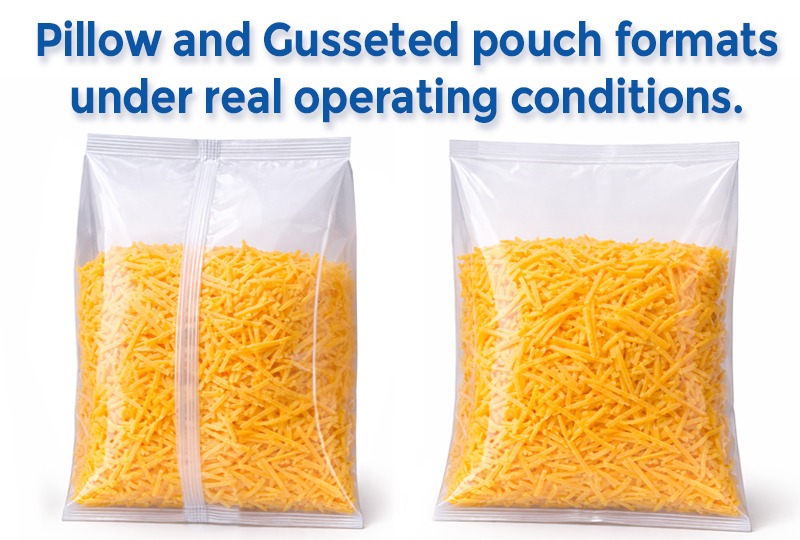
Clear pillow and gusseted pouches used for curd and shredded cheese packaging applications.
Curd and shredded cheese packaging respond differently to stacking and distribution stress. This article explains how pillow bags and gusseted formats manage compression, load distribution, and geometry retention under real operating conditions.

Cheese Packaging Equipment: Designing VFFS Lines for Stability in Shredded Cheese and Curd Production

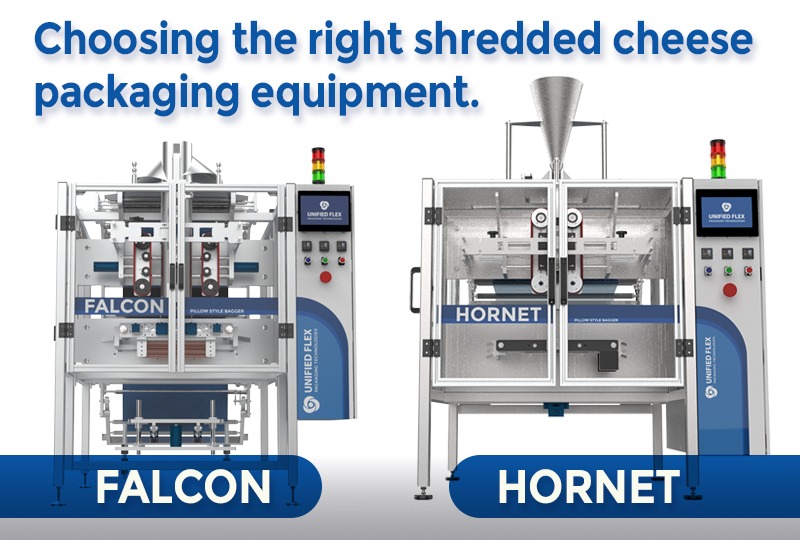
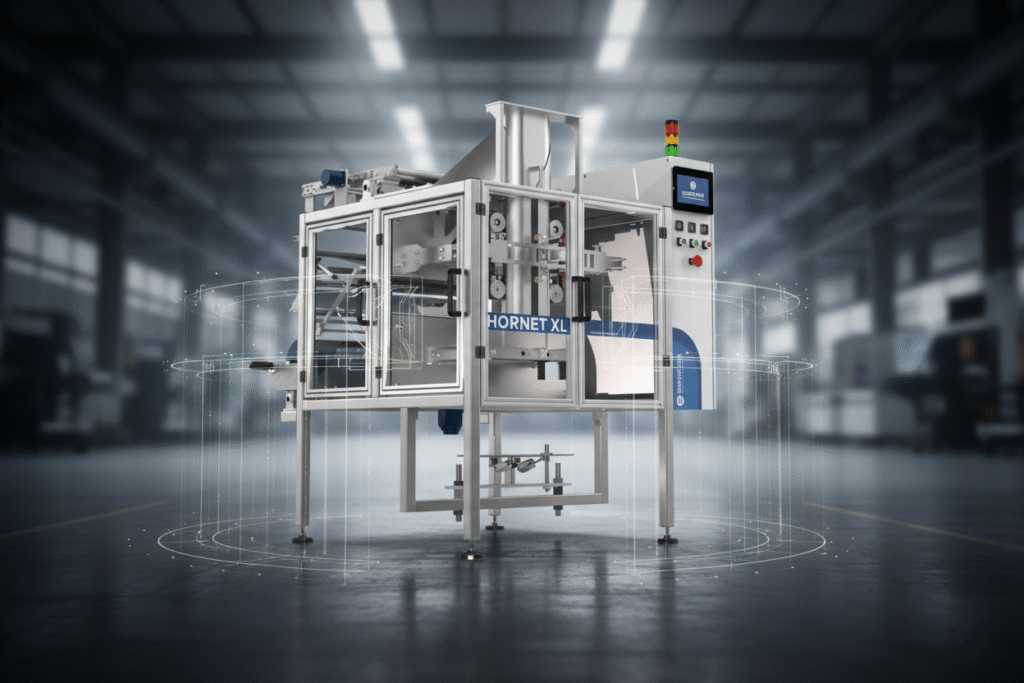
Falcon and Hornet vertical form fill seal machines used as Cheese Packaging Equipment for shredded cheese applications.
Cheese packaging equipment is tested after startup, during long shifts, roll changes, and repeated changeovers. This blog explains why shredded cheese and curds expose drift in forming alignment, film indexing, and horizontal seal engagement, and how a repeatable VFFS architecture preserves pouch geometry and seal integrity under sustained production.

Sustainable Cheese Packaging: Choosing Film That Cuts Waste Without Making the Line Fragile

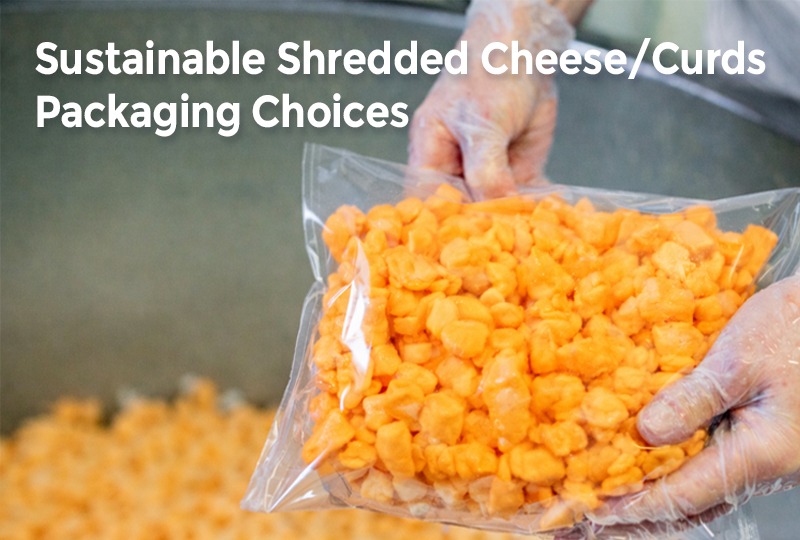
Sustainable Cheese Packaging example showing shredded cheese curds in a clear flexible pouch.
Sustainable cheese packaging only works when film performance holds up in real production. This blog explains how to choose rollstock that runs consistently on VFFS equipment, reduces waste through controlled COF, thickness, and sealing performance, and cuts preventable print scrap before film ever reaches the line, without compromising shelf life in cold-chain distribution.

Powder Packaging Machines for Animal Feed Additives: When Equipment Design Controls, or Reintroduces, Risk 

Vertobagger Hornet vertical form fill seal machine for packaging animal feed additives with Bacitracin Methylene Disalicylate bag and product sample.
Fine, dusty products like Bacitracin Methylene Disalicylate quickly expose weaknesses in machine design. A Powder Packaging Machine for Animal Feed Additives must maintain forming stability, repeatable motion, and consistent sealing as normal variation accumulates. This engineering review explains where failures begin and what to look for in equipment built for medicated feed additive applications.

Packaging Film for Medicated Feed Additives: Engineering a Laminate That Preserves Seal Integrity in a Dusty Powder Process 

Flexible multilayer packaging film displayed over fine powder used for Bacitracin Methylene Disalicylate feed additive packaging.
When medicated feed additives start leaking or drifting mid-run, the problem often begins with film. This article examines how laminate design influences seal tolerance, dimensional stability, and restart performance in dusty powder applications.

Animal Feed Additives in Powder Form: Where Packaging Formats Succeed and Where They Struggle 

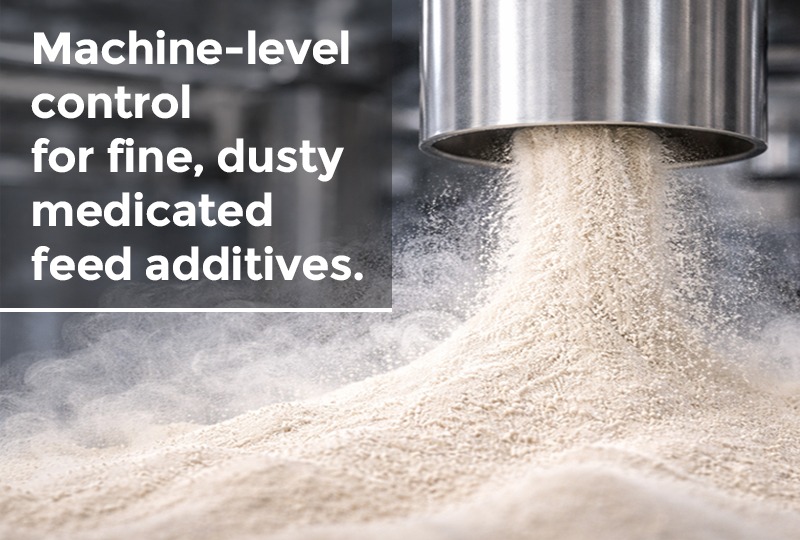
Fine, dusty medicated feed additive powder flowing from a stainless steel hopper with visible dust control during automated packaging.
Fine, pharmaceutical-grade feed additives behave very differently from bulk feed ingredients. This article reviews common packaging failure modes and explains how packaging format selection influences dust control, seal integrity, and long-term reliability in medicated feed additive applications.

How Do Packaging Machines Help Maintain Consistency Bag After Bag?

Learn how Unified Flex automatic packaging machines ensure bag-to-bag consistency with precision, automation, and engineered reliability.
In this blog, we explore how Unified Flex automatic packaging machines deliver bag-to-bag consistency through precision film handling, engineered forming, accurate filling, and automation. Read the full blog to learn how these machines ensure reliable, repeatable results for every bag.

Pet Food Packaging in Bulk Applications: Where Formats Succeed, and Where They Struggle 

Grain-free dog food bags displayed in modern pet fodd packaging, with a dog eating from a bowl in the background.
Bulk pet food packaging introduces challenges that don’t appear in lighter applications. This article examines common failure modes, instability, opening inconsistency, and seal variability and explains how pouch format design influences performance on the plant floor.

Bulk Pet Food Packaging Machines Fail Quietly — Until They Don’t 

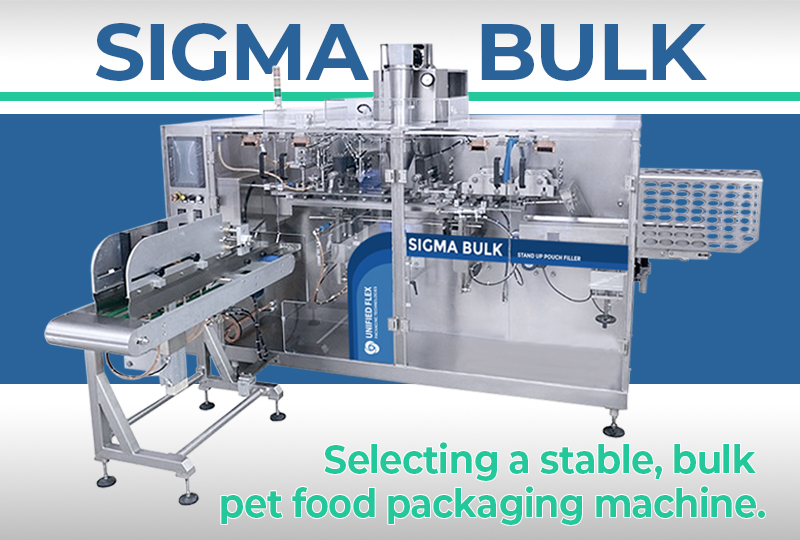
Sigma Bulk petfood packaging machine shown with integrated conveyor and automated pouch filling system.
Bulk pet food packaging machines are tested once product mass enters the pouch. This article examines where lines lose stability and how machine design supports consistent opening, filling, and sealing across real operating conditions.

Sustainable Pet Food Packaging: Choosing Film That Cuts Waste Without Making the Line Fragile 

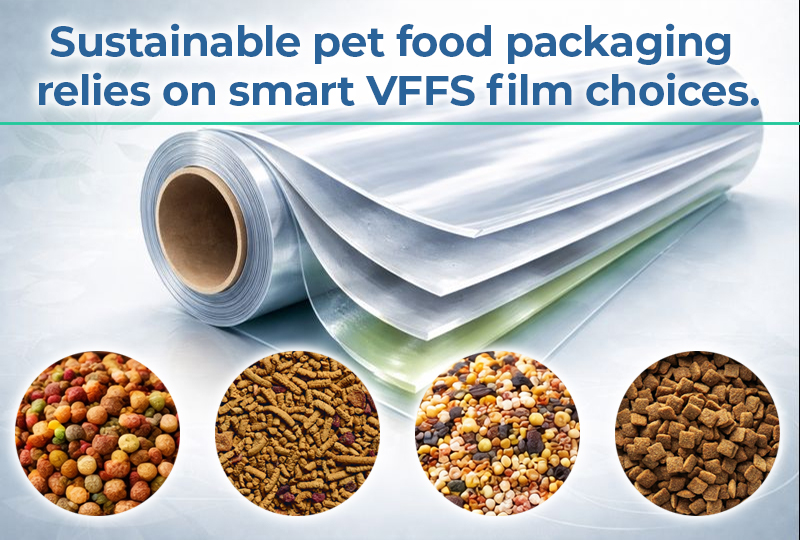
Rolls of flexible packaging film used for sustainable petfood packaging, shown alongside different types of dry pet food.
Sustainable pet food packaging only works when film performance holds up in real production. This blog explains how to choose rollstock that runs consistently on VFFS equipment, reduces waste through controlled COF, thickness and sealing performance, and cuts preventable print scrap before film ever reaches the line.

How Do Unified Flex Bakery Packaging Machines Protect Bread, Cookies, and Pastries?

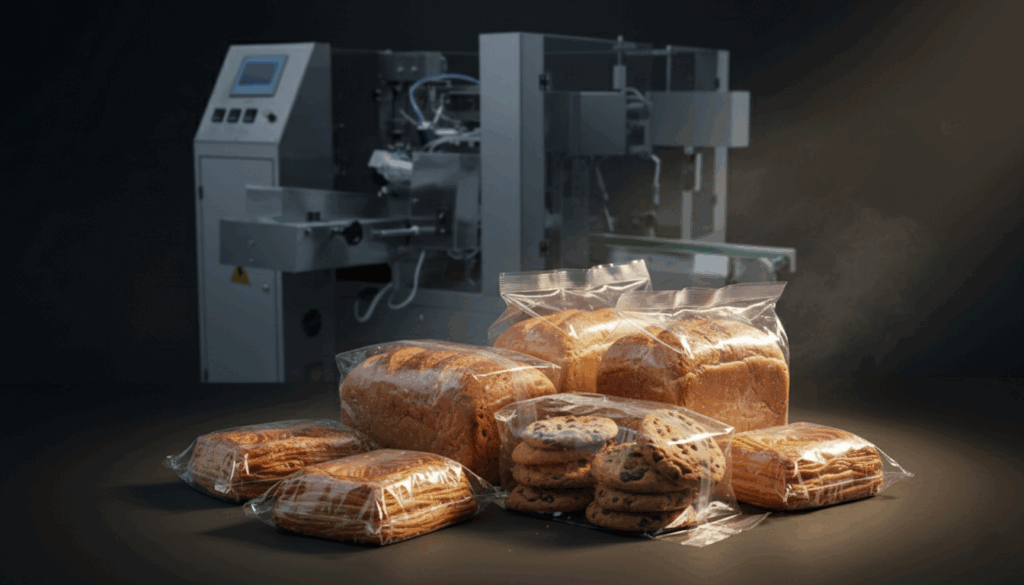
Learn how Unified Flex bakery packaging machines keep bread, cookies, and pastries fresh, protected, and shelf-ready.
This blog defines how Unified Flex bakery packaging machines protect bread, cookies, and pastries by preventing staleness, breakage, and quality loss. It highlights key packaging solutions that extend shelf life and reduce waste. Read the full blog to learn more.

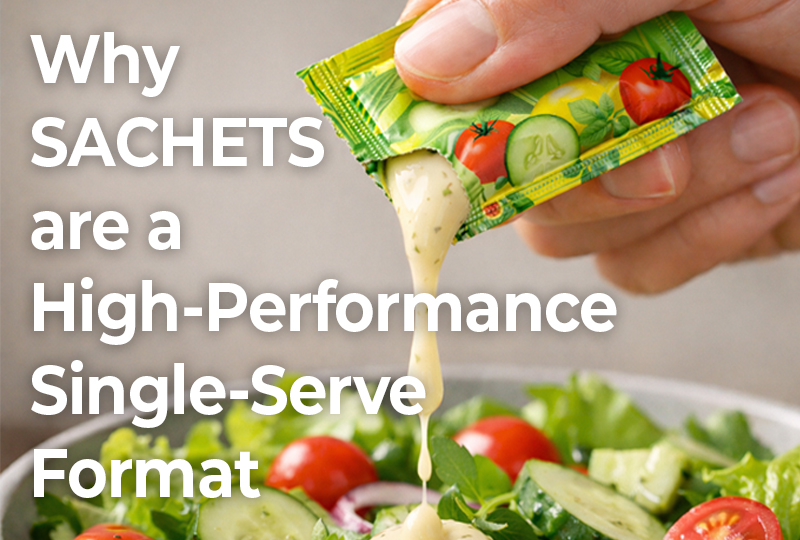
Sauces and Condiments Packaging: Why Sachets Are a High-Performance Single-Serve Format 

Single-serve sauce sachet being squeezed over a fresh salad
Sachets continue to play a critical role in sauces and condiments packaging because they’re designed for real-world use. This blog explores why the format works, what defines a well-designed sachet, and how brands can avoid common specification mistakes.

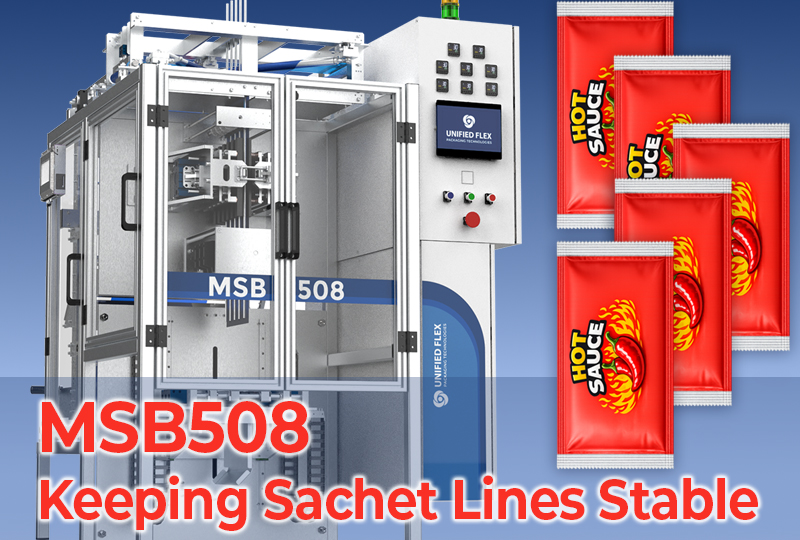
Sauces and Condiment Packaging Machine: The Real Reasons Sachet Lines Get Messy (and How to Keep Yours Boring, in a Good Way) 

Condiment packaging machine MSB508 shown with finished sauce sachets for single-serve applications
In sauces and condiment sachet production, small variation becomes expensive fast. This blog outlines the most common stability failure points and what to look for in a sauces and condiment packaging machine designed for repeatable sealing and consistent throughput.

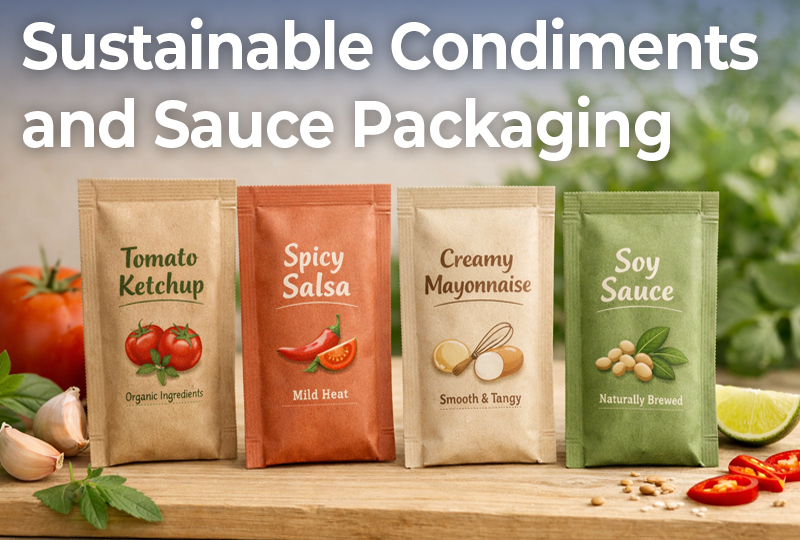
Sustainable Condiments and Sauce Packaging: Choosing Film That Cuts Waste Without Turning the Line Into a Science Project 

Sustainable sauce packaging shown through single-serve condiment sachets on a kitchen surface
Sustainable condiment and sauce packaging only works when film performance holds up in real production. This blog explains how to choose rollstock that runs consistently on VFFS equipment, reduces waste through controlled COF, thickness and sealing performance, and cuts preventable print scrap before film ever reaches the line.

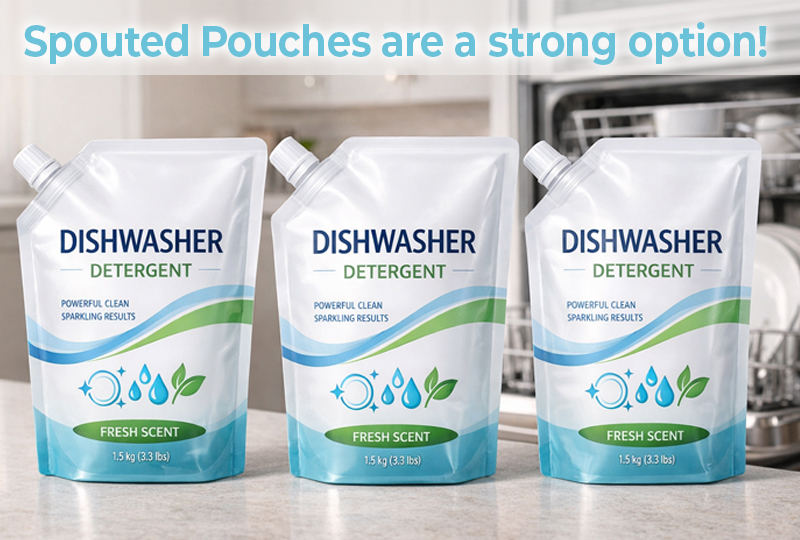
Liquid Detergent Packaging: Why Spouted Pouches Are a High-Performance Choice 

Three spouted pouches of dishwasher detergent displayed on a kitchen counter in front of an open dishwasher.
Detergent packaging doesn’t get tested at the line; it gets tested at the sink, in storage, and in transit. This blog explains why spouted pouches are a high-performance choice and what needs to be specified to keep them stable at scale. Read on to see what matters most.

Liquid Detergent Packaging Machine: The Real Reasons Spouted Pouch Lines Get Messy (and How to Keep Yours Boring, in a Good Way) 

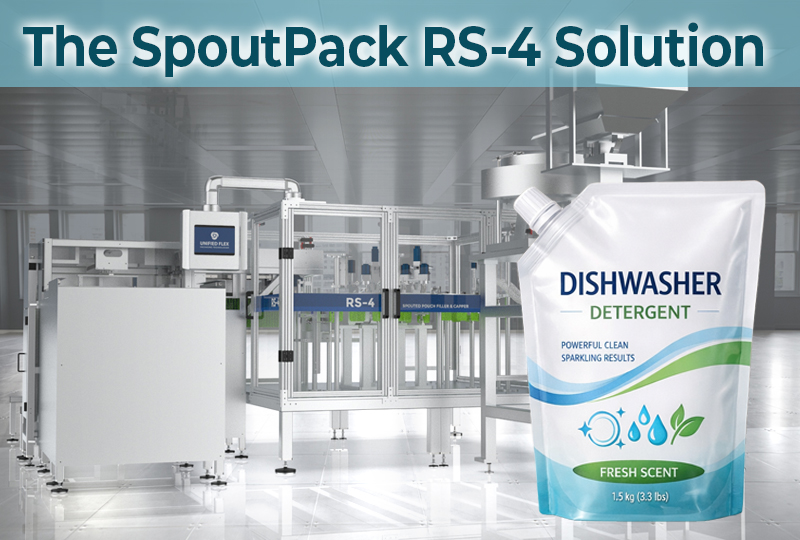
Automated spouted pouch filling and capping machine shown with a finished dishwasher detergent spouted pouch.
If your spouted pouch line is messy, it’s usually a repeatability problem, not a pouch problem. This post maps the most common failure points in a Liquid Detergent Packaging Machine and what keeps the process steady across long runs and changeovers. Read more.

Sustainable Detergent Packaging: Choosing Film That Cuts Waste and Runs Clean

Film-first liquid detergent packaging showing a flexible plastic film roll transforming into a spouted detergent pouch, highlighting lightweight and sustainable packaging design.
Sustainable detergent packaging isn’t measured by material claims; it’s measured by how the film behaves on the production floor. When film performance drifts, sustainability shows up as longer startups, higher scrap, more stops, and downstream cleanup. This blog takes a film-first approach to liquid detergent packaging, breaking down where waste really comes from and what needs to be controlled so packaging runs predictably, seals reliably, and holds up through real distribution conditions. Read the blog.

Spice Packaging Machine for Bulk Packaging: From Failure Points to Stable Output 

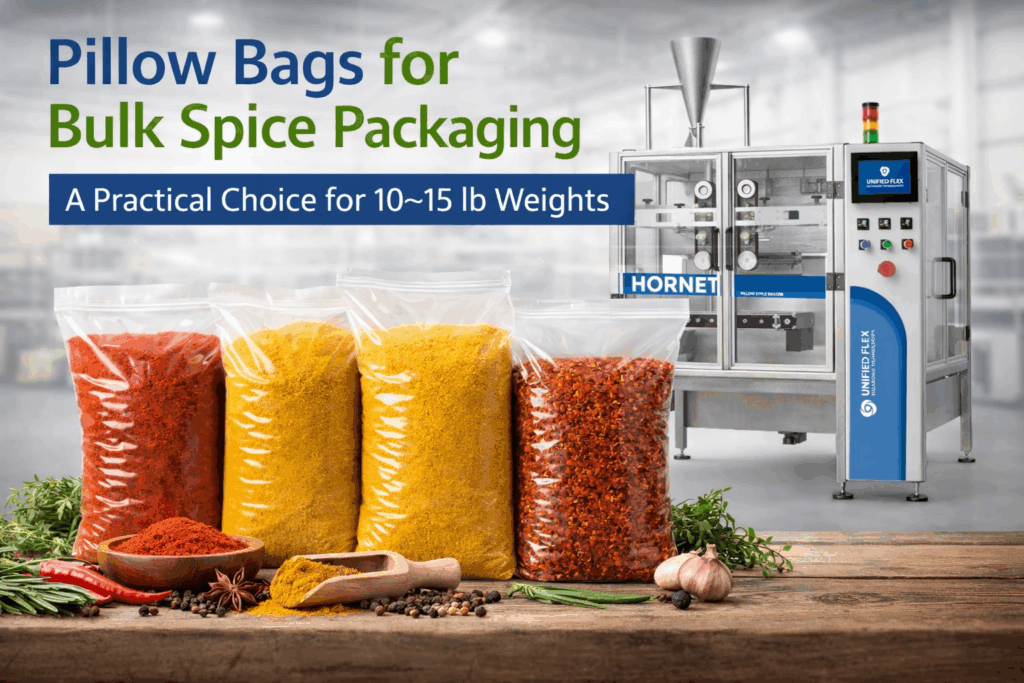
Spice packaging machine forming 10–15 lb pillow bags filled with bulk spices on a production floor.
Bulk spice packaging doesn’t fail at the discharge; it fails in handling, case packing, and transit. Here’s what breaks first at 10–15 lb and what to prioritize in a VFFS configuration to maintain consistent sealing and bag presentation.

Sustainable Flexible Packaging for Bulk Spice: Using Film to Cut Waste Without Slowing the Line 

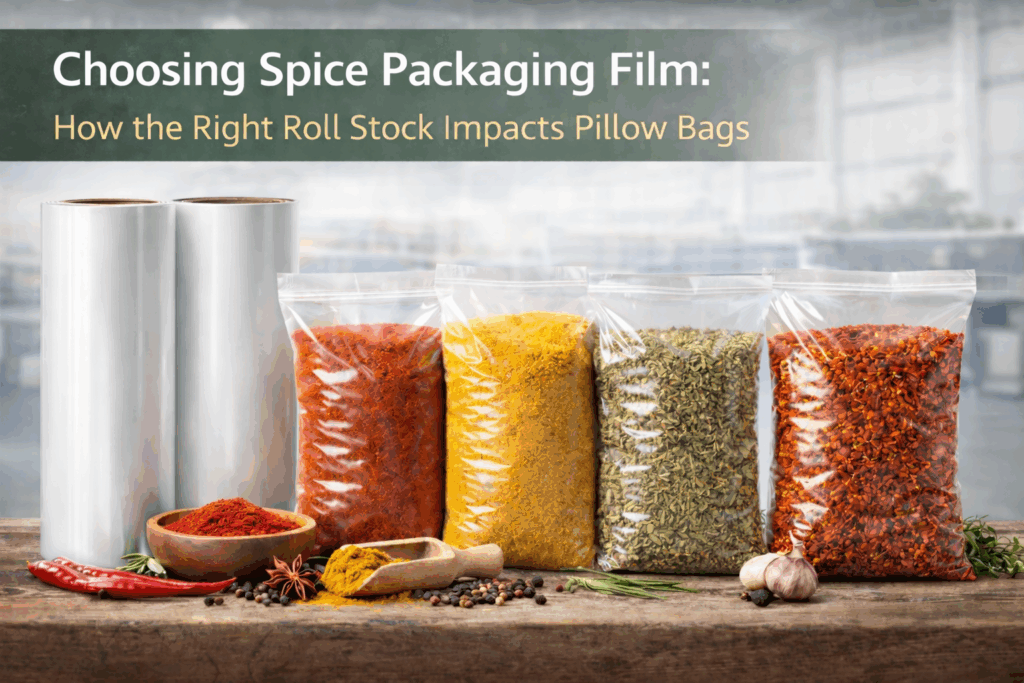
Spice packaging film rolls and clear pillow bags filled with bulk spices used in spice packaging applications.
Sustainable flexible packaging for 10–15 lb bulk spice is won or lost at the film level. This post shows where waste quietly builds, scrap, overbuilt barriers, print rejects, and thin films that fail, and how a film-first, test-backed approach cuts waste without slowing production.