
The Importance of Packaging: Why Better Packaging Doesn’t Fix Growth (If It’s Built for the Wrong Behavior)
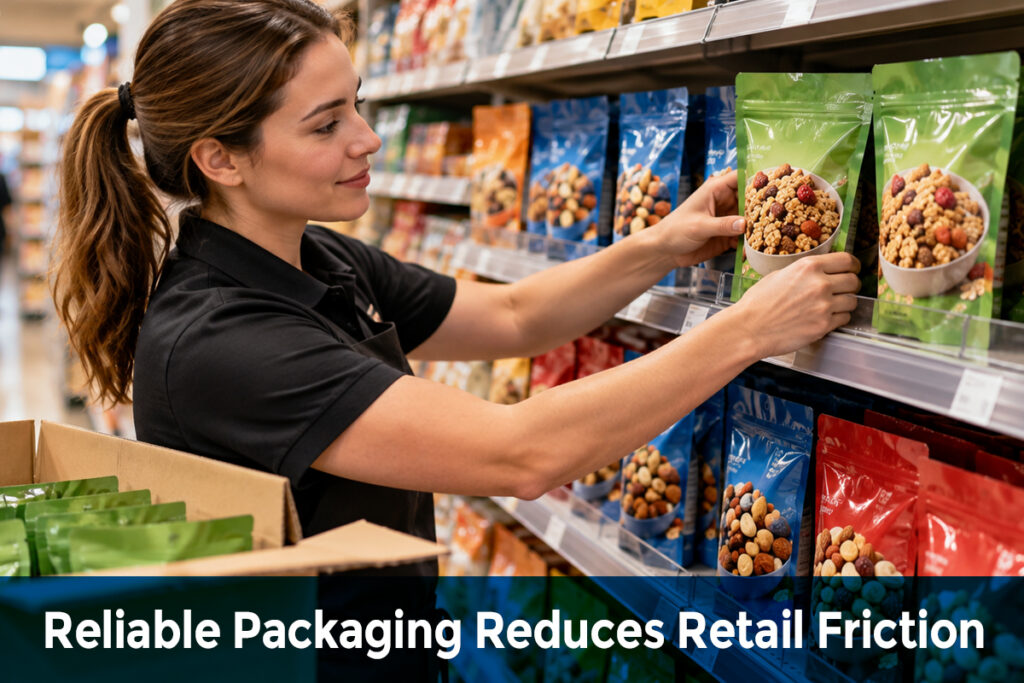
A product can have strong shelf appeal, competitive pricing, and packaging that performs reliably through production and distribution. It can generate initial sales, secure retail placement, and meet the operational targets established before launch and still struggle to achieve sustained growth.
The problem is not necessarily the product or its ability to attract customers. Sometimes, the disconnect emerges after purchase, when consumers begin incorporating the product into their daily lives.
This is where the importance of packaging extends beyond protection, presentation, and cost. A format designed around how a product is sold may not necessarily support how customers prefer to use it.
For brand owners, that distinction matters because winning the first purchase and encouraging continued consumption are two different challenges.
Table of Contents
Distribution Creates Opportunity. Consumption Determines What Happens Next.
Expanding distribution gives a product access to more potential customers. Strong shelf presentation can encourage trial, while effective marketing helps communicate value, but neither guarantees that the product will become part of a consumer’s routine.
In categories where customers replenish products after consumption, usage frequency is an important component of repeat purchasing. A product consumed daily may require more frequent replenishment than one used occasionally, assuming comparable quantities and serving sizes. This relationship also matters when evaluating business performance.
Revenue may increase because of higher prices, broader distribution, or promotional activity without a corresponding increase in underlying consumption. Similarly, strong initial sales can conceal weaker-than-expected repeat purchasing. Understanding the difference requires looking beyond how many units enter the market to how consumers actually use them.
For brand owners, the challenge is identifying whether slower repurchase reflects limited demand, dissatisfaction with the product, or barriers that make regular consumption less convenient.
The Missing Link Between Purchase and Everyday Use
Consumers purchase products with particular expectations, but their circumstances determine how those products are used.
A nutritional supplement may be purchased with the intention of daily consumption. A powdered beverage may be marketed for convenience, while a snack may be positioned for consumption throughout the day. Yet each product must fit into the practical conditions of the customer’s routine.
Consider a powdered drink mix sold in a large resealable pouch. The format may offer an attractive cost per serving and work well for consumers preparing drinks at home.
For someone who regularly consumes the product at work or while traveling, however, the need to measure, transfer, and carry powder separately may make preparation less convenient.
Individually portioned stick packs offer a different experience. They eliminate measuring and make servings easier to transport, although they may involve higher packaging costs and more packaging material per serving.
Neither format is universally better. Their suitability depends on the intended customer, consumption occasion, and commercial priorities.
The example illustrates an important distinction: a package can perform exactly as designed while still being poorly matched to how customers want to use the product.
Where Packaging Creates Friction
Packaging becomes part of the consumer experience through a series of ordinary interactions. Opening a package, accessing the contents, controlling portions, dispensing the product, and storing what remains all require some degree of effort.
The significance of that effort depends on the product and how frequently these interactions occur. A closure that requires additional handling may be acceptable for a product used once a week but frustrating for something accessed several times a day. A large container may be appropriate for household consumption yet inconvenient for individual use outside the home.
These differences are easy to overlook when packaging is evaluated primarily through manufacturing and distribution requirements. Production teams measure efficiency, material usage, and machine compatibility. Logistics teams consider shipping density and handling. Retail teams prioritize shelf dimensions and presentation.
Each perspective addresses legitimate business needs. However, consumer behavior introduces another set of requirements that may not be captured by these measurements.
The challenge is not to maximize convenience at any cost. It is to understand which interactions matter most to the intended customer and whether the chosen format makes those interactions unnecessarily difficult.
When Packaging Improvements Solve the Wrong Problem
Packaging improvements are often assessed through measurable operational or commercial gains. Reducing material usage can lower packaging costs. Improving structural integrity can protect products during distribution. Refreshing graphics can strengthen shelf visibility.
These are meaningful improvements, but their value depends on the problem a brand is trying to solve. If customers are not noticing a product, better presentation may help. If packages are damaged during shipping, material and structural improvements may be necessary. But when the concern is infrequent consumption, improving shelf appearance or reducing material costs may do little to change customer behavior.
A packaging redesign can therefore succeed against its original performance targets without producing the anticipated sales growth. This does not make the improvement unsuccessful. It means the commercial expectation was broader than the problem being addressed.
For leadership teams, the distinction is important. Packaging investments should be evaluated against clearly defined objectives rather than the assumption that any improvement will translate into greater demand.
Designing Around Real Consumption Behavior
Understanding consumer behavior does not mean choosing the most portable, compact, or convenient format available. It means identifying the conditions under which customers are expected to use the product and developing packaging requirements accordingly.
For example, a brand evaluating a new format should consider:
- Consumption occasion: Is the product primarily used at home, at work, while traveling, or across multiple settings?
- Serving requirements: Do customers need controlled portions, or do they prefer flexibility in the amount dispensed?
- Frequency of interaction: How often must the package be opened, handled, and stored?
- Storage conditions: Does the format accommodate the space and environment in which the product will typically be kept?
- Commercial trade-offs: Do potential convenience benefits justify differences in packaging costs, materials, and production requirements?
Answers to these questions can influence choices involving package size, portioning, closures, dispensing features, and flexible packaging formats. They also provide a more useful starting point for packaging development than assuming that a format successful in one application will work equally well in another.
Measuring Whether the Packaging Change Works
Consumer-centered packaging decisions still need commercial validation.
A brand may introduce smaller portions or improve accessibility with the expectation that customers will use the product more regularly. But convenience improvements do not automatically produce higher consumption or repeat purchasing. The effect should be tested.
Consumer usage research can reveal where preparation or handling creates difficulty. Product trials can compare how customers interact with alternative formats. Purchase data can help evaluate whether a change is associated with differences in replenishment intervals, repeat-purchase rates, or consumption volume.
These measurements require context. Customers purchasing bulk formats may have different needs from those choosing individual portions. Differences in price, household size, promotions, and product satisfaction can also influence results. The objective is not simply to demonstrate that consumers prefer one package over another.
It is to determine whether the format delivers enough value in actual use to support the intended commercial outcome. That evidence gives brand owners a stronger basis for deciding when packaging changes are worth the investment.
The Real Importance of Packaging
Packaging decisions influence multiple stages of a product’s commercial journey, from manufacturing and distribution to retail and consumption.
Success at one stage does not guarantee success at another. A format that reduces operating costs may be the right choice for one market, while a portion-controlled or portable alternative may better serve another. The decision depends on the product, its customers, and the behavior the brand is trying to support.
For brand owners, the opportunity is to treat consumer usage as a defined packaging requirement rather than an assumed outcome.
Better packaging is not necessarily the format with the lowest cost, strongest shelf presence, or greatest convenience. It is the format that balances those priorities with how the product is actually used.
Growth becomes easier to evaluate when packaging decisions are connected to the behaviors they are intended to influence, rather than improvements that look beneficial in isolation.