Bag Types
Blogs

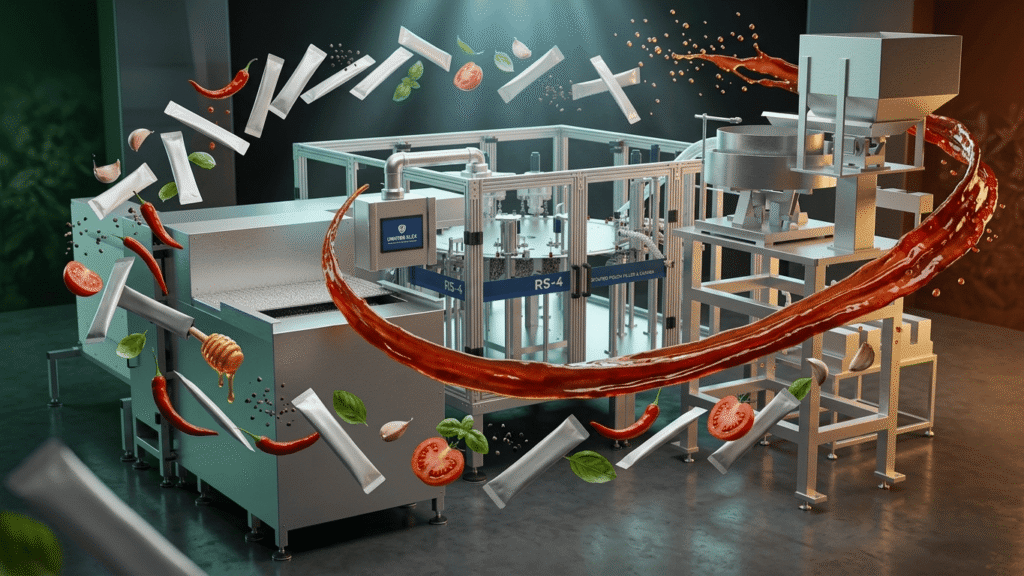
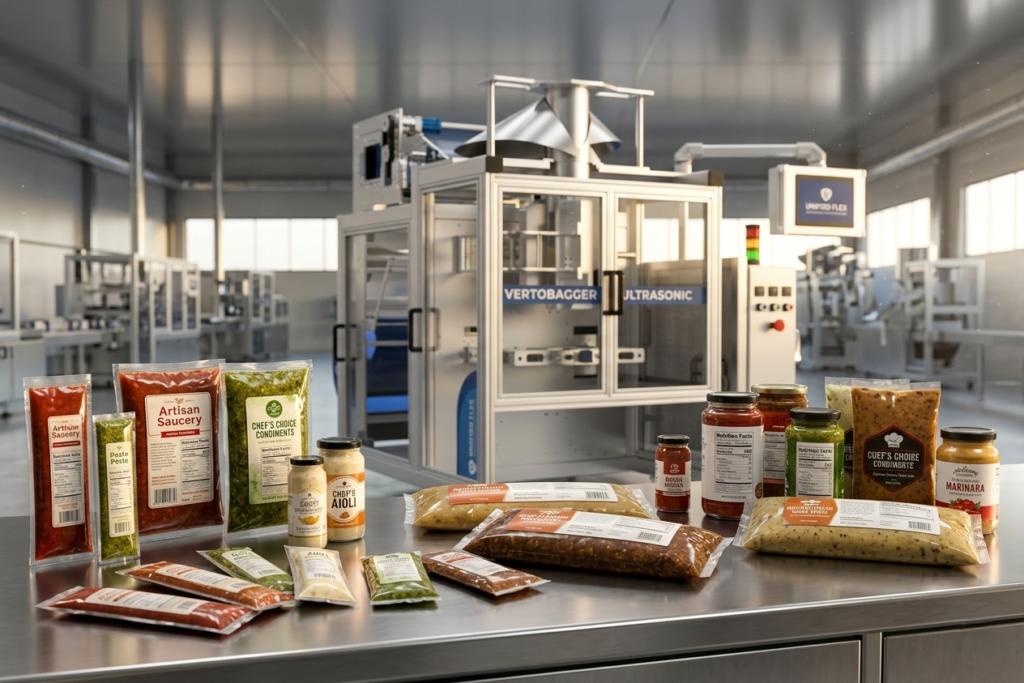
Why Are Smart Sauce Packaging Machines Transforming the Food Industry?

Learn how smart sauce packaging machines improve efficiency, reduce waste, and ensure consistent sealing for modern condiment production lines.
Smart sauce packaging machines are reshaping production by ensuring consistent fills, stable seals, and precise portions. They reduce leaks, minimize waste, and keep high-volume condiment lines running smoothly.

Can Powder Filling Machines Handle Multiple Types of Powders Without Waste?

Learn how Unified Flex powder filling machines handle multiple powders efficiently, reducing waste and maximizing production margins.
Can automatic powder filling machines handle fine, dusty, or moisture-sensitive powders without waste? See how precision dosing, sealing, and dust control keep multiple powders consistent across production lines.

Keeping the Crunch: Why Pillow Bags and Side-Gusset Bags Work for Nuts Packaging 

Hands holding a mixed nuts pouch showing nuts packaging in pillow and gusseted bag format
Nuts packaging must protect product freshness while maintaining structural stability during stacking and distribution. This article explains how pillow bags and side-gusset bags perform in nut and dry fruit packaging and when each format offers the best balance of efficiency and protection.

Magnesium Hydroxide Powder Packaging: Why Stick Pack Format Reduces Risk in Unit-Dose OTC Production

Magnesium Hydroxide stick pack packaging in hand with single-dose powder
Magnesium hydroxide powder doesn’t fail a line loudly; it fails it slowly: drifting weights, dusty seals, and more intervention per shift. This article breaks down why format matters and how stick packs can make unit-dose laxative and antacid production more controllable.

Curd & Shredded Cheese Packaging: Choosing the Right Bag Format for Distribution Performance 

Clear pillow and gusseted pouches used for curd and shredded cheese packaging applications.
Curd and shredded cheese packaging respond differently to stacking and distribution stress. This article explains how pillow bags and gusseted formats manage compression, load distribution, and geometry retention under real operating conditions.

Why Do Feed Additive Packaging Machines Fail with Powders?

Vertobagger Hornet vertical form fill seal machine for packaging animal feed additives with Bacitracin Methylene Disalicylate bag and product sample.
Fine, dusty products like Bacitracin Methylene Disalicylate quickly expose weaknesses in machine design. A Powder Packaging Machine for Animal Feed Additives must maintain forming stability, repeatable motion, and consistent sealing as normal variation accumulates. This engineering review explains where failures begin and what to look for in equipment built for medicated feed additive applications.

Packaging Film for Medicated Feed Additives: Engineering a Laminate That Preserves Seal Integrity in a Dusty Powder Process 

Flexible multilayer packaging film displayed over fine powder used for Bacitracin Methylene Disalicylate feed additive packaging.
When medicated feed additives start leaking or drifting mid-run, the problem often begins with film. This article examines how laminate design influences seal tolerance, dimensional stability, and restart performance in dusty powder applications.

Animal Feed Additives in Powder Form: Where Packaging Formats Succeed and Where They Struggle 

Fine, dusty medicated feed additive powder flowing from a stainless steel hopper with visible dust control during automated packaging.
Fine, pharmaceutical-grade feed additives behave very differently from bulk feed ingredients. This article reviews common packaging failure modes and explains how packaging format selection influences dust control, seal integrity, and long-term reliability in medicated feed additive applications.

Pet Food Packaging in Bulk Applications: Where Formats Succeed, and Where They Struggle 

Grain-free dog food bags displayed in modern pet fodd packaging, with a dog eating from a bowl in the background.
Bulk pet food packaging introduces challenges that don’t appear in lighter applications. This article examines common failure modes, instability, opening inconsistency, and seal variability and explains how pouch format design influences performance on the plant floor.

Bulk Pet Food Packaging Machines Fail Quietly — Until They Don’t 

Sigma Bulk petfood packaging machine shown with integrated conveyor and automated pouch filling system.
Bulk pet food packaging machines are tested once product mass enters the pouch. This article examines where lines lose stability and how machine design supports consistent opening, filling, and sealing across real operating conditions.